Sajib Mursalin, Trigo João P, Abdollahi Mehdi, Undeland Ingrid
Food and Nutrition Science, Department of Biology and Biological Engineering, Chalmers University of Technology, 41296 Gothenburg, Sweden.
Food Bioproc Tech. 2022;15(10):2267-2281. doi: 10.1007/s11947-022-02870-9. Epub 2022 Jul 19.
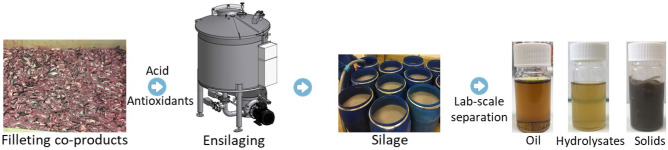
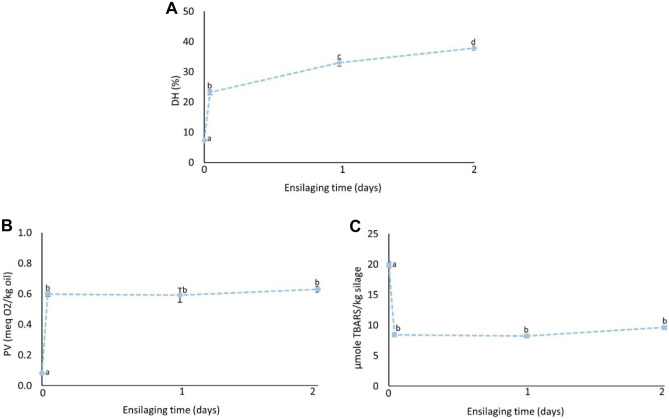
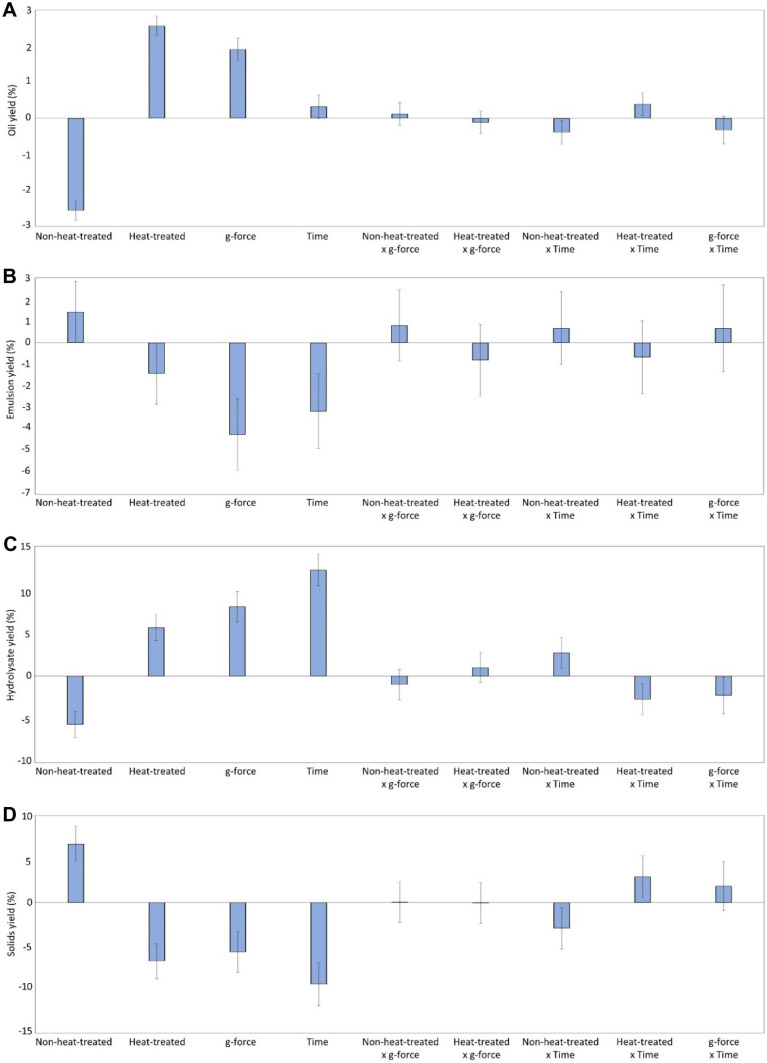
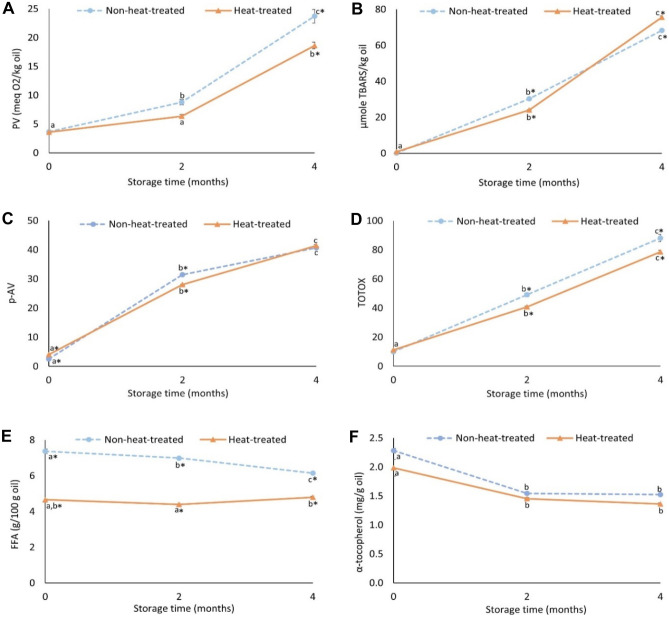
In this study, ensilaging of herring () filleting co-products was taken from lab-scale to pilot scale (1500 L) while monitoring the protein degree of hydrolysis (DH) and lipid oxidation. Subsequently, the possibility of recovering fish oil and protein hydrolysates using batch centrifugation at different g-forces/times was investigated. Around 38% DH was recorded after 2-day pilot-scale ensilaging of herring co-products at ambient temperature (i.e., ~ 22 °C), which was similar to the DH found in lab-scale (40% after 2 days; 22 °C). The lipid oxidation marker 2-thiobarbituric acid reactive substances (TBARS) reached 20 µmole TBARS/kg silage after 2-day ensilaging. Centrifugation of the silage at 3000-8500 × g for 2-20 min revealed successful separation into fish oil and protein hydrolysates. Heat-treating the silage (85 °C; 30 min) prior to centrifugation resulted in significantly higher oil and hydrolysates recoveries; the same being true for increased g-force. At 8500 × g, the recovery of oil and hydrolysates were 9.7 and 53.0% /, respectively, from heat-treated silage, while recoveries were 4.1 and 48.1% /, respectively, from non-heat treated silage. At 4500 × g, being a more scalable approach, corresponding numbers were 8.2 and 47.1% (/) as well as 2.0 and 40.2% (/). The recovered fish oil contained 8% EPA and 11% DHA of total fatty acids. Free fatty acids (FFA), peroxide value (PV), p-anisidine value (p-AV), and total oxidation (TOTOX) values of oils were in the range of 4-7% (FFA), 3.6-3.7 meq/kg oil (PV), 2.5-4.0 (p-AV), and 9.9-11.1 (TOTOX), respectively, which were within the acceptable limits for human consumption specified by the GOED voluntary monograph. The recovered protein hydrolysates contained peptides in the molecular weight range 0.3-6 kDa (~ 37%) and 11-34 kDa (~ 63%). Also, the remaining solids contained 15-17% (/) protein, having 44-45% essential amino acids. Overall, the results suggest that herring co-product silage is a valuable source of fish oil and protein hydrolysates, paving the way for ensilaging based-biorefining of herring co-products into multiple products.
The online version contains supplementary material available at 10.1007/s11947-022-02870-9.
在本研究中,鲱鱼()鱼片加工副产物的青贮从实验室规模扩大到中试规模(1500升),同时监测蛋白质水解度(DH)和脂质氧化情况。随后,研究了在不同离心力/时间下采用间歇离心法回收鱼油和蛋白质水解物的可能性。在环境温度(即约22°C)下对鲱鱼副产物进行2天的中试规模青贮后,记录到的水解度约为38%,这与实验室规模(2天;22°C后为40%)下的水解度相似。青贮2天后,脂质氧化标志物硫代巴比妥酸反应性物质(TBARS)达到20微摩尔TBARS/千克青贮料。将青贮料在3000 - 8500×g下离心2 - 20分钟,成功分离出鱼油和蛋白质水解物。在离心前对青贮料进行热处理(85°C;30分钟)可显著提高油和水解物的回收率;增加离心力时也是如此。在8500×g下,热处理青贮料的油和水解物回收率分别为9.7%和53.0%,而未热处理青贮料的回收率分别为4.1%和48.1%。在4500×g下,作为一种更具可扩展性的方法,相应的数据分别为8.2%和47.1%以及2.0%和40.2%。回收的鱼油中,总脂肪酸中EPA含量为8%,DHA含量为11%。油的游离脂肪酸(FFA)、过氧化值(PV)、对茴香胺值(p - AV)和总氧化值(TOTOX)分别在4 - 7%(FFA)、3.6 - 3.7毫当量/千克油(PV)、2.5 - 4.0(p - AV)和9.9 - 11.1(TOTOX)范围内,均在GOED自愿性专著规定的人类消费可接受范围内。回收的蛋白质水解物含有分子量范围为0.3 - 6 kDa(约37%)和11 - 34 kDa(约63%)的肽。此外,剩余固体含有15 - 17%()的蛋白质,其中必需氨基酸含量为44 - 45%。总体而言,结果表明鲱鱼副产物青贮是鱼油和蛋白质水解物的宝贵来源,为将鲱鱼副产物基于青贮的生物精炼转化为多种产品铺平了道路。
在线版本包含可在10.1007/s11947 - 022 - 02870 - 9获取的补充材料。