• 文献检索
  • 文档翻译
  • 深度研究
  • 学术资讯
  • Suppr Zotero 插件Zotero 插件
  • 邀请有礼
  • 套餐&价格
  • 历史记录
应用&插件
Suppr Zotero 插件Zotero 插件浏览器插件Mac 客户端Windows 客户端微信小程序
定价
高级版会员购买积分包购买API积分包
服务
文献检索文档翻译深度研究API 文档MCP 服务
关于我们
关于 Suppr公司介绍联系我们用户协议隐私条款
关注我们

Suppr 超能文献

核心技术专利:CN118964589B侵权必究
粤ICP备2023148730 号-1Suppr @ 2026

文献检索

告别复杂PubMed语法,用中文像聊天一样搜索,搜遍4000万医学文献。AI智能推荐,让科研检索更轻松。

立即免费搜索

文件翻译

保留排版,准确专业,支持PDF/Word/PPT等文件格式,支持 12+语言互译。

免费翻译文档

深度研究

AI帮你快速写综述,25分钟生成高质量综述,智能提取关键信息,辅助科研写作。

立即免费体验

新冠疫情期间的用户特征、社交媒体使用与疲劳:一个压力源-应变-结果框架。

User characteristics, social media use, and fatigue during the coronavirus pandemic: A stressor-strain-outcome framework.

作者信息

Wang Tawei, Deng Xuefei Nancy

机构信息

School of Accountancy and MIS, DePaul University, United States.

Department of Information Systems and Operations Management, California State University Dominguez Hills, United States.

出版信息

Comput Hum Behav Rep. 2022 Aug;7:100218. doi: 10.1016/j.chbr.2022.100218. Epub 2022 Jul 21.

DOI:10.1016/j.chbr.2022.100218
PMID:35879947
原文链接:https://pmc.ncbi.nlm.nih.gov/articles/PMC9300513/
Abstract

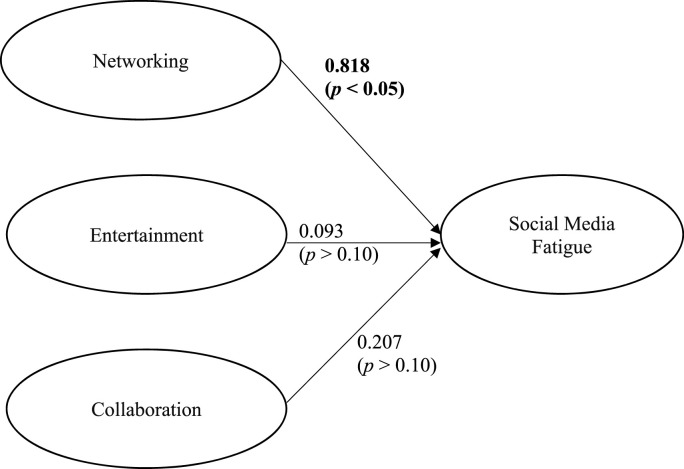
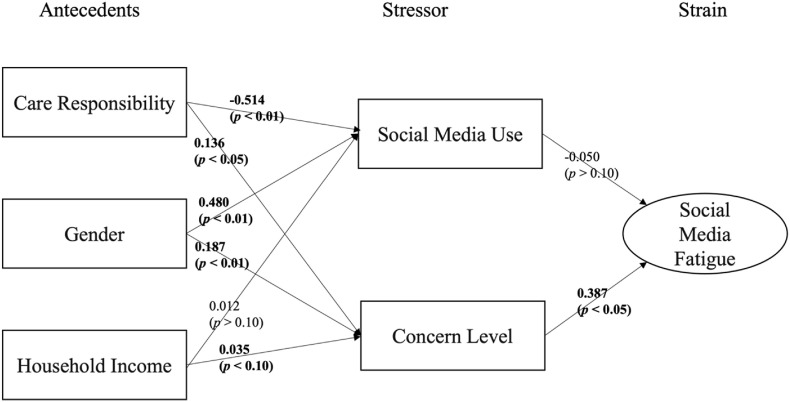
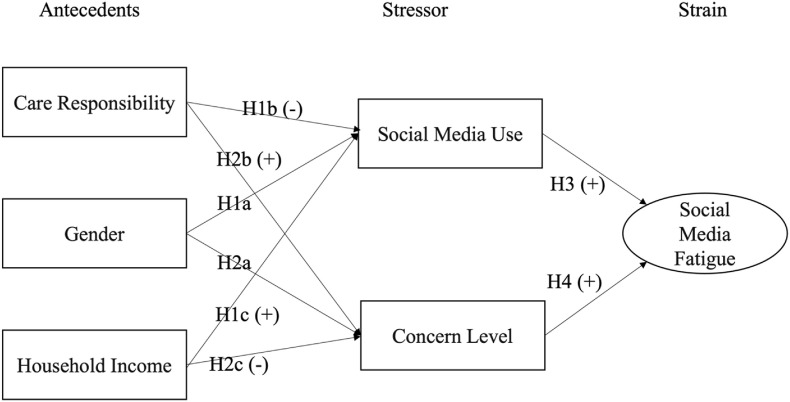
Social networking platforms allow people to connect and socialize online, but the extant research suggests that increased social media (SM) use also leads to fatigue, affecting individual well-being. During the coronavirus (COVID-19) pandemic when millions of people were confined to their homes, SM use surged, posing questions about changes in individual SM use behaviors and effects. Guided by the stressor-strain-outcome framework and SM use research, this study examined the relationship among personal factors (gender, caregiving, income), two stressors (SM use intensity and risk concern about COVID-19), and the strain of SM fatigue. Survey data of 192 U.S. adult SM users were collected in late March of 2020. Our quantitative data analysis shows that SM fatigue increased significantly as individual concern about COVID-19 increased. Meanwhile, gender and caregiving responsibilities significantly impacted SM use intensity. Surprisingly, the predicted effect of SM use intensity on SM fatigue was not supported. Additional factor analysis revealed three motives of SM use (entertainment, networking, and collaboration) and quantitative analysis revealed that only the networking use of SM increased SM fatigue significantly. The results highlight the importance of considering individual risk concern and SM use motives when studying individual SM fatigue during crises.

摘要

社交网络平台使人们能够在网上建立联系和进行社交,但现有研究表明,社交媒体使用的增加也会导致疲劳,影响个人幸福感。在冠状病毒病(COVID-19)大流行期间,数百万人被困在家中,社交媒体的使用激增,这引发了关于个人社交媒体使用行为变化及其影响的问题。本研究以压力源-压力-结果框架和社交媒体使用研究为指导,考察了个人因素(性别、照顾他人、收入)、两种压力源(社交媒体使用强度和对COVID-19的风险担忧)与社交媒体疲劳压力之间的关系。2020年3月下旬收集了192名美国成年社交媒体用户的调查数据。我们的定量数据分析表明,随着个人对COVID-19的担忧增加,社交媒体疲劳显著增加。同时,性别和照顾责任对社交媒体使用强度有显著影响。令人惊讶的是,社交媒体使用强度对社交媒体疲劳的预测效应未得到支持。额外的因素分析揭示了社交媒体使用的三个动机(娱乐、社交和协作),定量分析表明,只有社交媒体的社交使用显著增加了社交媒体疲劳。研究结果凸显了在研究危机期间个人社交媒体疲劳时考虑个人风险担忧和社交媒体使用动机的重要性。
https://cdn.ncbi.nlm.nih.gov/pmc/blobs/6b6f/9300513/6e84609dd3bd/gr4_lrg.jpg
https://cdn.ncbi.nlm.nih.gov/pmc/blobs/6b6f/9300513/38ebb6ea5331/gr1_lrg.jpg
https://cdn.ncbi.nlm.nih.gov/pmc/blobs/6b6f/9300513/00a285e34856/gr2_lrg.jpg
https://cdn.ncbi.nlm.nih.gov/pmc/blobs/6b6f/9300513/f385799673c8/gr3_lrg.jpg
https://cdn.ncbi.nlm.nih.gov/pmc/blobs/6b6f/9300513/6e84609dd3bd/gr4_lrg.jpg
https://cdn.ncbi.nlm.nih.gov/pmc/blobs/6b6f/9300513/38ebb6ea5331/gr1_lrg.jpg
https://cdn.ncbi.nlm.nih.gov/pmc/blobs/6b6f/9300513/00a285e34856/gr2_lrg.jpg
https://cdn.ncbi.nlm.nih.gov/pmc/blobs/6b6f/9300513/f385799673c8/gr3_lrg.jpg
https://cdn.ncbi.nlm.nih.gov/pmc/blobs/6b6f/9300513/6e84609dd3bd/gr4_lrg.jpg

相似文献

1
User characteristics, social media use, and fatigue during the coronavirus pandemic: A stressor-strain-outcome framework.新冠疫情期间的用户特征、社交媒体使用与疲劳:一个压力源-应变-结果框架。
Comput Hum Behav Rep. 2022 Aug;7:100218. doi: 10.1016/j.chbr.2022.100218. Epub 2022 Jul 21.
2
Unveiling the Dynamics: Exploring User Affective and Behavioral Responses to Social Media.揭示动态:探索用户对社交媒体的情感和行为反应。
Behav Sci (Basel). 2024 Jun 25;14(7):529. doi: 10.3390/bs14070529.
3
"Left on read" examining social media users' lurking behavior: an integration of anxiety and social media fatigue.“已读不回”:审视社交媒体用户的潜水行为——焦虑与社交媒体疲劳的综合研究
Front Psychol. 2024 Aug 2;15:1406895. doi: 10.3389/fpsyg.2024.1406895. eCollection 2024.
4
How Differential Dimensions of Social Media Overload Influences Young People's Fatigue and Negative Coping during Prolonged COVID-19 Pandemic? Insights from a Technostress Perspective.社交媒体过载的不同维度如何影响年轻人在长期新冠疫情期间的疲劳和消极应对?来自技术压力视角的见解。
Healthcare (Basel). 2022 Dec 20;11(1):6. doi: 10.3390/healthcare11010006.
5
Information quality, media richness, and negative coping: A daily research during the COVID-19 pandemic.信息质量、媒介丰富度与消极应对:新冠疫情期间的每日研究
Pers Individ Dif. 2021 Jul;176:110774. doi: 10.1016/j.paid.2021.110774. Epub 2021 Feb 19.
6
How compulsive WeChat use and information overload affect social media fatigue and well-being during the COVID-19 pandemic? A stressor-strain-outcome perspective.在新冠疫情期间,强迫性使用微信和信息过载如何影响社交媒体疲劳和幸福感?一个压力源-应变-结果的视角。
Telemat Inform. 2021 Nov;64:101690. doi: 10.1016/j.tele.2021.101690. Epub 2021 Jul 27.
7
An investigation on information quality, media richness, and social media fatigue during the disruptions of COVID-19 pandemic.关于新冠疫情期间信息质量、媒介丰富度和社交媒体疲劳的调查
Curr Psychol. 2023;42(3):2488-2499. doi: 10.1007/s12144-021-02253-x. Epub 2021 Sep 7.
8
Influence of Social Media Platforms on Public Health Protection Against the COVID-19 Pandemic via the Mediating Effects of Public Health Awareness and Behavioral Changes: Integrated Model.社交媒体平台通过公众健康意识和行为变化的中介作用对新冠疫情期间公众健康保护的影响:综合模型
J Med Internet Res. 2020 Aug 19;22(8):e19996. doi: 10.2196/19996.
9
Social Networking Use Across Gender: Its Association with Social Connectedness and Happiness Amidst the COVID-19 Pandemic.新冠疫情期间不同性别的社交网络使用情况:其与社会联系及幸福感的关联
J Technol Behav Sci. 2022;7(3):396-405. doi: 10.1007/s41347-022-00262-6. Epub 2022 Jun 23.
10
"No more COVID-19 messages via social media, please": the mediating role of COVID-19 message fatigue between information overload, message avoidance, and behavioral intention.“请不要再通过社交媒体发送新冠疫情相关信息”:新冠疫情信息疲劳在信息过载、信息回避和行为意图之间的中介作用
Curr Psychol. 2023 Jun 2:1-15. doi: 10.1007/s12144-023-04726-7.

引用本文的文献

1
The internet usage increases fear of infection with Covid-19.互联网使用增加了对感染新冠病毒的恐惧。
Sci Rep. 2025 Feb 10;15(1):4936. doi: 10.1038/s41598-025-88283-y.
2
Global quality scores of Brazilian public health system-related YouTubeTM videos and their users' engagement.巴西公共卫生系统相关YouTube™视频的全球质量评分及其用户参与度。
Braz Oral Res. 2024 Dec 9;38:e099. doi: 10.1590/1807-3107bor-2024.vol38.0099. eCollection 2024.
3
A two-year follow-up: Twitter activity regarding misinformation about spinal manipulation, chiropractic care and boosting immunity during the COVID-19 pandemic.

本文引用的文献

1
Is the Global Pandemic Driving Me Crazy? The Relationship Between Personality Traits, Fear of Missing Out, and Social Media Fatigue During the COVID-19 Pandemic in Nigeria.全球大流行把我逼疯了吗?尼日利亚新冠疫情期间人格特质、错失恐惧和社交媒体疲劳之间的关系。
Int J Ment Health Addict. 2022 Jan 15:1-16. doi: 10.1007/s11469-021-00723-8.
2
Early evidence of the impacts of COVID-19 on minority unemployment.新冠疫情对少数族裔失业影响的早期证据。
J Public Econ. 2020 Dec;192:104287. doi: 10.1016/j.jpubeco.2020.104287. Epub 2020 Sep 14.
3
Social Media Use and Mental Health during the COVID-19 Pandemic: Moderator Role of Disaster Stressor and Mediator Role of Negative Affect.
两年随访:关于新冠疫情期间脊柱推拿、整脊疗法和增强免疫力的错误信息的推特活动。
Chiropr Man Therap. 2023 Jan 23;31(1):4. doi: 10.1186/s12998-022-00469-7.
社交媒体使用与 COVID-19 大流行期间的心理健康:灾难应激源的调节作用和负性情绪的中介作用。
Appl Psychol Health Well Being. 2020 Dec;12(4):1019-1038. doi: 10.1111/aphw.12226. Epub 2020 Sep 17.
4
Immediate Psychological Responses and Associated Factors during the Initial Stage of the 2019 Coronavirus Disease (COVID-19) Epidemic among the General Population in China.中国民众在 2019 年冠状病毒病(COVID-19)疫情初期的即时心理反应及相关因素。
Int J Environ Res Public Health. 2020 Mar 6;17(5):1729. doi: 10.3390/ijerph17051729.
5
To Be Connected or Not To Be Connected? Mobile Messenger Overload, Fatigue, and Mobile Shunning.连接与否?移动即时通讯过载、疲劳与手机回避
Cyberpsychol Behav Soc Netw. 2016 Oct;19(10):579-586. doi: 10.1089/cyber.2016.0236. Epub 2016 Sep 22.
6
Family caregiving and emotional strain: associations with quality of life in a large national sample of middle-aged and older adults.家庭照料与情绪压力:在一个大型全国中年及老年成年人样本中与生活质量的关联
Qual Life Res. 2009 Aug;18(6):679-88. doi: 10.1007/s11136-009-9482-2. Epub 2009 May 7.
7
Fatigue in the workforce of National Health Service Trusts: levels of symptomatology and links with minor psychiatric disorder, demographic, occupational and work role factors.英国国民医疗服务信托机构员工的疲劳:症状水平以及与轻度精神障碍、人口统计学、职业和工作角色因素的关联。
J Psychosom Res. 1997 Jul;43(1):83-92. doi: 10.1016/s0022-3999(97)00019-6.
8
Fatigue mechanisms in cancer patients: developing nursing theory.癌症患者的疲劳机制:护理理论的发展
Oncol Nurs Forum. 1987 Nov-Dec;14(6):17-23.