Simon F. S. Li Marine Science Laboratory, School of Life Sciences, The Chinese University of Hong Kong, Shatin, Hong Kong SAR.
State Key Laboratory of Agrobiotechnology, The Chinese University of Hong Kong, Shatin, Hong Kong SAR.
mBio. 2022 Aug 30;13(4):e0057122. doi: 10.1128/mbio.00571-22. Epub 2022 Jul 26.
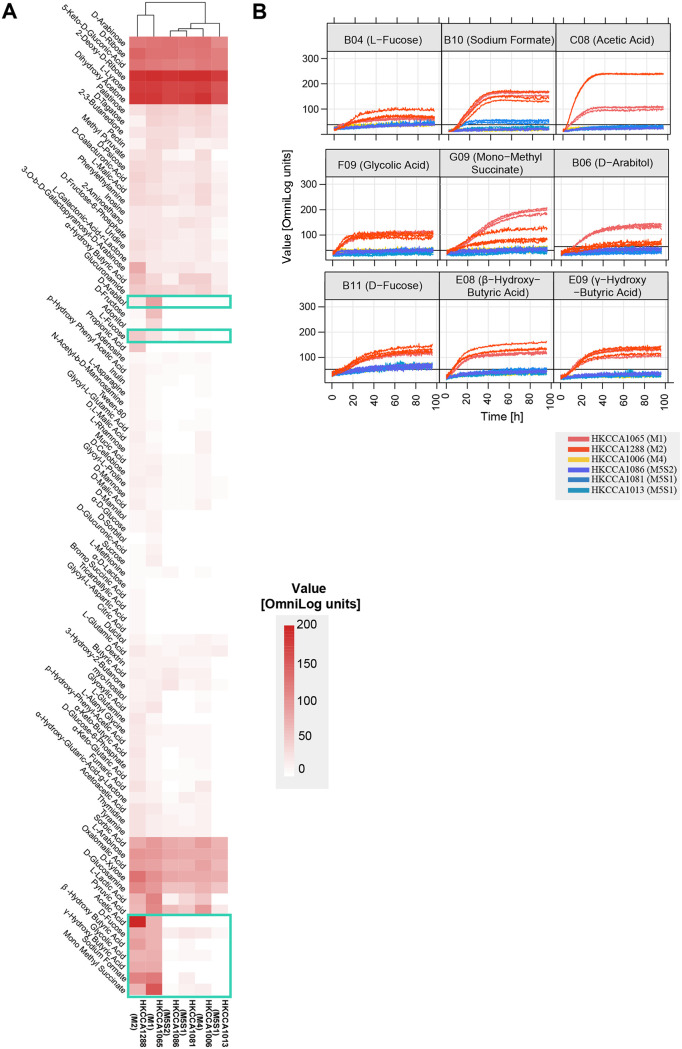
Globally dominant marine bacterioplankton lineages are often limited in metabolic versatility, owing to their extensive genome reductions, and thus cannot take advantage of transient nutrient patches. It is therefore perplexing how the nutrient-poor bulk seawater sustains the pelagic streamlined lineages, each containing numerous populations. Here, we sequenced the genomes of 33 isolates of the recently discovered CHUG lineage (~2.6 Mbp), which have some of the smallest genomes in the globally abundant Roseobacter group (commonly over 4 Mbp). These genome-reduced bacteria were isolated from a transient habitat: seawater surrounding the brown alga, Sargassum hemiphyllum. Population genomic analyses showed that: (i) these isolates, despite sharing identical 16S rRNA genes, were differentiated into several genetically isolated populations through successive speciation events; (ii) only the first speciation event led to the genetic separation of both core and accessory genomes; and (iii) populations resulting from this event are differentiated at many loci involved in carbon utilization and oxygen respiration, corroborated by BiOLOG phenotype microarray assays and oxygen uptake kinetics experiments, respectively. These differentiated traits match well with the dynamic nature of the macroalgal seawater, in which the quantity and quality of carbon sources and the concentration of oxygen likely vary spatially and temporally, though other habitats, like fresh organic aggregates, cannot be ruled out. Our study implies that transient habitats in the overall nutrient-poor ocean can shape the microdiversity and population structure of genome-reduced bacterioplankton lineages. Prokaryotic species, defined with operational thresholds, such as 95% of the whole-genome average nucleotide identity (ANI) or 98.7% similarity of the 16S rRNA gene sequences, commonly contain extensive fine-grained diversity in both the core genome and the accessory genome. However, the ways in which this genomic microdiversity and its associated phenotypic microdiversity are organized and structured is poorly understood, which disconnects microbial diversity and ecosystem functioning. Population genomic approaches that allow this question to be addressed are commonly applied to cultured species because linkages between different loci are necessary but are missing from metagenome-assembled genomes. In the past, these approaches were only applied to easily cultivable bacteria and archaea, which, nevertheless, are often not representative of natural communities. Here, we focus on the recently discovered cluster, CHUG, which are representative in marine bacterioplankton communities and possess some of the smallest genomes in the globally dominant marine Roseobacter group. Despite being over 95% ANI and identical in the 16S rRNA gene, the 33 CHUG genomes we analyzed have undergone multiple speciation events, with the first split event predominantly structuring the genomic diversity. The observed pattern of genomic microdiversity correlates with CHUG members' differential utilization of carbon sources and differential ability to explore low-oxygen niches. The available data are consistent with the idea that brown algae may be home to CHUG, though other habitats, such as fresh organic aggregates, are also possible.
全球占主导地位的海洋细菌谱系通常在代谢多样性方面受到限制,这是由于它们的基因组大量减少,因此无法利用短暂的营养斑块。因此,令人费解的是,营养贫乏的大洋洋水如何维持含有众多种群的浮游流线型谱系。在这里,我们对最近发现的 CHUG 谱系的 33 个分离株的基因组进行了测序(~2.6 Mbp),这些分离株的基因组在全球丰富的玫瑰杆菌群中(通常超过 4 Mbp)属于最小的基因组之一。这些基因组减少的细菌是从一个短暂的栖息地中分离出来的:周围的棕色海藻,马尾藻。种群基因组分析表明:(i)尽管这些分离株共享相同的 16S rRNA 基因,但通过连续的物种形成事件分化成几个遗传隔离的种群;(ii)只有第一次物种形成事件导致核心和辅助基因组的遗传分离;(iii)来自该事件的种群在涉及碳利用和氧呼吸的许多基因座上分化,这与 BiOLOG 表型微阵列测定和氧摄取动力学实验分别得到的结果一致。这些分化的特征与宏观海藻海水中的动态性质非常吻合,其中碳源的数量和质量以及氧气的浓度可能在空间和时间上发生变化,尽管不能排除其他栖息地,如新鲜有机聚集体。我们的研究表明,在整体营养贫乏的海洋中的短暂栖息地可以塑造基因组减少的细菌浮游生物谱系的微观多样性和种群结构。 原核生物物种是根据操作阈值定义的,例如全基因组平均核苷酸同一性(ANI)的 95%或 16S rRNA 基因序列相似度的 98.7%,通常在核心基因组和辅助基因组中都包含广泛的精细粒度多样性。然而,这种基因组微观多样性及其相关表型微观多样性的组织和结构方式尚不清楚,这使得微生物多样性与生态系统功能脱节。通常应用于培养物种的种群基因组方法可以解决这个问题,因为不同基因座之间的联系是必要的,但在宏基因组组装基因组中却缺失。过去,这些方法仅应用于易于培养的细菌和古菌,尽管如此,它们通常不能代表自然群落。在这里,我们专注于最近发现的 CHUG 簇,它在海洋细菌浮游生物群落中具有代表性,并且在全球占主导地位的海洋玫瑰杆菌群中拥有一些最小的基因组。尽管我们分析的 33 个 CHUG 基因组的 ANI 超过 95%,并且 16S rRNA 基因完全相同,但它们已经经历了多次物种形成事件,第一次分裂事件主要构建了基因组多样性。观察到的基因组微观多样性模式与 CHUG 成员对碳源的不同利用和探索低氧小生境的不同能力相关。可用数据与以下观点一致,即褐藻可能是 CHUG 的家园,尽管其他栖息地,如新鲜有机聚集体,也有可能。