School of Pharmacy, Lebanese International University, Bekaa, Lebanon.
School of Pharmacy, Lebanese International University, Beirut, Lebanon.
BMC Nephrol. 2022 Jul 26;23(1):266. doi: 10.1186/s12882-022-02889-2.
Good knowledge and early identification of chronic kidney disease (CKD) can help in preventing disease progression in its early stages and reducing undesired outcomes. The aim of the current study was to assess the level of public knowledge about CKD, determine predictors of better knowledge, and to construct and validate a CKD knowledge scale for public health assessment and research use.
A community-based cross-sectional study was conducted using an electronic self-administered questionnaire. All people living in Lebanon and being 18 years of age and above were considered eligible for recruitment. CKD knowledge was assessed by a 37-item scale that was constructed by principal component analysis and then validated. The score of the CKD knowledge scale was computed from the extracted factors. A multivariable binomial logistic regression model evaluated the sociodemographic and clinical predictors of the knowledge score.
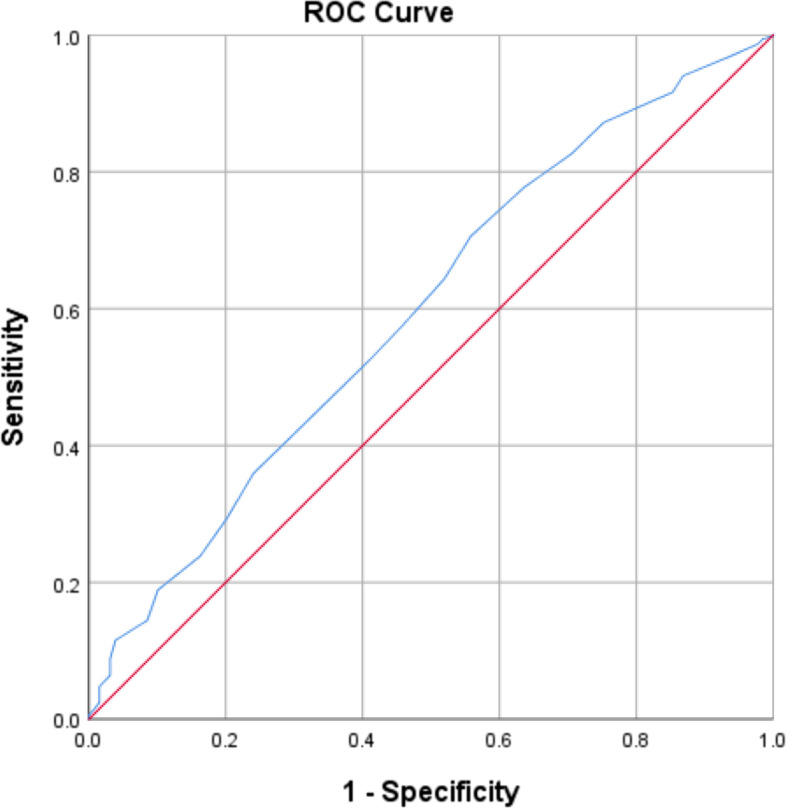
A total of 1308 participants were included. The scale items converged over 9 factors with Eigenvalue greater than 1 and explaining 53.26% of the total variance, and the total scale had a high Cronbach's alpha of 0.804. All items of the scale significantly correlated with the full scale with correlation coefficients ranging from 0.082 to 0.558. The ROC curve analysis determined an optimal cutoff point of better knowledge at 47.5 with 70.6% sensitivity and 44.2% specificity. The CKD knowledge score had a median of 51.00 (IQR 47.00-55.00). Higher knowledge score was significantly associated with old age (ORa = 1.018, 95% CI 1.006-1.030, P = 0.003),, occupation (ORa = 3.919, 95% CI 2.107-7.288, P < 0.001), and recent renal function assessment (ORa = 2.314, 95% CI 1.532-3.495, P < 0.001). However, a lower knowledge score was significantly associated with lower level of education (ORa = 0.462, 95% CI 0.327-0.653, P < 0.001).
A reliable tool to assess public knowledge and awareness about CKD was developed and validated. The overall knowledge was good, however, important gaps in CKD awareness were detected in some areas and subpopulations. Therefore, public health stakeholders need to implement targeted CKD educational activities to minimize the disease burden.
良好的知识和对慢性肾脏病(CKD)的早期识别有助于在疾病早期阶段预防疾病进展并减少不良后果。本研究的目的是评估公众对 CKD 的知识水平,确定更好知识的预测因素,并构建和验证用于公共卫生评估和研究用途的 CKD 知识量表。
使用电子自我管理问卷进行基于社区的横断面研究。所有居住在黎巴嫩且年龄在 18 岁及以上的人都被认为有资格参加。CKD 知识通过由主成分分析构建的 37 项量表进行评估,然后进行验证。CKD 知识量表的评分是从提取的因子中计算出来的。多变量二项逻辑回归模型评估了知识评分的社会人口统计学和临床预测因素。
共纳入 1308 名参与者。量表项目集中在 9 个因子上,特征值大于 1,解释了总方差的 53.26%,总量表的克朗巴赫α系数为 0.804。量表的所有项目与全量表的相关性均显著,相关系数范围为 0.082 至 0.558。ROC 曲线分析确定更好的知识的最佳截断点为 47.5,灵敏度为 70.6%,特异性为 44.2%。CKD 知识评分中位数为 51.00(IQR 47.00-55.00)。更高的知识评分与年龄较大(ORa=1.018,95%CI 1.006-1.030,P=0.003)、职业(ORa=3.919,95%CI 2.107-7.288,P<0.001)和最近的肾功能评估(ORa=2.314,95%CI 1.532-3.495,P<0.001)显著相关。然而,较低的知识评分与较低的教育水平显著相关(ORa=0.462,95%CI 0.327-0.653,P<0.001)。
开发并验证了一种可靠的工具来评估公众对 CKD 的知识和意识。总体知识水平良好,但在某些领域和亚人群中发现了对 CKD 意识的重要差距。因此,公共卫生利益相关者需要实施有针对性的 CKD 教育活动,以最大限度地减少疾病负担。