Department of Obstetrics and Gynecology, University of Chicago, Chicago, IL 60637, USA.
Department of Biology, Yazd University, Yazd 8915818411, Iran.
Cells. 2022 Jul 10;11(14):2160. doi: 10.3390/cells11142160.
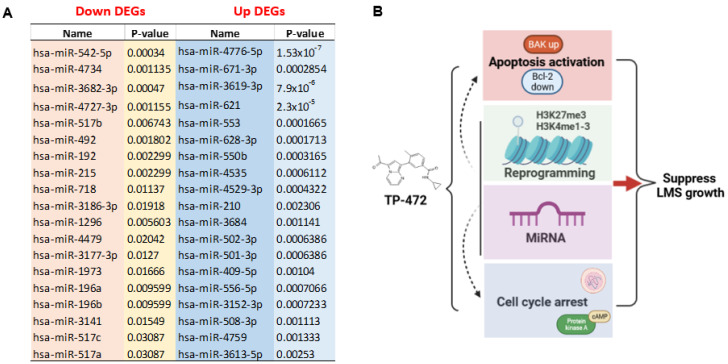
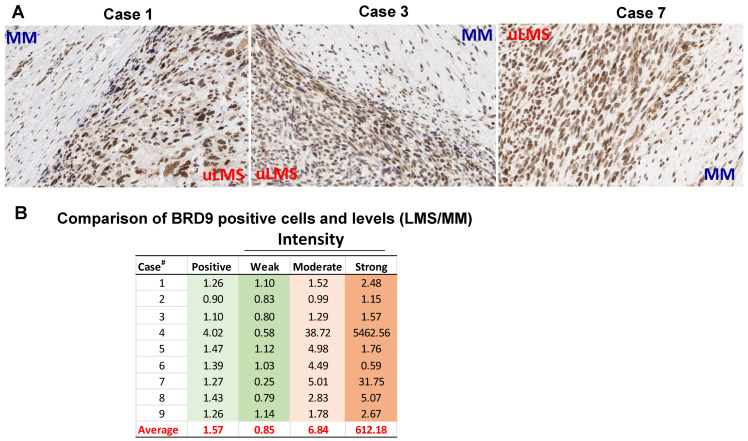
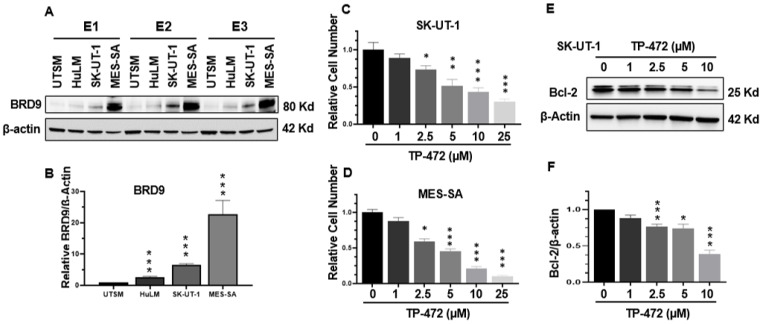
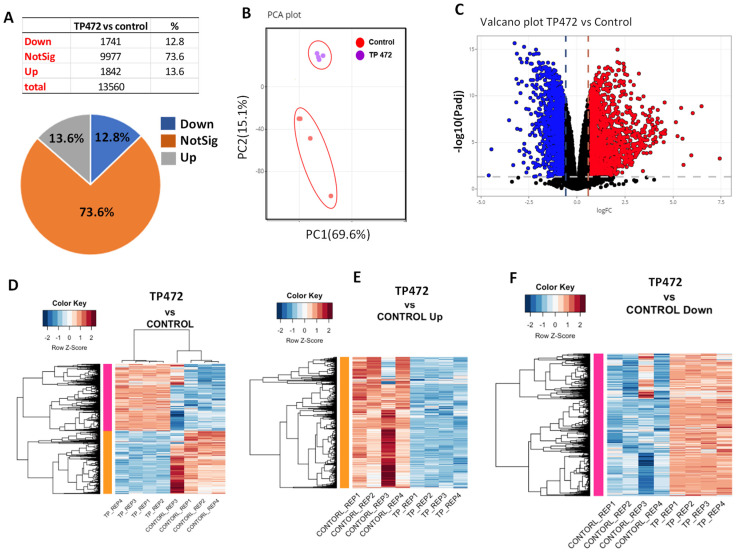
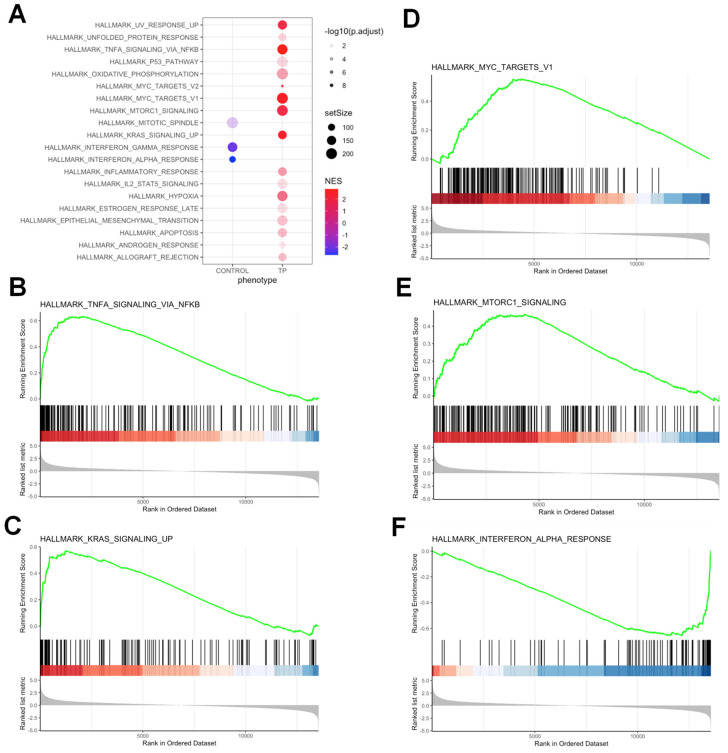
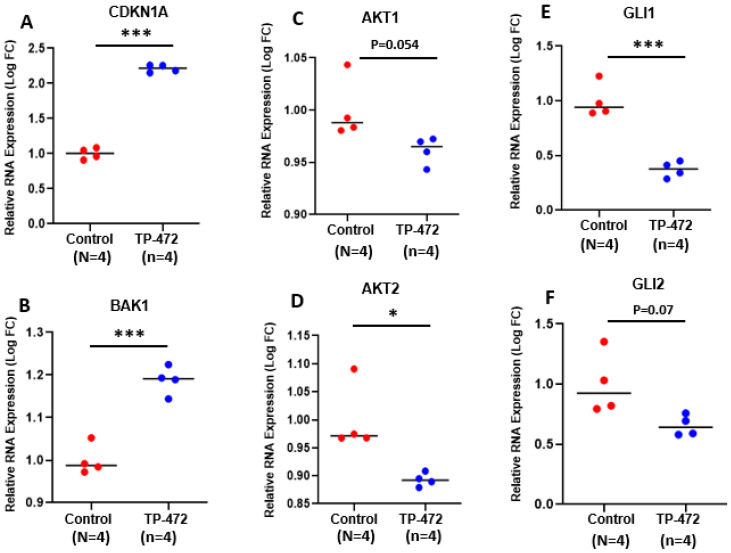
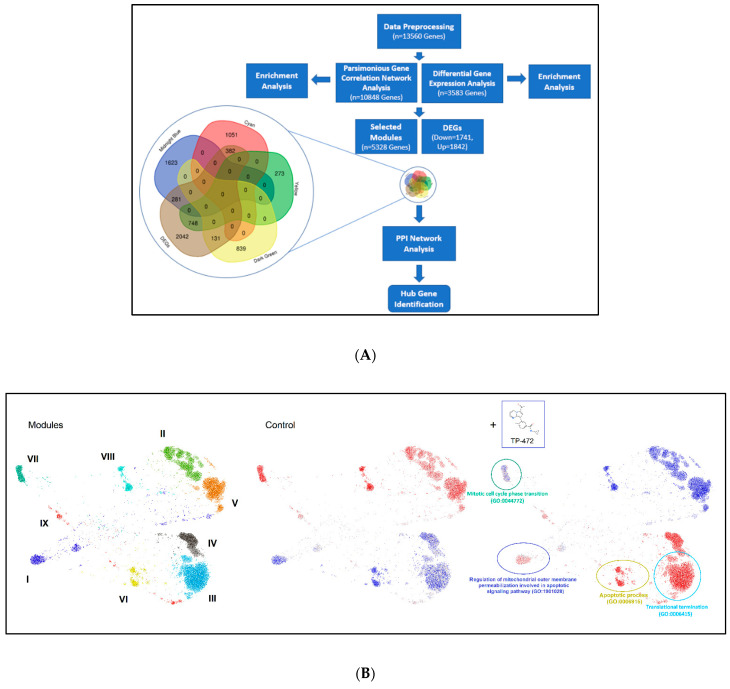
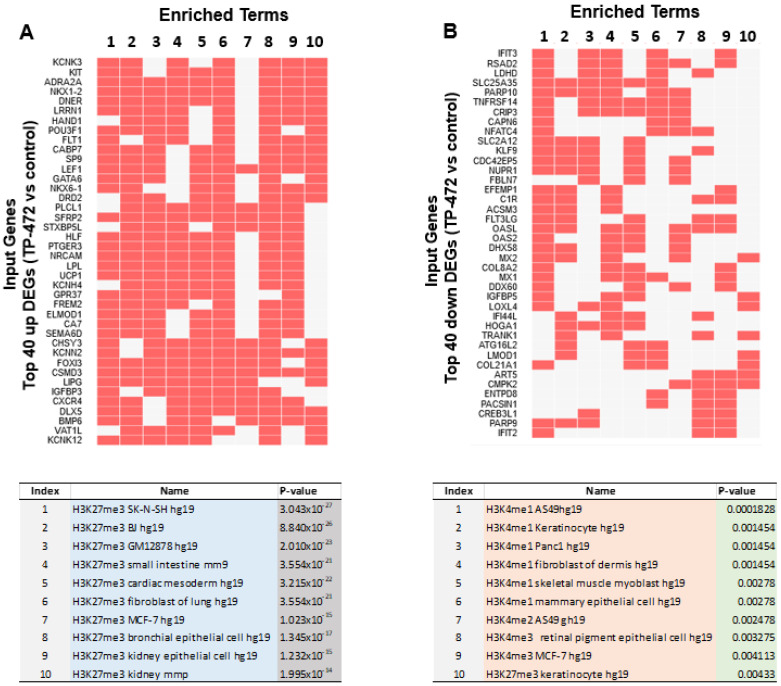
Uterine leiomyosarcoma (uLMS) is the most common type of uterine sarcoma associated with poor prognosis, high rates of recurrence, and metastasis. There is currently limited information about uLMS molecular mechanisms of origin and development. Bromodomain (BRD)-containing proteins are involved in many biological processes, most notably epigenetic regulation of transcription, and BRD protein dysfunction has been linked to many diseases including tumorigenesis. However, the role of BRD proteins in the pathogenesis of uLMS is unknown. Here, we show for the first time that BRD9 is aberrantly overexpressed in uLMS tissues compared to adjacent myometrium. BRD9 expression is also upregulated in uLMS cell lines compared to benign uterine fibroid and myometrium cell lines. Inhibition of BRD9 using the specific inhibitor (TP-472) suppressed uLMS cell proliferation via inducing apoptosis and cell cycle arrest. To further characterize the mechanistic basis for TP-472 inhibition of uLMS cell growth, we performed a comparative RNA-seq analysis of vehicle-treated and TP-472-treated uLMS cells ( = 4 each). Bioinformatics analysis revealed that TP-472 treatment distinctly altered the uLMS cell transcriptome. Gene set enrichment analysis identified critical pathways altered by BRD9 inhibition, including interferon-alpha response, KRAS signaling, MYC targets, TNF-a signaling via NFkB, and MTORC1 signaling. Parsimonious gene correlation network analysis identified nine enriched modules, including cell cycle and apoptosis modules. Moreover, the ENCODE Histone Modifications gene set and TargetScan microRNA analysis in Enrichr suggested that TP-472-induced BRD9 inhibition may alter the uLMS cell transcriptome by reprograming the oncogenic epigenome and inducing miRNA-mediated gene regulation. Therefore, BRD9 constitutes a specific vulnerability in malignant uLMS, and targeting non-BET BRD proteins in uLMS may provide a promising and novel strategy for treating patients with this aggressive uterine cancer.
子宫平滑肌肉瘤(uLMS)是与预后不良、高复发率和转移率相关的最常见的子宫肉瘤类型。目前关于 uLMS 起源和发展的分子机制的信息有限。含溴结构域(BRD)的蛋白参与许多生物学过程,尤其是转录的表观遗传调控,BRD 蛋白功能障碍与许多疾病有关,包括肿瘤发生。然而,BRD 蛋白在 uLMS 发病机制中的作用尚不清楚。在这里,我们首次表明,与相邻的子宫肌层相比,BRD9 在 uLMS 组织中异常过表达。与良性子宫肌瘤和子宫肌层细胞系相比,BRD9 在 uLMS 细胞系中的表达也上调。使用特异性抑制剂(TP-472)抑制 BRD9 可通过诱导细胞凋亡和细胞周期停滞来抑制 uLMS 细胞增殖。为了进一步表征 TP-472 抑制 uLMS 细胞生长的机制基础,我们对用载体和 TP-472 处理的 uLMS 细胞(每组各 4 个)进行了比较 RNA-seq 分析。生物信息学分析显示,TP-472 处理明显改变了 uLMS 细胞的转录组。基因集富集分析确定了 BRD9 抑制改变的关键途径,包括干扰素-α反应、KRAS 信号、MYC 靶标、通过 NFkB 的 TNF-a 信号和 MTORC1 信号。简约基因相关网络分析确定了九个富集模块,包括细胞周期和凋亡模块。此外,ENCODE 组蛋白修饰基因集和 Enrichr 中的 TargetScan microRNA 分析表明,TP-472 诱导的 BRD9 抑制可能通过重新编程致癌表观基因组并诱导 miRNA 介导的基因调控来改变 uLMS 细胞的转录组。因此,BRD9 构成恶性 uLMS 的特异性脆弱性,靶向 uLMS 中的非 BET BRD 蛋白可能为治疗这种侵袭性子宫癌患者提供一种有前途的新策略。