
经导管主动脉瓣置换术(TAVR)期间程序性卒中的临床预测因素及对栓子保护装置的影响:多中心经导管主动脉瓣置换术住院卒中(TASK)研究结果
Clinical Predictors for Procedural Stroke and Implications for Embolic Protection Devices during TAVR: Results from the Multicenter Transcatheter Aortic Valve Replacement In-Hospital Stroke (TASK) Study.
作者信息
Berkovitch Anat, Segev Amit, Maor Elad, Sedaghat Alexander, Finkelstein Ariel, Saccocci Matteo, Kornowski Ran, Latib Azeem, De La Torre Hernandez Jose M, Søndergaard Lars, Mylotte Darren, Van Royen Niels, Zaman Azfar G, Robert Pierre, Sinning Jan-Malte, Steinvil Arie, Maisano Francesco, Orvin Katia, Iannopollo Gianmarco, Lee Dae-Hyun, De Backer Ole, Mercanti Federico, van der Wulp Kees, Shome Joy, Tchétché Didier, Barbash Israel M
机构信息
Interventional Cardiology Unit, Leviev Heart and Vascular Center, Chaim Sheba Medical Center, Ramat Gan 5262000, Israel.
Sackler School of Medicine, Tel-Aviv University, Tel Aviv 69978, Israel.
出版信息
J Pers Med. 2022 Jun 28;12(7):1056. doi: 10.3390/jpm12071056.
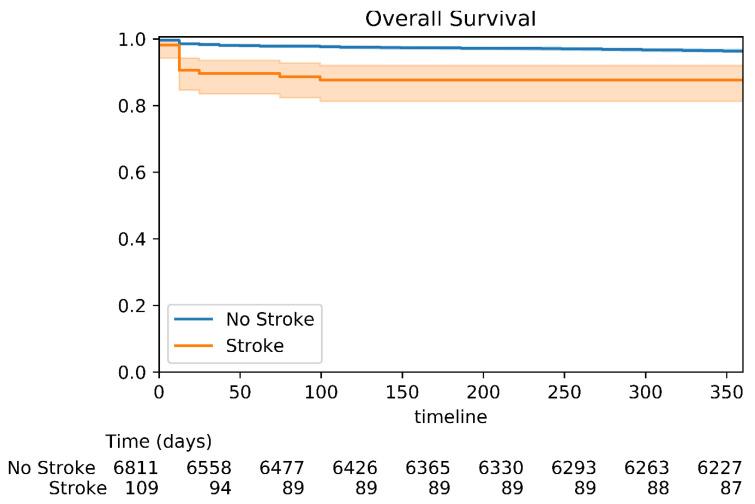
Background: Data to support the routine use of embolic protection devices for stroke prevention during transcatheter aortic valve replacement (TAVR) are controversial. Identifying patients at high risk for peri-procedural cerebrovascular events may facilitate effective patient selection for embolic protection devices during TAVR. Aim: To generate a risk score model for stratifying TAVR patients according to peri-procedural cerebrovascular events risk. Methods and results: A total of 8779 TAVR patients from 12 centers worldwide were included. Peri-procedural cerebrovascular events were defined as an ischemic stroke or a transient ischemic attack occurring ≤24 h from TAVR. The peri-procedural cerebrovascular events rate was 1.4% (n = 127), which was independently associated with 1-year mortality (hazards ratio (HR) 1.78, 95% confidence interval (CI) 1.06−2.98, p < 0.028). The TASK risk score parameters were history of stroke, use of a non-balloon expandable valve, chronic kidney disease, and peripheral vascular disease, and each parameter was assigned one point. Each one-point increment was associated with a significant increase in peri-procedural cerebrovascular events risk (OR 1.96, 95% CI 1.56−2.45, p < 0.001). The TASK score was dichotomized into very-low, low, intermediate, and high (0, 1, 2, 3−4 points, respectively). The high-risk TASK score group (OR 5.4, 95% CI 2.06−14.16, p = 0.001) was associated with a significantly higher risk of peri-procedural cerebrovascular events compared with the low TASK score group. Conclusions: The proposed novel TASK risk score may assist in the pre-procedural risk stratification of TAVR patients for peri-procedural cerebrovascular events.
背景
支持在经导管主动脉瓣置换术(TAVR)期间常规使用栓子保护装置预防中风的数据存在争议。识别围手术期脑血管事件高危患者可能有助于在TAVR期间有效选择适合使用栓子保护装置的患者。目的:生成一个风险评分模型,用于根据围手术期脑血管事件风险对TAVR患者进行分层。方法和结果:纳入了来自全球12个中心的8779例TAVR患者。围手术期脑血管事件定义为在TAVR后≤24小时内发生的缺血性中风或短暂性脑缺血发作。围手术期脑血管事件发生率为1.4%(n = 127),这与1年死亡率独立相关(风险比(HR)1.78,95%置信区间(CI)1.06 - 2.98,p < 0.028)。TASK风险评分参数为中风病史、使用非球囊扩张瓣膜、慢性肾脏病和外周血管疾病,每个参数计1分。每增加1分与围手术期脑血管事件风险显著增加相关(比值比(OR)1.96,95% CI 1.56 - 2.45,p < 0.001)。TASK评分分为极低、低、中、高(分别为0、1、2、3 - 4分)。与低TASK评分组相比,高风险TASK评分组(OR 5.4,95% CI 2.06 - 14.16,p = 0.001)围手术期脑血管事件风险显著更高。结论:所提出的新型TASK风险评分可能有助于对TAVR患者进行围手术期脑血管事件的术前风险分层。


 Zotero 插件