Peruri Alekhya, Morgan Alexandra, D'Souza Alida, Mellon Bridget, Hung Carey W, Kayal Gabriella, Shin Haejung, Nguyen Kim, Zahed Malek, Yount Mason, Ellis Reilly, Wynne Taylor, Fritz Virginia, Simmons Zachary, Roballo Kelly C S
Biomedical Affairs and Research, Edward Via College of Osteopathic Medicine, 2265 Kraft Drive, Blacksburg, VA 24060, USA.
Department of Biomedical Sciences and Pathobiology, Virginia Maryland College of Veterinary Medicine, Virginia Tech, 1410 Prices Fork, Blacksburg, VA 24060, USA.
Life (Basel). 2022 Jul 15;12(7):1057. doi: 10.3390/life12071057.
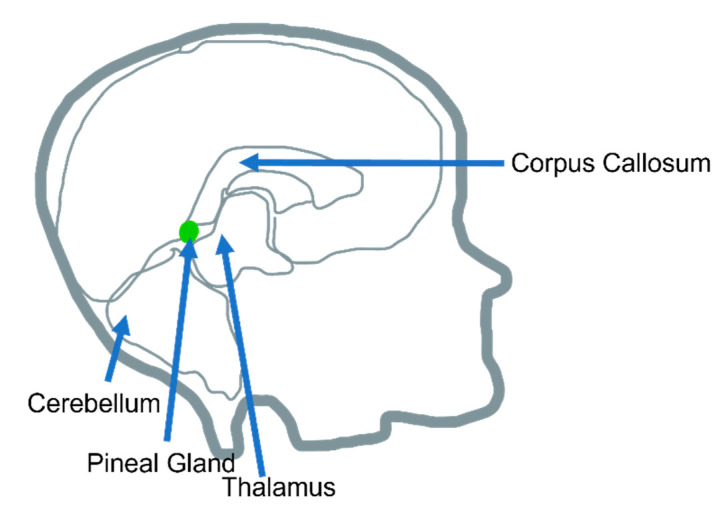
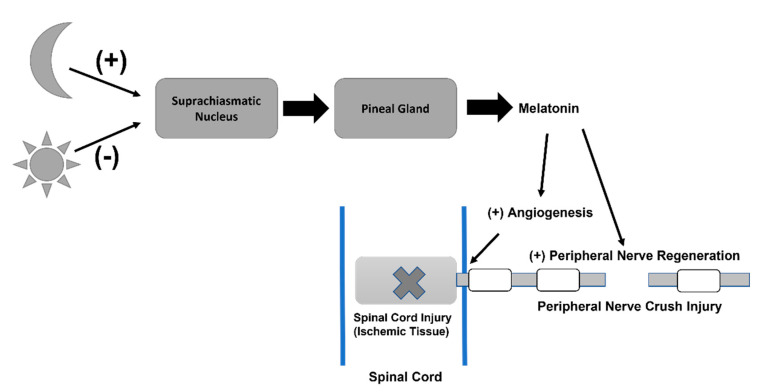
This review demonstrates current literature on pineal gland physiology, pathology, and animal model experiments to concisely explore future needs in research development with respect to pineal gland function and neuro-regenerative properties. The pineal gland plays an integral role in sleep and recovery by promoting physiologic circadian rhythms via production and release of melatonin. Yet, the current literature shows that the pineal gland has neuroprotective effects that modulate both peripheral and central nerve injuries through several direct and indirect mechanisms, such as angiogenesis and induction of growth factors and anti-inflammatory mediators. Animal models have also shown correlations between pineal gland function and metabolic homeostasis. Studies have shown that a functional pineal gland is essential in preventing and slowing the progression of certain diseases such as diabetes, osteoporosis, vertebral osteoarthritis, and neurodegenerative processes. Lastly, the array of cell culturing methods and animal models that can be used to further develop the study of pineal gland function and nervous system injury were reviewed.
本综述展示了关于松果体生理学、病理学及动物模型实验的当前文献,以简要探讨在松果体功能和神经再生特性方面未来研究发展的需求。松果体通过分泌和释放褪黑素促进生理昼夜节律,在睡眠和恢复过程中发挥不可或缺的作用。然而,当前文献表明,松果体具有神经保护作用,可通过多种直接和间接机制,如血管生成以及生长因子和抗炎介质的诱导,调节外周和中枢神经损伤。动物模型也显示了松果体功能与代谢稳态之间的关联。研究表明,功能性松果体对于预防和减缓某些疾病(如糖尿病、骨质疏松症、椎体骨关节炎和神经退行性过程)的进展至关重要。最后,综述了可用于进一步开展松果体功能和神经系统损伤研究的一系列细胞培养方法和动物模型。