Monti Hughes Andrea, Goldfinger Jessica A, Palmieri Mónica A, Ramos Paula, Santa Cruz Iara S, De Leo Luciana, Garabalino Marcela A, Thorp Silvia I, Curotto Paula, Pozzi Emiliano C C, Kawai Kazuki, Sato Shinichi, Itoiz María E, Trivillin Verónica A, Guidobono Juan S, Nakamura Hiroyuki, Schwint Amanda E
Department of Radiobiology, National Atomic Energy Commission, Av. General Paz 1499, San Martin, Buenos Aires B1650KNA, Argentina.
National Scientific and Technical Research Council (CONICET), Ciudad Autónoma de Buenos Aires C1425FQB, Argentina.
Life (Basel). 2022 Jul 20;12(7):1082. doi: 10.3390/life12071082.
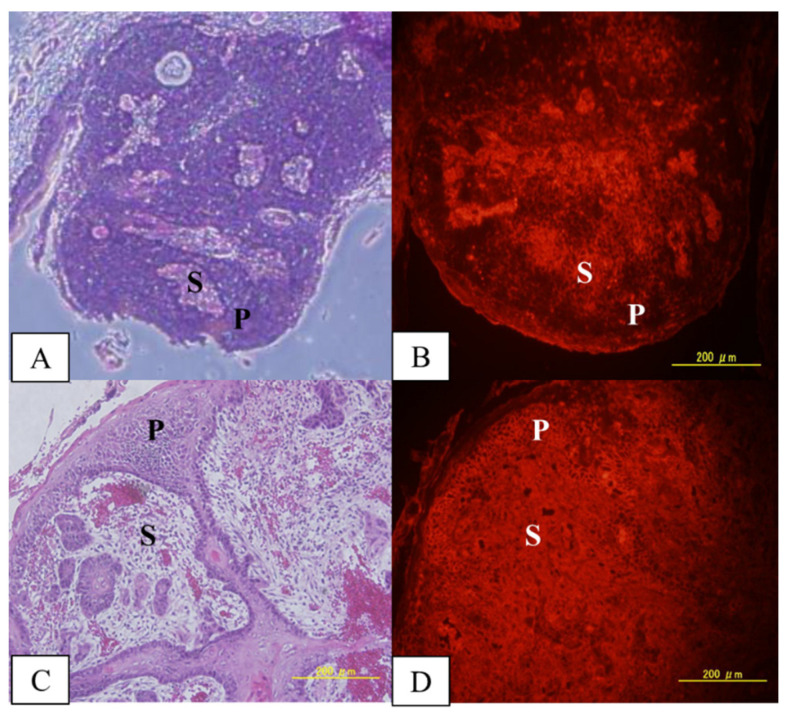
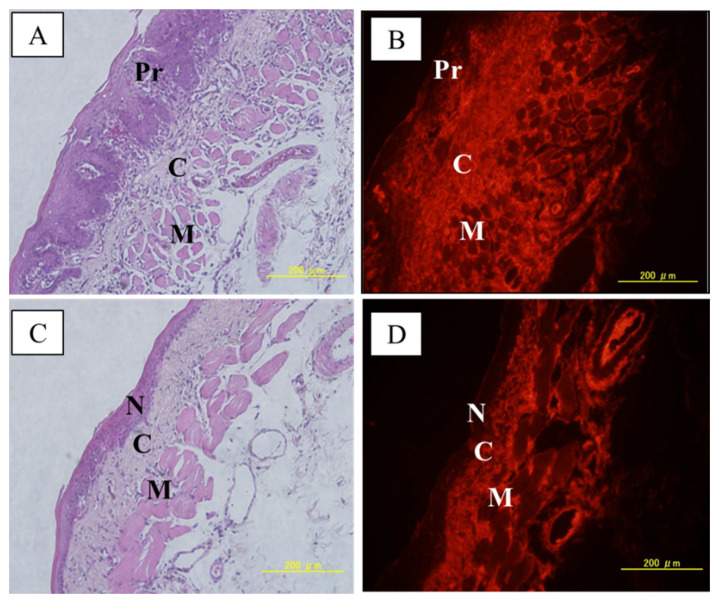
BNCT (Boron Neutron Capture Therapy) is a tumor-selective particle radiotherapy that combines preferential boron accumulation in tumors and neutron irradiation. Although -boronophenylalanine (BPA) has been clinically used, new boron compounds are needed for the advancement of BNCT. Based on previous studies in colon tumor-bearing mice, in this study, we evaluated MID:BSA (maleimide-functionalized -dodecaborate conjugated to bovine serum albumin) biodistribution and MID:BSA/BNCT therapeutic effect on tumors and associated radiotoxicity in the hamster cheek pouch oral cancer model.
Biodistribution studies were performed at 30 mg B/kg and 15 mg B/kg (12 h and 19 h post-administration). MID:BSA/BNCT (15 mg B/kg, 19 h) was performed at three different absorbed doses to precancerous tissue.
MID:BSA 30 mg B/kg protocol induced high BSA toxicity. MID:BSA 15 mg B/kg injected at a slow rate was well-tolerated and reached therapeutically useful boron concentration values in the tumor and tumor/normal tissue ratios. The 19 h protocol exhibited significantly lower boron concentration values in blood. MID:BSA/BNCT exhibited a significant tumor response vs. the control group with no significant radiotoxicity.
MID:BSA/BNCT would be therapeutically useful to treat oral cancer. BSA toxicity is a consideration when injecting a compound conjugated to BSA and depends on the animal model studied.
硼中子俘获疗法(BNCT)是一种肿瘤选择性粒子放疗方法,它将肿瘤中硼的优先积聚与中子照射相结合。尽管硼苯丙氨酸(BPA)已在临床上使用,但BNCT的发展需要新的硼化合物。基于先前对荷瘤结肠小鼠的研究,在本研究中,我们评估了马来酰亚胺功能化的十二硼酸盐与牛血清白蛋白共轭物(MID:BSA)在仓鼠颊囊口腔癌模型中的生物分布、MID:BSA/BNCT对肿瘤的治疗效果以及相关的放射毒性。
在30mg硼/千克和15mg硼/千克(给药后12小时和19小时)进行生物分布研究。以三种不同的吸收剂量对癌前组织进行MID:BSA/BNCT(15mg硼/千克,19小时)治疗。
MID:BSA 30mg硼/千克方案诱导了较高的牛血清白蛋白毒性。以缓慢速率注射的MID:BSA 15mg硼/千克耐受性良好,在肿瘤中达到了治疗有用的硼浓度值以及肿瘤/正常组织比率。19小时方案在血液中的硼浓度值显著较低。MID:BSA/BNCT与对照组相比表现出显著的肿瘤反应,且无明显的放射毒性。
MID:BSA/BNCT对治疗口腔癌具有治疗价值。注射与牛血清白蛋白共轭的化合物时,牛血清白蛋白毒性是一个需要考虑的因素,并且取决于所研究的动物模型。