Li Kai, Yuan Feng, Hu Yinghui, Du Yongbin, Chen Wei, Lan Chunyun
School of Instrumentation Science and Engineering, Harbin Institute of Technology, Harbin 150001, China.
Beijing Institute of Aerospace Automatic Control, Beijing 100089, China.
Sensors (Basel). 2022 Jul 7;22(14):5110. doi: 10.3390/s22145110.
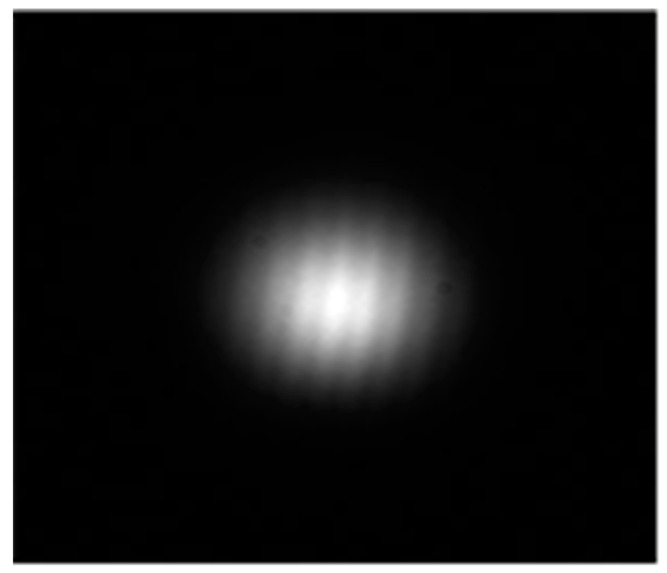
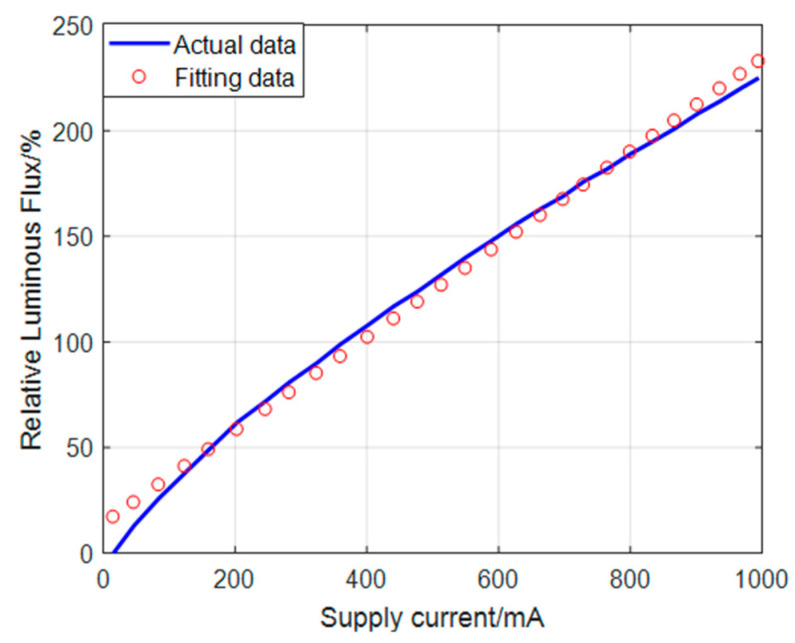
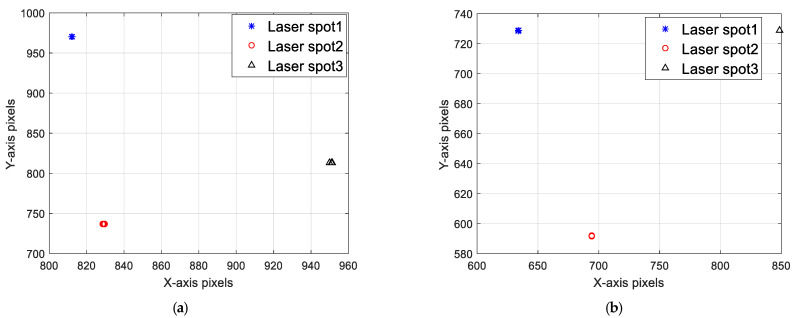
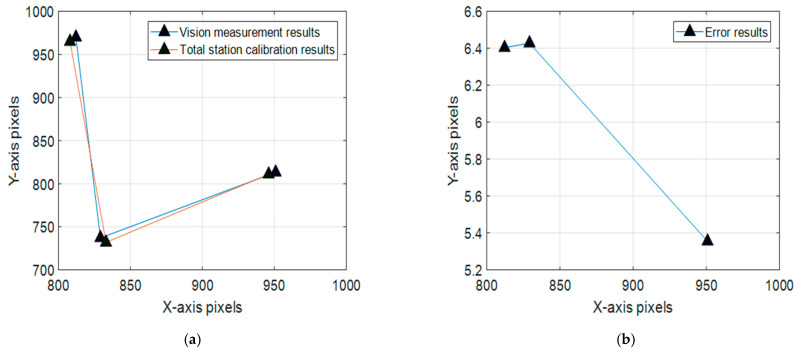
The relative positioning precisions of coordinate points is an important indicator that affects the final accuracy in the visual measurement system of space cooperative targets. Many factors, such as measurement methods, environmental conditions, data processing principles and equipment parameters, are supposed to influence the cooperative target's acquisition and determine the precision of the cooperative target's position in a ground simulation experiment with laser projected spots on parallel screens. To overcome the precision insufficiencies of cooperative target measurement, the factors of the laser diode supply current and charge couple device (CCD) camera exposure time are studied in this article. On the hypothesis of the optimal experimental conditions, the state equations under the image coordinates' system that describe the laser spot position's variation are established. The novel optimizing method is proposed by taking laser spot position as state variables, diode supply current and exposure time as controllable variables, calculating the optimal controllable variables through intersecting the focal spot centroid line and the 3-D surface, and avoiding the inconvenience of solving nonlinear equations. The experiment based on the new algorithm shows that the optimal solution can guarantee the focal spot's variation range in 5-10 pixels under image coordinates' system equivalent to the space with a 3 m distance and 0.6-1.2 mm positioning accuracy.
坐标点的相对定位精度是影响空间合作目标视觉测量系统最终精度的一个重要指标。在平行屏幕上进行激光投射光斑的地面模拟实验中,许多因素,如测量方法、环境条件、数据处理原理和设备参数,都被认为会影响合作目标的获取,并决定合作目标位置的精度。为了克服合作目标测量精度不足的问题,本文研究了激光二极管供电电流和电荷耦合器件(CCD)相机曝光时间等因素。在最优实验条件的假设下,建立了图像坐标系下描述激光光斑位置变化的状态方程。提出了一种新颖的优化方法,以激光光斑位置为状态变量,二极管供电电流和曝光时间为可控变量,通过焦点质心线与三维曲面相交来计算最优可控变量,避免了求解非线性方程的不便。基于新算法的实验表明,在图像坐标系下,最优解能够保证光斑的变化范围在5 - 10像素以内,相当于在3米距离的空间中具有0.6 - 1.2毫米的定位精度。