Burastero Giulia Jole, Orlando Gabriella, Santoro Antonella, Menozzi Marianna, Franceschini Erica, Bedini Andrea, Cervo Adriana, Faltoni Matteo, Bacca Erica, Biagioni Emanuela, Coloretti Irene, Melegari Gabriele, Maccieri Jessica, Busani Stefano, Bertellini Elisabetta, Girardis Massimo, Ferrarini Giulia, Rofrano Laura, Sarti Mario, Mussini Cristina, Meschiari Marianna
Department of Infectious Diseases, Azienda Ospedaliero-Universitaria of Modena, 41124 Modena, Italy.
Department of Anaesthesia and Intensive Care, Azienda Ospedaliero-Universitaria of Modena, 41124 Modena, Italy.
Antibiotics (Basel). 2022 Jul 26;11(8):1007. doi: 10.3390/antibiotics11081007.
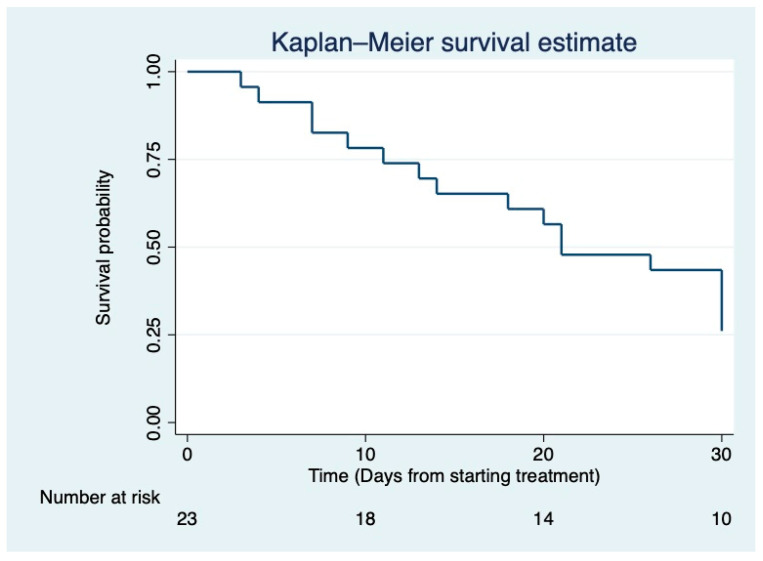
Ventilator-associated pneumonia (VAP) in critically ill patients with COVID-19 represents a very huge global threat due to a higher incidence rate compared to non-COVID-19 patients and almost 50% of the 30-day mortality rate. was the first pathogen involved but uncommon non-fermenter gram-negative organisms such as and have emerged as other potential etiological causes. Against carbapenem-resistant gram-negative microorganisms, Ceftazidime/avibactam (CZA) is considered a first-line option, even more so in case of a ceftolozane/tazobactam resistance or shortage. The aim of this report was to describe our experience with CZA in a case series of COVID-19 patients hospitalized in the ICU with VAP due to difficult-to-treat (DTT) , , and and to compare it with data published in the literature. A total of 23 patients were treated from February 2020 to March 2022: 19/23 (82%) VAPs were caused by spp. (16/19 DTT), 2 by , and 6 by ; 12/23 (52.1%) were polymicrobial. Septic shock was diagnosed in 65.2% of the patients and VAP occurred after a median of 29 days from ICU admission. CZA was prescribed as a combination regimen in 86% of the cases, with either fosfomycin or inhaled amikacin or cotrimoxazole. Microbiological eradication was achieved in 52.3% of the cases and the 30-day overall mortality rate was 14/23 (60.8%). Despite the high mortality of critically ill COVID-19 patients, CZA, especially in combination therapy, could represent a valid treatment option for VAP due to DTT non-fermenter gram-negative bacteria, including uncommon pathogens such as and .
与非新冠肺炎患者相比,新冠肺炎重症患者的呼吸机相关性肺炎(VAP)发病率更高,30天死亡率近50%,这对全球构成了巨大威胁。 是最初涉及的病原体,但罕见的非发酵革兰氏阴性菌如 和 已成为其他潜在病因。对于耐碳青霉烯类革兰氏阴性微生物,头孢他啶/阿维巴坦(CZA)被视为一线选择,在头孢洛扎/他唑巴坦耐药或短缺的情况下更是如此。本报告的目的是描述我们在一系列因难治性(DTT) 、 和 导致VAP而入住重症监护病房(ICU)的新冠肺炎患者中使用CZA的经验,并将其与文献中公布的数据进行比较。2020年2月至2022年3月共治疗了23例患者:23例中有19例(82%)VAP由 菌属引起(19例中有16例为DTT),2例由 引起,6例由 引起;23例中有12例(52.1%)为混合微生物感染。65.2%的患者被诊断为感染性休克,VAP发生在入住ICU后的中位时间为29天。86%的病例中CZA被作为联合用药方案,与磷霉素、吸入用阿米卡星或复方新诺明联合使用。52.3%的病例实现了微生物清除,30天总死亡率为23例中的14例(60.8%)。尽管新冠肺炎重症患者死亡率很高,但CZA,尤其是联合治疗,可能是治疗因DTT非发酵革兰氏阴性菌(包括 和 等罕见病原体)导致的VAP的有效治疗选择。