Park Byung-Yong, Tachi-Duprat Melanie, Ihewulezi Chibuike, Devotta Arun, Saint-Jeannet Jean-Pierre
Department of Molecular Pathobiology, College of Dentistry, New York University, 345 East 24th Street, New York, NY 10010, USA.
J Dev Biol. 2022 Jul 8;10(3):29. doi: 10.3390/jdb10030029.
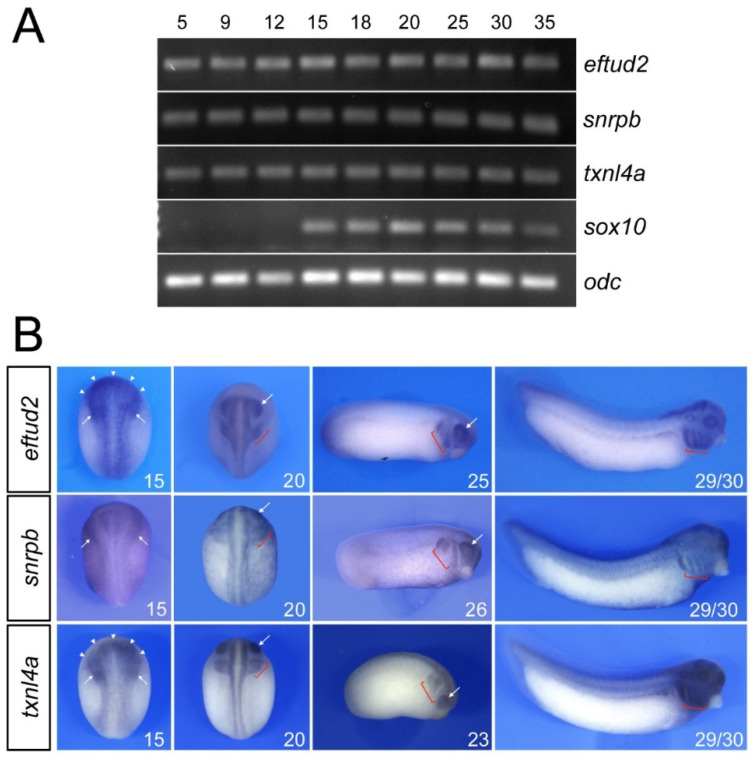
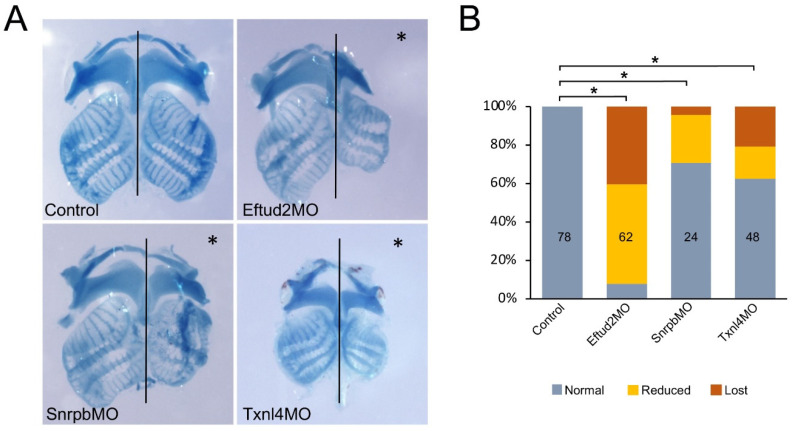
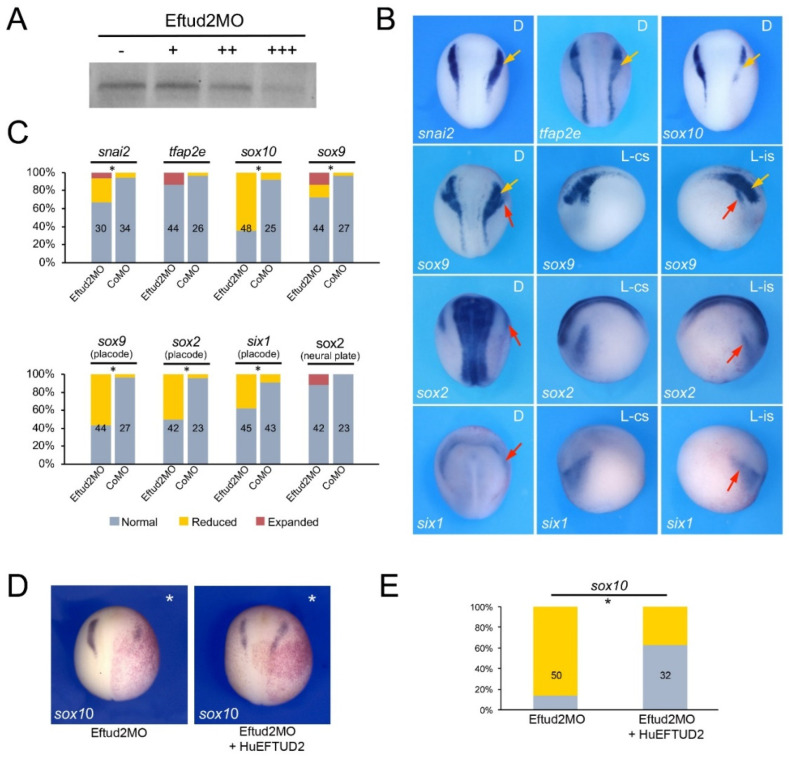
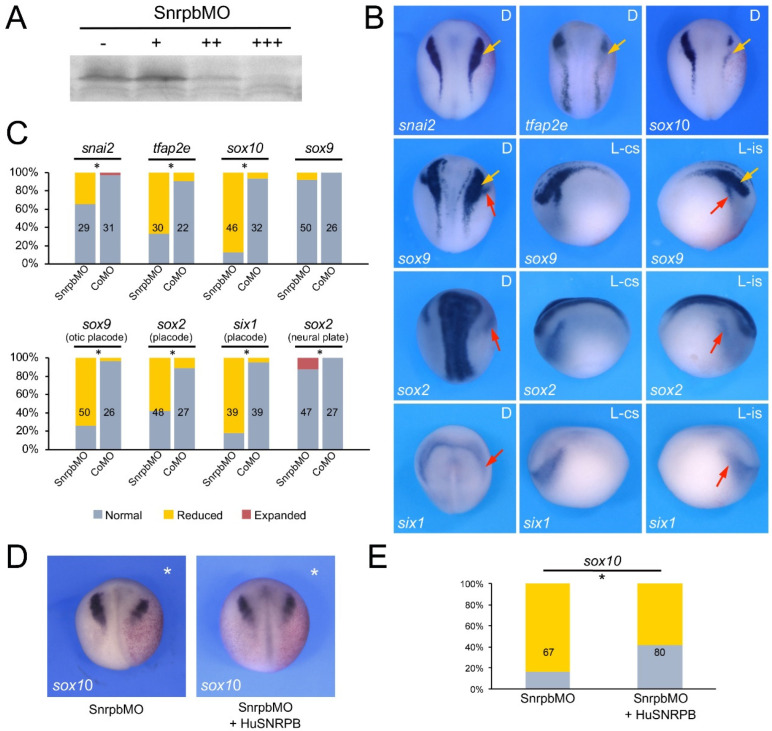
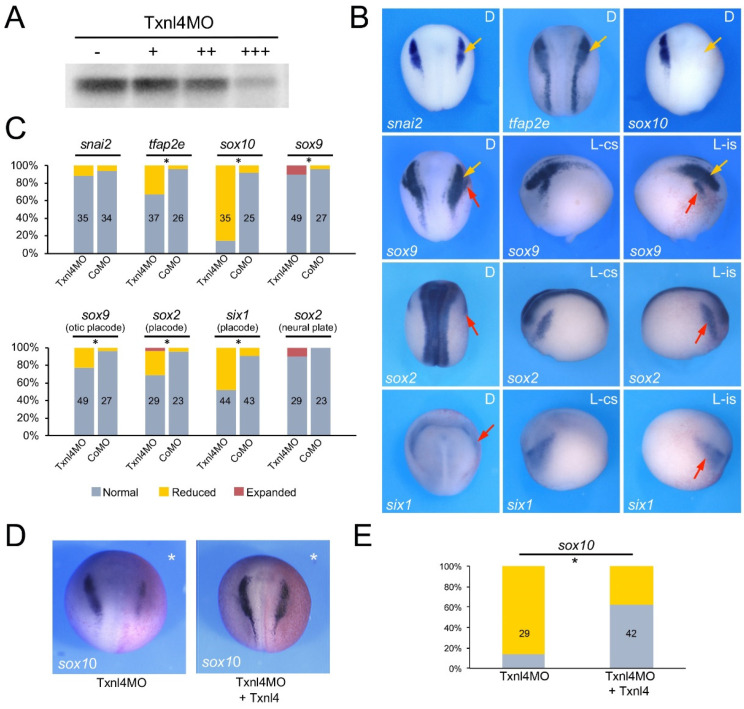
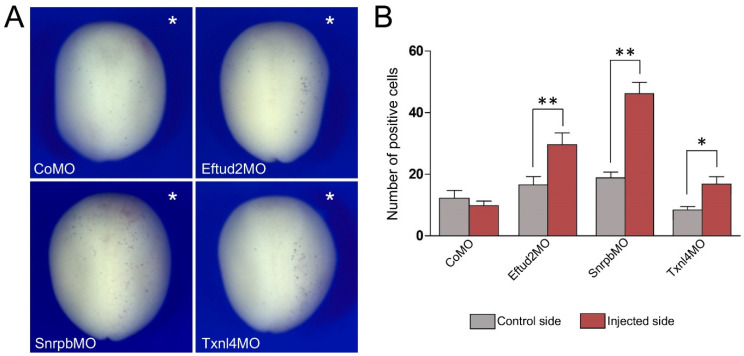
Mandibulofacial dysostosis (MFD) is a human congenital disorder characterized by hypoplastic neural-crest-derived craniofacial bones often associated with outer and middle ear defects. There is growing evidence that mutations in components of the spliceosome are a major cause for MFD. Genetic variants affecting the function of several core splicing factors, namely , , , and , are responsible for MFD in five related but distinct syndromes known as Nager and Rodriguez syndromes (NRS), craniofacial microsomia (CFM), mandibulofacial dysostosis with microcephaly (MFDM), cerebro-costo-mandibular syndrome (CCMS) and Burn-McKeown syndrome (BMKS), respectively. Animal models of NRS and MFDM indicate that MFD results from an early depletion of neural crest progenitors through a mechanism that involves apoptosis. Here we characterize the knockdown phenotype of Eftud2, Snrpb and Txnl4a in embryos at different stages of neural crest and craniofacial development. Our results point to defects in cranial neural crest cell formation as the likely culprit for MFD associated with , and haploinsufficiency, and suggest a commonality in the etiology of these craniofacial spliceosomopathies.
下颌面骨发育不全(MFD)是一种人类先天性疾病,其特征是神经嵴衍生的颅面骨发育不全,常伴有外耳和中耳缺陷。越来越多的证据表明,剪接体成分的突变是MFD的主要原因。影响几种核心剪接因子功能的基因变异,即 、 、 、 和 ,分别导致了五种相关但不同的综合征中的MFD,这些综合征被称为纳杰尔和罗德里格斯综合征(NRS)、颅面短小畸形(CFM)、小头畸形伴下颌面骨发育不全(MFDM)、脑-肋骨-下颌综合征(CCMS)和伯恩-麦基翁综合征(BMKS)。NRS和MFDM的动物模型表明,MFD是由于神经嵴祖细胞通过一种涉及细胞凋亡的机制早期耗竭所致。在这里,我们描述了Eftud2、Snrpb和Txnl4a在神经嵴和颅面发育不同阶段的胚胎中的敲低表型。我们的结果表明,颅神经嵴细胞形成缺陷可能是与 、 和 单倍体不足相关的MFD的罪魁祸首,并提示这些颅面剪接体病在病因上具有共性。