Liccardo Daniela, Arosio Beatrice, Corbi Graziamaria, Cannavo Alessandro
Department of Neurosciences, Reproductive and Odontostomatological Sciences, Federico II University of Naples, 80131 Naples, Italy.
Department of Clinical Sciences and Community Health, University of Milan, 20122 Milan, Italy.
J Clin Med. 2022 Jul 22;11(15):4280. doi: 10.3390/jcm11154280.
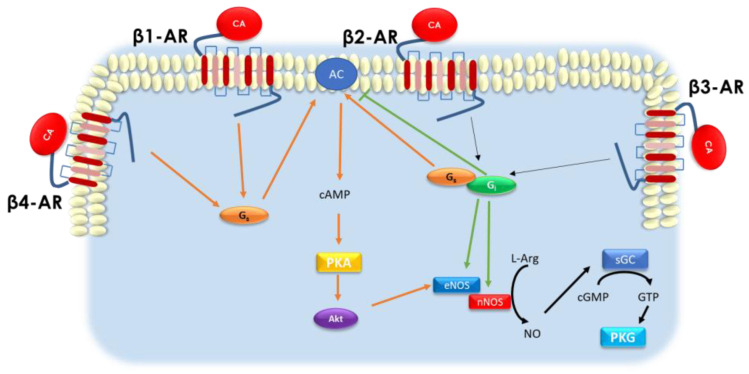
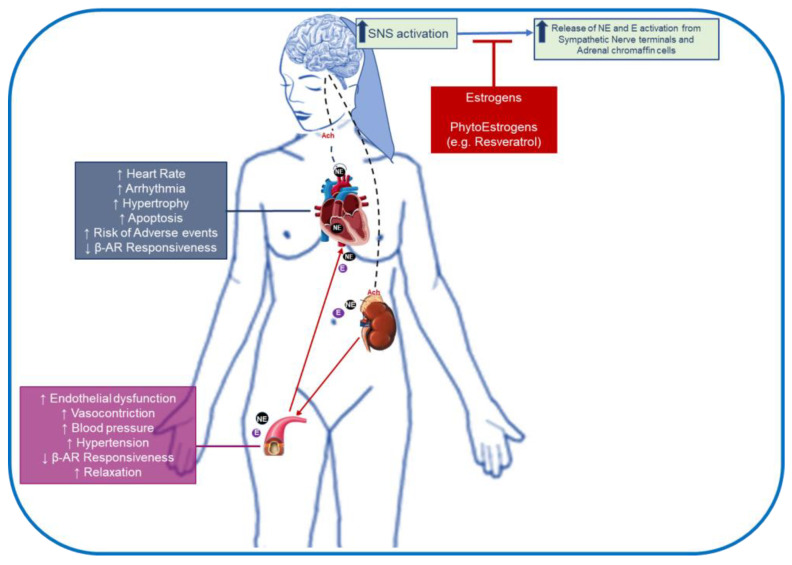
Sex differences in cardiovascular disease (CVD) are often recognized from experimental and clinical studies examining the prevalence, manifestations, and response to therapies. Compared to age-matched men, women tend to have reduced CV risk and a better prognosis in the premenopausal period. However, with menopause, this risk increases exponentially, surpassing that of men. Although several mechanisms have been provided, including sex hormones, an emerging role in these sex differences has been suggested for β-adrenergic receptor (β-AR) signaling. Importantly, β-ARs are the most important G protein-coupled receptors (GPCRs), expressed in almost all the cell types of the CV system, and involved in physiological and pathophysiological processes. Consistent with their role, for decades, βARs have been considered the first targets for rational drug design to fight CVDs. Of note, β-ARs are seemingly associated with different CV outcomes in females compared with males. In addition, even if there is a critical inverse correlation between β-AR responsiveness and aging, it has been reported that gender is crucially involved in this age-related effect. This review will discuss how β-ARs impact the CV risk and response to anti-CVD therapies, also concerning sex and age. Further, we will explore how estrogens impact β-AR signaling in women.
心血管疾病(CVD)中的性别差异通常从研究患病率、表现及对治疗反应的实验和临床研究中得以认识。与年龄匹配的男性相比,女性在绝经前往往心血管风险较低且预后较好。然而,随着绝经,这种风险呈指数级增加,超过男性。尽管已提出多种机制,包括性激素,但β-肾上腺素能受体(β-AR)信号传导在这些性别差异中被认为发挥着新出现的作用。重要的是,β-AR是最重要的G蛋白偶联受体(GPCR),几乎在心血管系统的所有细胞类型中表达,并参与生理和病理生理过程。与其作用相符,几十年来,β-AR一直被视为对抗心血管疾病合理药物设计的首要靶点。值得注意的是,与男性相比,β-AR似乎与女性不同的心血管结局相关。此外,即使β-AR反应性与衰老之间存在关键的负相关,但据报道,性别在这种与年龄相关的效应中起着至关重要的作用。本综述将讨论β-AR如何影响心血管风险及对抗心血管疾病治疗的反应,同时涉及性别和年龄。此外,我们将探讨雌激素如何影响女性的β-AR信号传导。