Al-Maawi Sarah, Valenzuela Priscilia, Dohle Eva, Heselich Anja, Sader Robert, Ghanaati Shahram
Frankfurt Oral Regenerative Medicine (FORM-Lab), Clinic for Maxillofacial and Plastic Surgery, Goethe University, 60590 Frankfurt am Main, Germany.
Methods Protoc. 2022 Jul 21;5(4):64. doi: 10.3390/mps5040064.
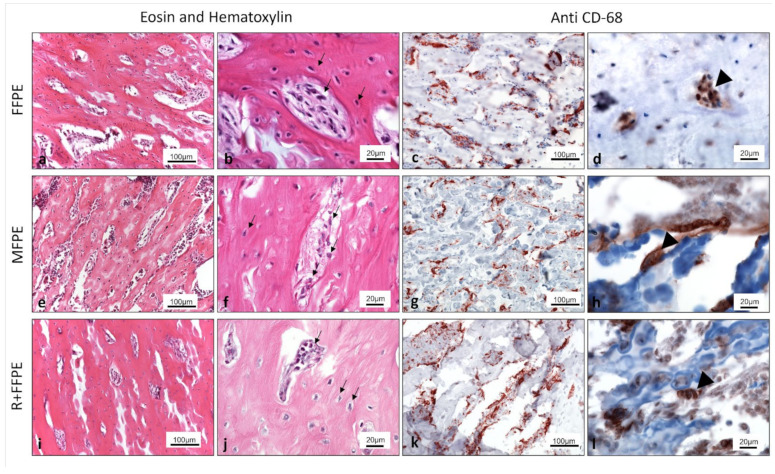
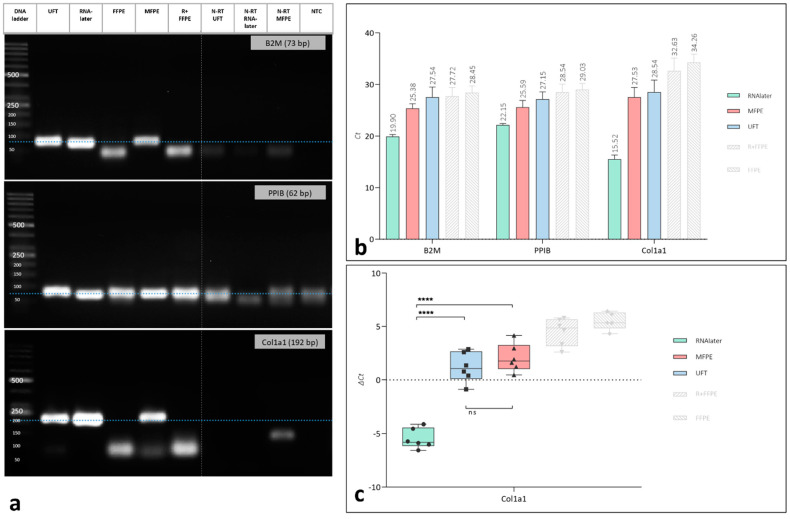
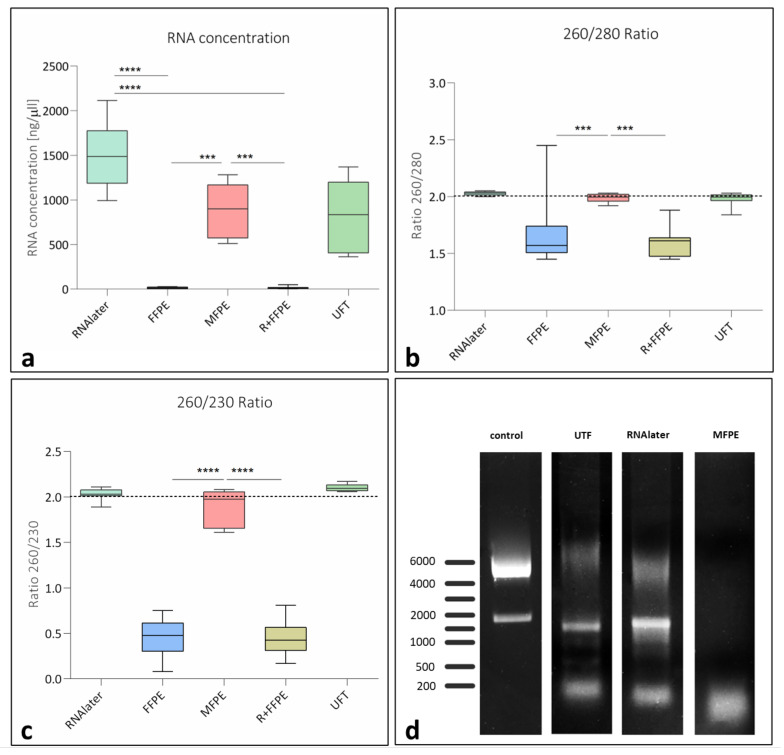
The combination of histological and biomolecular analyses provides deep understanding of different biological processes and is of high interest for basic and applied research. However, the available analytical methods are still limited, especially when considering bone samples. This study compared different fixation media to identify a sufficient analytical method for the combination of histological, immuno-histological and biomolecular analyses of the same fixed, processed and paraffin embedded bone sample. Bone core biopsies of rats' femurs were fixed in different media (RNAlater + formaldehyde (R + FFPE), methacarn (MFPE) or formaldehyde (FFPE)) for 1 week prior to decalcification by EDTA and further histological processing and paraffin embedding. Snap freezing (unfixed frozen tissue, UFT) and incubation in RNAlater were used as additional controls. After gaining the paraffin sections for histological and immunohistological analysis, the samples were deparaffined and RNA was isolated by a modified TRIZOL protocol. Subsequently, gene expression was evaluated using RT-qPCR. Comparable histo-morphological and immuno-histological results were evident in all paraffin embedded samples of MFPE, FFPE and R + FFPE. The isolated RNA in the group of MFPE showed a high concentration and high purity, which was comparable to the UFT and RNAlater groups. However, in the groups of FFPE and R + FFPE, the RNA quality and quantity were statistically significantly lower when compared to MFPE, UFT and RNAlater. RT-qPCR results showed a comparable outcome in the group of MFPE and UFT, whereas the groups of FFPE and R + FFPE did not result in a correctly amplified gene product. Sample fixation by means of methacarn is of high interest for clinical samples to allow a combination of histological, immunohistological and biomolecular analysis. The implementation of such evaluation method in clinical research may allow a deeper understanding of the processes of bone formation and regeneration.
组织学和生物分子分析相结合,能深入了解不同的生物学过程,对基础研究和应用研究都具有重要意义。然而,现有的分析方法仍然有限,尤其是在分析骨样本时。本研究比较了不同的固定介质,以确定一种适用于对同一固定、处理和石蜡包埋的骨样本进行组织学、免疫组织学和生物分子分析的充分分析方法。大鼠股骨的骨芯活检样本在不同介质(RNA Later + 甲醛(R + FFPE)、甲醇 - 冰醋酸固定液(MFPE)或甲醛(FFPE))中固定1周,然后用乙二胺四乙酸(EDTA)脱钙,再进行进一步的组织学处理和石蜡包埋。速冻(未固定冷冻组织,UFT)和在RNA Later中孵育用作额外对照。获取石蜡切片进行组织学和免疫组织学分析后,将样本脱石蜡,并用改良的TRIZOL方法分离RNA。随后,使用逆转录定量聚合酶链反应(RT-qPCR)评估基因表达。在MFPE、FFPE和R + FFPE的所有石蜡包埋样本中,组织形态学和免疫组织学结果相当。MFPE组分离出的RNA浓度高、纯度高,与UFT组和RNA Later组相当。然而,与MFPE、UFT和RNA Later组相比,FFPE组和R + FFPE组的RNA质量和数量在统计学上显著更低。RT-qPCR结果显示,MFPE组和UFT组结果相当,而FFPE组和R + FFPE组未得到正确扩增的基因产物。甲醇 - 冰醋酸固定液对临床样本的固定很有价值,可实现组织学、免疫组织学和生物分子分析的结合。在临床研究中实施这种评估方法,可能有助于更深入地了解骨形成和再生过程。