Department of Emergency Medicine, Kaohsiung Veterans General Hospital, No.386, Dazhong 1st Rd., Zuoying Dist, Kaohsiung City, 813414, Taiwan.
Health Management Center, Kaohsiung Veterans General Hospital, Kaohsiung City, Taiwan.
BMC Emerg Med. 2022 Jul 27;22(1):137. doi: 10.1186/s12873-022-00694-6.
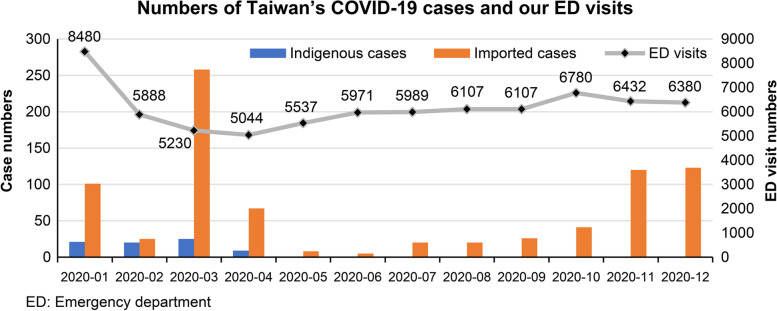
Taiwan's successful containment of the COVID-19 outbreak prior to 2021 provided a unique environment for the surveillance of unnecessary emergency medical use. The aim of the study is to examine the impact of the coronavirus disease (COVID-19) pandemic on the patient flow in the emergency department (ED) of a tertiary hospital over 1 year in southern Taiwan, a region with low COVID-19 prevalence.
Cross-sectional observational study was conducted from January to December 2020. Essential parameters of patient flow in the ED between January and February 2020 and the subsequent 11-month period were compared to data from 2019. Data were analyzed with descriptive statistics, using an independent sample t-test or Mann-Whitney U test, as applicable.
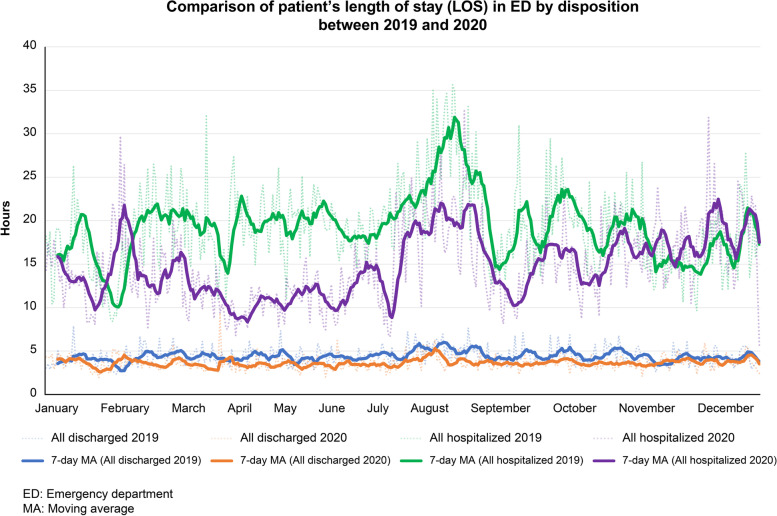
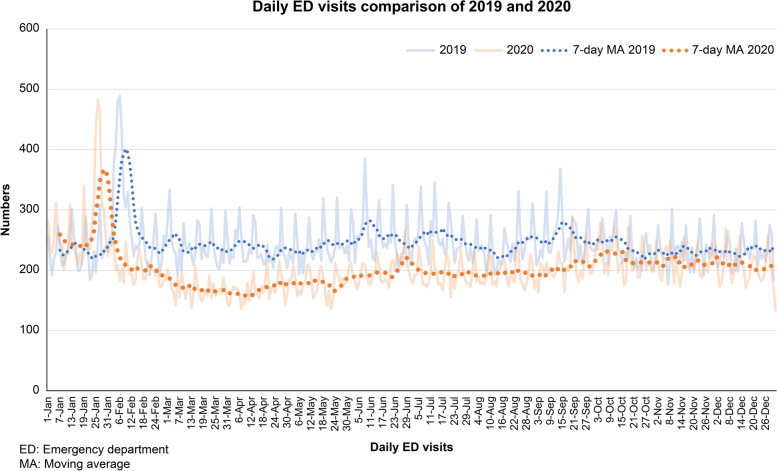
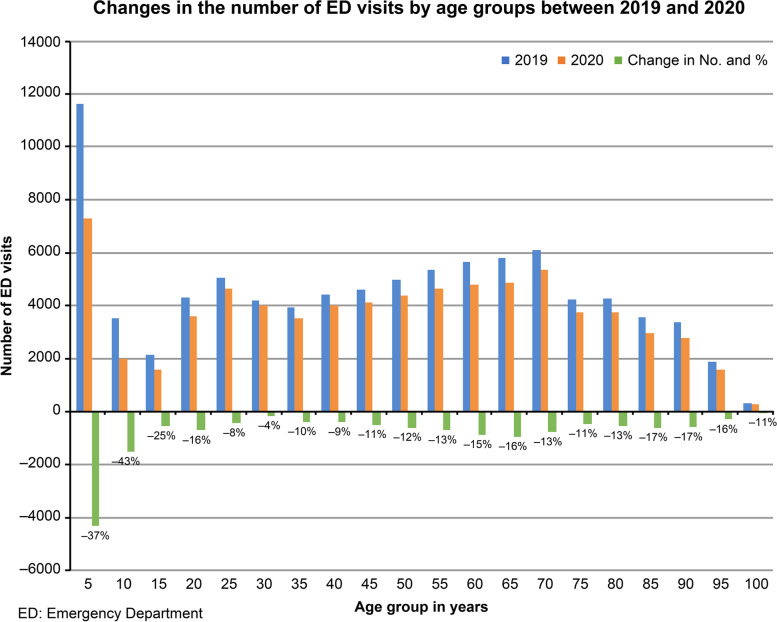
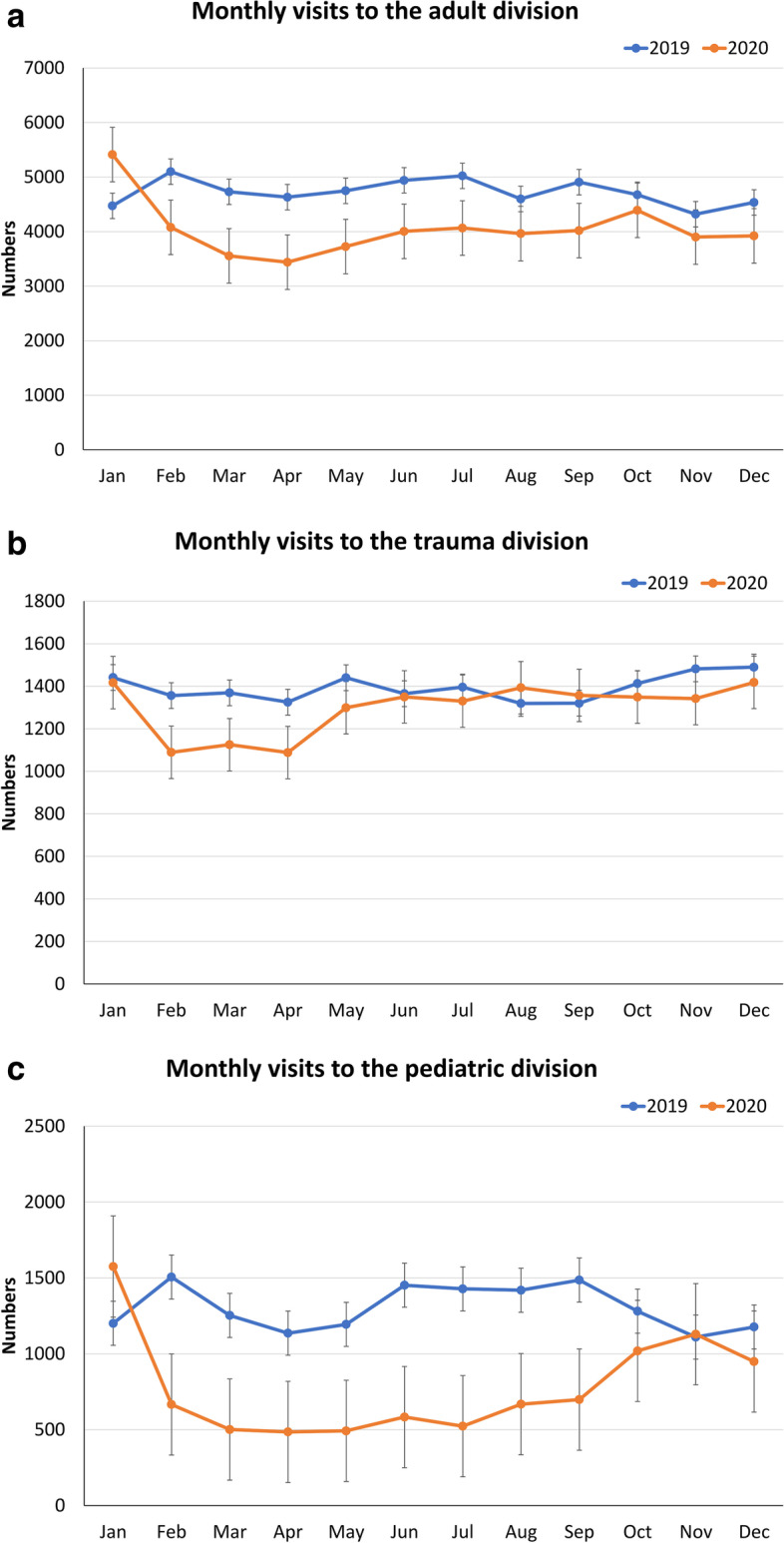
The ED census showed an acute decline (- 30.8%) from January to February 2020, reaching its nadir (- 40.5%) in April 2020. From February to December 2020, there was an average decrease of 20.3% in ED attendance (p < 0.001). The impact was most significant in ambulatory visits, lower-urgency acuity (level III) visits, and pediatric visits, without change in the acuity proportion. The length of stay shortened mainly in the adult division, which typically had an overcrowding problem (median, 5.7-4.4 hours in discharge; 24.8-16.9 hours in hospitalization; p < 0.001). The incidence of 72-hour unscheduled return visits was also reduced (4.1-3.5%, p = 0.002).
In contrast to devastated regions, the impact on the ED patient flow in regions having low COVID-19 prevalence highlights a remodeling process of emergency medical care that would improve overcrowding.
台湾在 2021 年之前成功控制了 COVID-19 疫情,为监测非必要的紧急医疗使用提供了独特的环境。本研究旨在探讨 2020 年 COVID-19 大流行对台湾南部一家三级医院急诊科(ED)患者流量的影响,该地区 COVID-19 发病率较低。
横断面观察性研究于 2020 年 1 月至 12 月进行。将 2020 年 1 月至 2 月和随后 11 个月期间 ED 患者流量的基本参数与 2019 年的数据进行比较。采用描述性统计分析数据,使用独立样本 t 检验或 Mann-Whitney U 检验,视情况而定。
ED 普查显示,2020 年 1 月至 2 月期间急诊人数急剧下降(-30.8%),2020 年 4 月达到最低点(-40.5%)。2020 年 2 月至 12 月,ED 就诊人数平均减少 20.3%(p<0.001)。影响最大的是门诊、低紧急程度(III 级)就诊和儿科就诊,就诊严重程度比例无变化。停留时间缩短主要发生在成人病房,成人病房通常存在过度拥挤问题(中位数,出院时 5.7-4.4 小时;住院时 24.8-16.9 小时;p<0.001)。72 小时内非计划性复诊的发生率也有所下降(4.1-3.5%,p=0.002)。
与受灾地区相比,COVID-19 发病率较低地区急诊科患者流量的影响凸显了急诊医疗重塑过程,该过程将改善过度拥挤状况。