Department of Physiology, School of Basic Medicine Science, Central South University, Changsha 410078, China.
Experimental Center of Medical Morphology, School of Basic Medicine Science, Central South University, Changsha 410078, China.
Int J Mol Sci. 2022 Jul 27;23(15):8267. doi: 10.3390/ijms23158267.
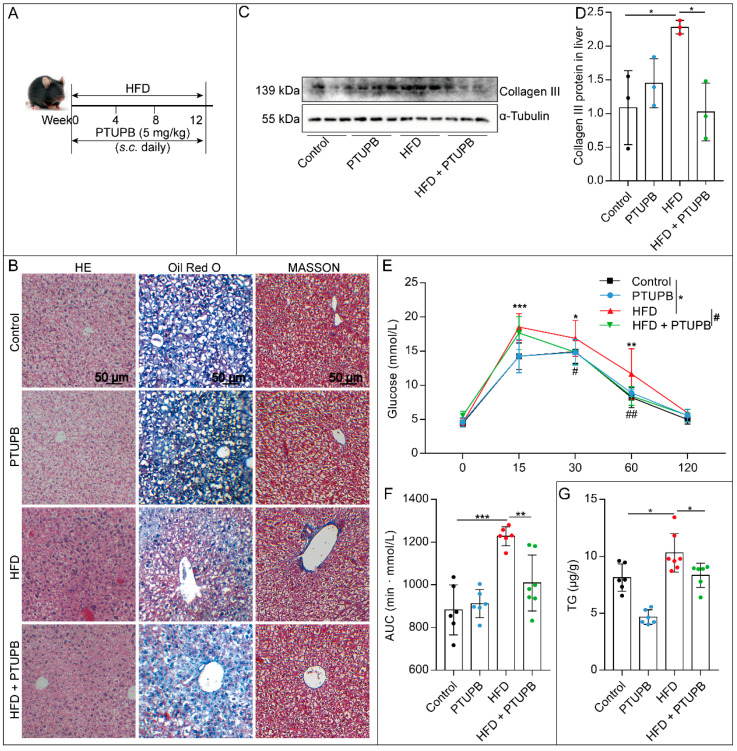
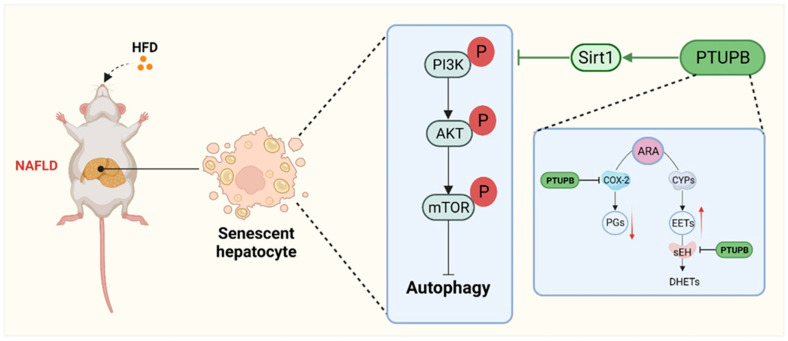
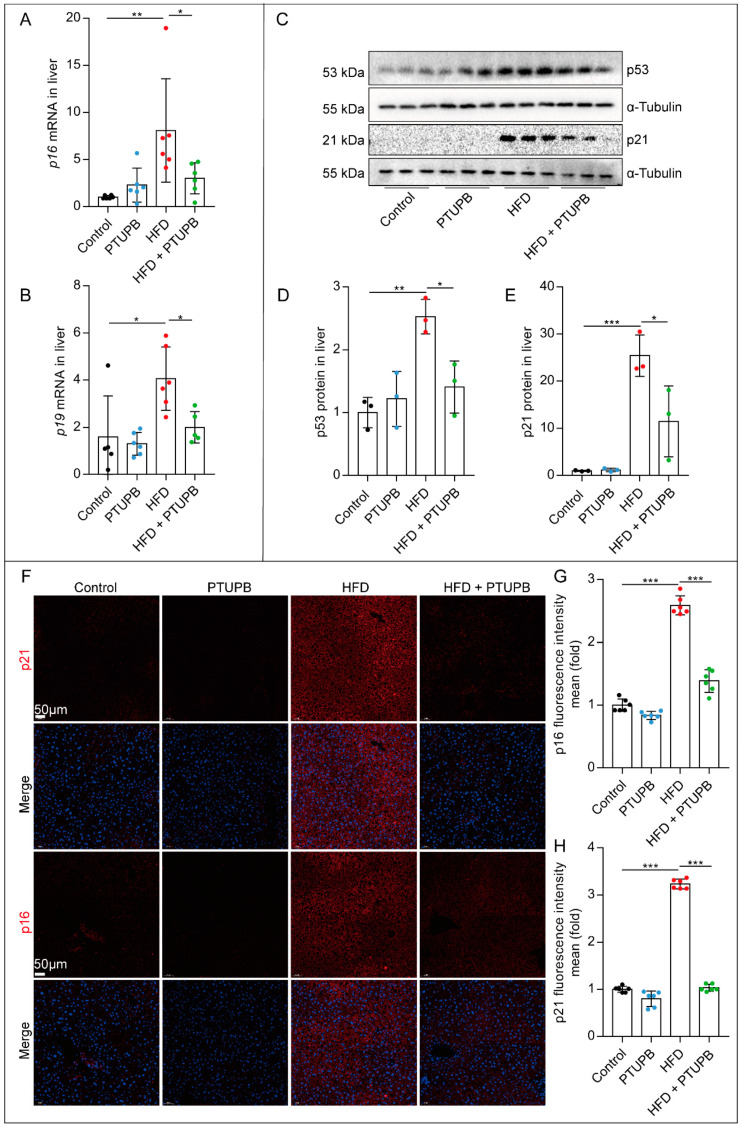
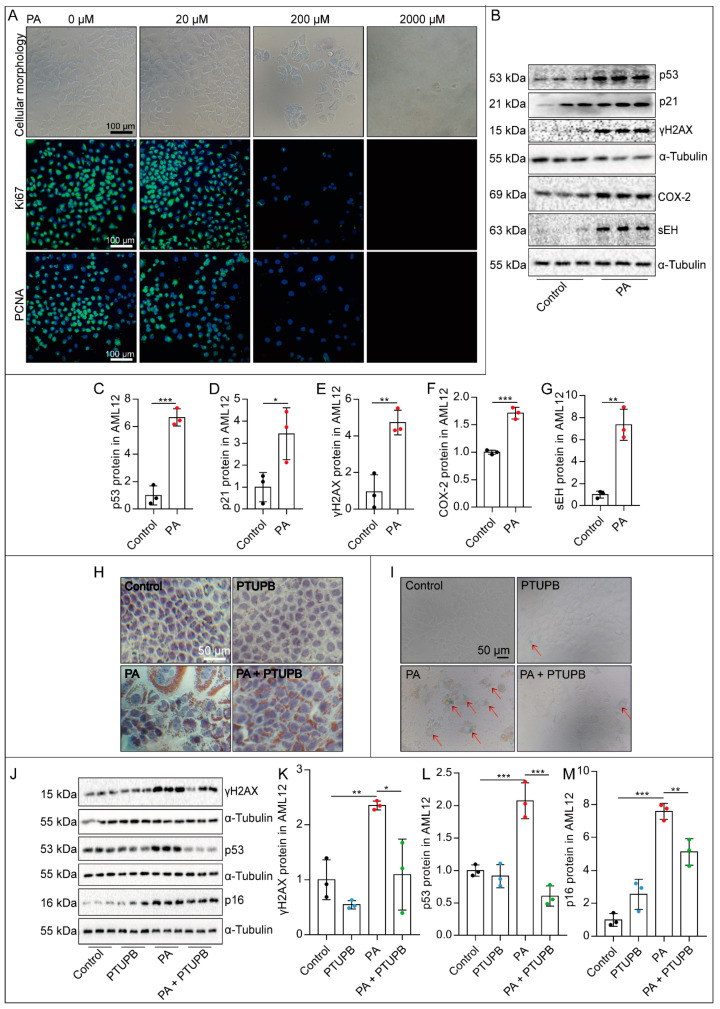
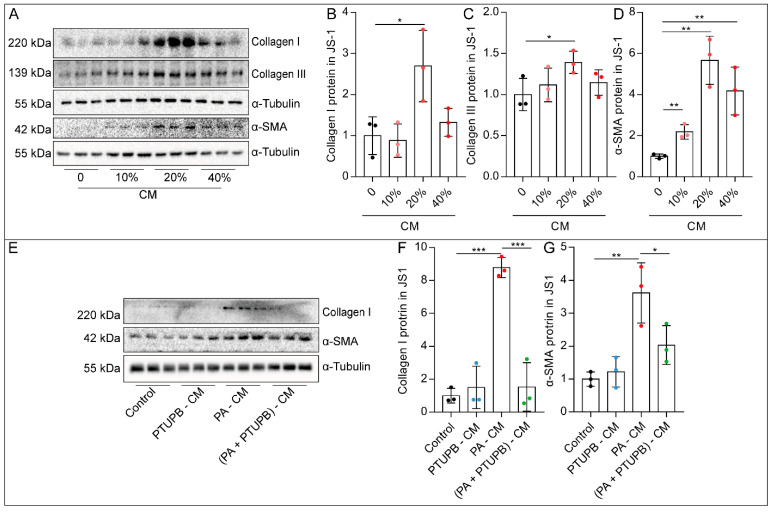
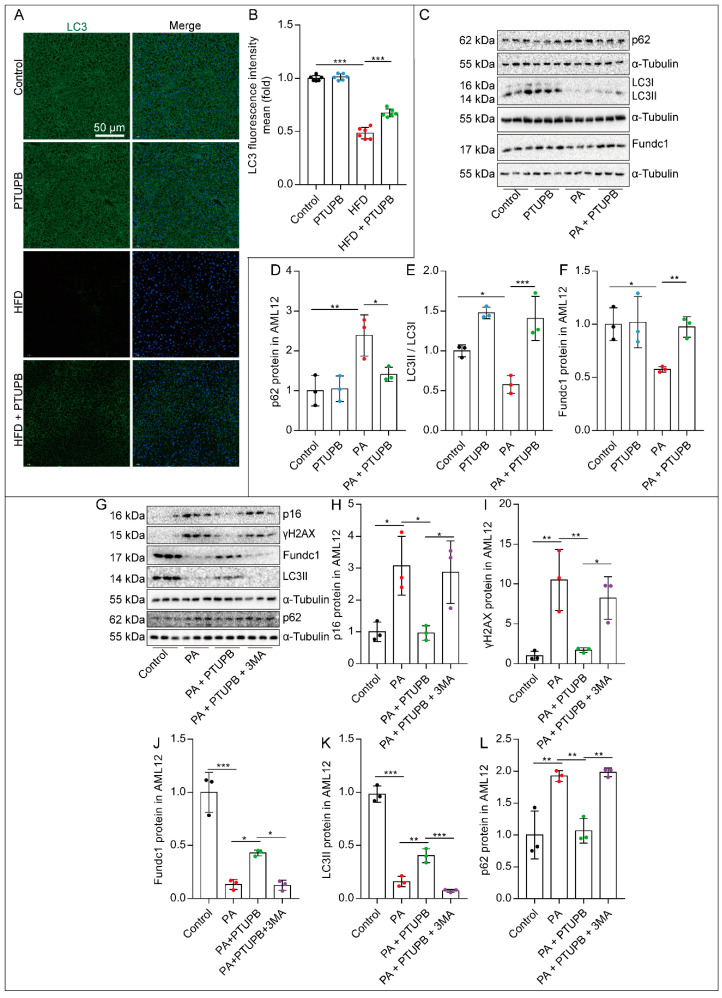
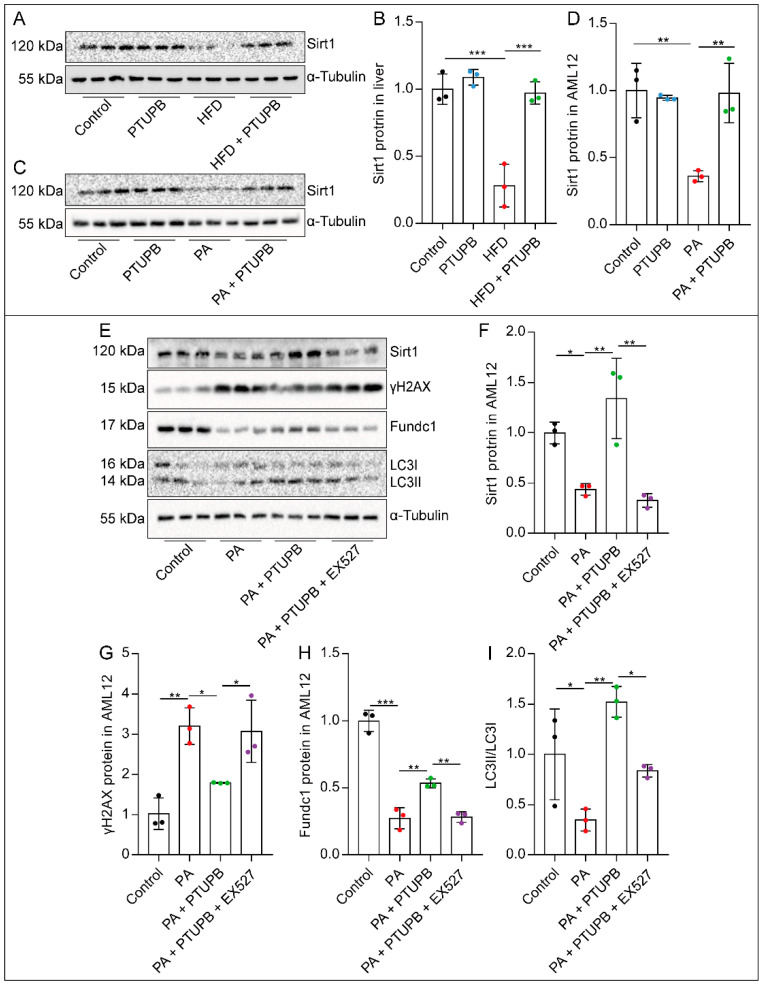
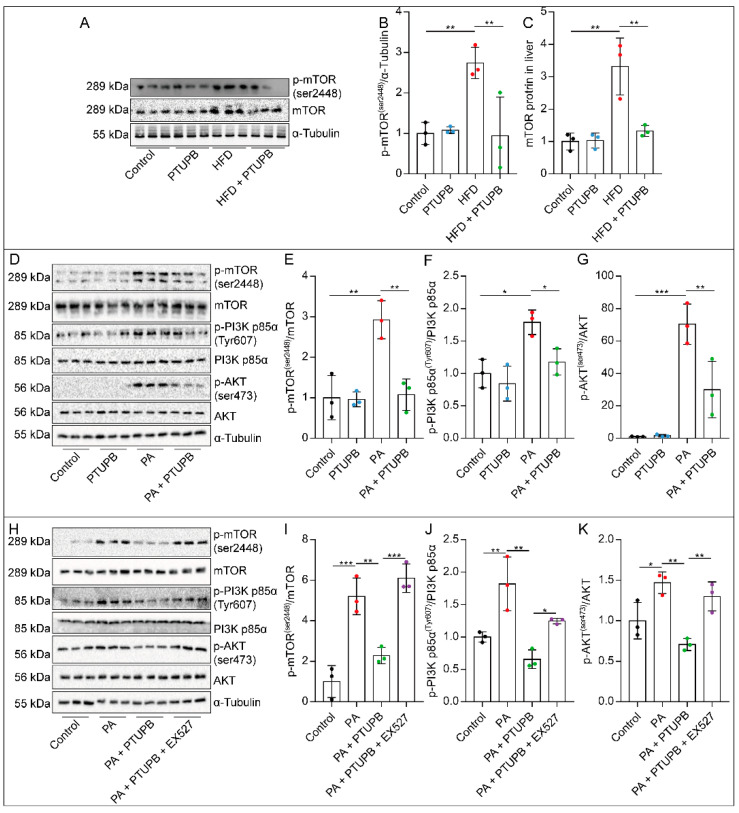
We previously found that the disorder of soluble epoxide hydrolase (sEH)/cyclooxygenase-2 (COX-2)-mediated arachidonic acid (ARA) metabolism contributes to the pathogenesis of the non-alcoholic fatty liver disease (NAFLD) in mice. However, the exact mechanism has not been elucidated. Accumulating evidence points to the essential role of cellular senescence in NAFLD. Herein, we investigated whether restoring the balance of sEH/COX-2-mediated ARA metabolism attenuated NAFLD via hepatocyte senescence. A promised dual inhibitor of sEH and COX-2, PTUPB, was used in our study to restore the balance of sEH/COX-2-mediated ARA metabolism. , NAFLD was induced by a high-fat diet (HFD) using C57BL/6J mice. , mouse hepatocytes (AML12) and mouse hepatic astrocytes (JS1) were used to investigate the effects of PTUPB on palmitic acid (PA)-induced hepatocyte senescence and its mechanism. PTUPB alleviated liver injury, decreased collagen and lipid accumulation, restored glucose tolerance, and reduced hepatic triglyceride levels in HFD-induced NAFLD mice. Importantly, PTUPB significantly reduced the expression of liver senescence-related molecules p16, p53, and p21 in HFD mice. , the protein levels of γH2AX, p53, p21, COX-2, and sEH were increased in AML12 hepatocytes treated with PA, while Ki67 and PCNA were significantly decreased. PTUPB decreased the lipid content, the number of β-gal positive cells, and the expression of p53, p21, and γH2AX proteins in AML12 cells. Meanwhile, PTUPB reduced the activation of hepatic astrocytes JS1 by slowing the senescence of AML12 cells in a co-culture system. It was further observed that PTUPB enhanced the ratio of autophagy-related protein LC3II/I in AML12 cells, up-regulated the expression of Fundc1 protein, reduced p62 protein, and suppressed hepatocyte senescence. In addition, PTUPB enhanced hepatocyte autophagy by inhibiting the PI3K/AKT/mTOR pathway through Sirt1, contributing to the suppression of senescence. PTUPB inhibits the PI3K/AKT/mTOR pathway through Sirt1, improves autophagy, slows down the senescence of hepatocytes, and alleviates NAFLD.
我们之前发现,可溶型环氧合酶-2(COX-2)/环氧水解酶(sEH)介导的花生四烯酸(ARA)代谢紊乱导致非酒精性脂肪性肝病(NAFLD)的发病机制。然而,确切的机制尚未阐明。越来越多的证据表明细胞衰老在 NAFLD 中起着重要作用。在此,我们研究了恢复 sEH/COX-2 介导的 ARA 代谢平衡是否通过肝细胞衰老来减轻 NAFLD。我们在研究中使用了一种有前途的 sEH 和 COX-2 的双重抑制剂 PTUPB 来恢复 sEH/COX-2 介导的 ARA 代谢平衡。
通过使用 C57BL/6J 小鼠的高脂肪饮食(HFD)诱导 NAFLD。使用 AML12 肝细胞和 JS1 肝星形细胞来研究 PTUPB 对棕榈酸(PA)诱导的肝细胞衰老及其机制的影响。PTUPB 减轻了 HFD 诱导的 NAFLD 小鼠的肝损伤、胶原和脂质积累、葡萄糖耐量和肝甘油三酯水平。重要的是,PTUPB 显著降低了 HFD 小鼠肝脏中与衰老相关的分子 p16、p53 和 p21 的表达。
在 AML12 肝细胞中,用 PA 处理后,γH2AX、p53、p21、COX-2 和 sEH 的蛋白水平升高,而 Ki67 和 PCNA 明显减少。PTUPB 降低了 AML12 细胞的脂类含量、β-半乳糖苷酶阳性细胞数量以及 p53、p21 和 γH2AX 蛋白的表达。同时,PTUPB 通过减缓共培养体系中 AML12 细胞的衰老,降低了 JS1 肝星形细胞的激活。进一步观察到,PTUPB 通过 Sirt1 增强了 AML12 细胞中自噬相关蛋白 LC3II/I 的比值,上调了 Fundc1 蛋白的表达,降低了 p62 蛋白的表达,并抑制了肝细胞衰老。此外,PTUPB 通过 Sirt1 抑制 PI3K/AKT/mTOR 通路增强了肝细胞自噬,从而抑制了衰老。PTUPB 通过 Sirt1 抑制 PI3K/AKT/mTOR 通路,改善自噬,减缓肝细胞衰老,从而缓解 NAFLD。