Kavaklı Kaan, Antmen Bülent, Okan Vahap, Şahin Fahri, Aytaç Selin, Balkan Can, Berber Ergül, Kaya Zühre, Küpesiz Alphan, Zülfikar Bülent
Division of Hematology, Department of Pediatrics, Ege University Faculty of Medicine, Bornova, 35100 İzmir, Turkey.
Division of Hematology, Department of Pediatrics, Acıbadem Adana Hospital, Adana, Turkey.
Ther Adv Hematol. 2022 Jul 23;13:20406207221104591. doi: 10.1177/20406207221104591. eCollection 2022.
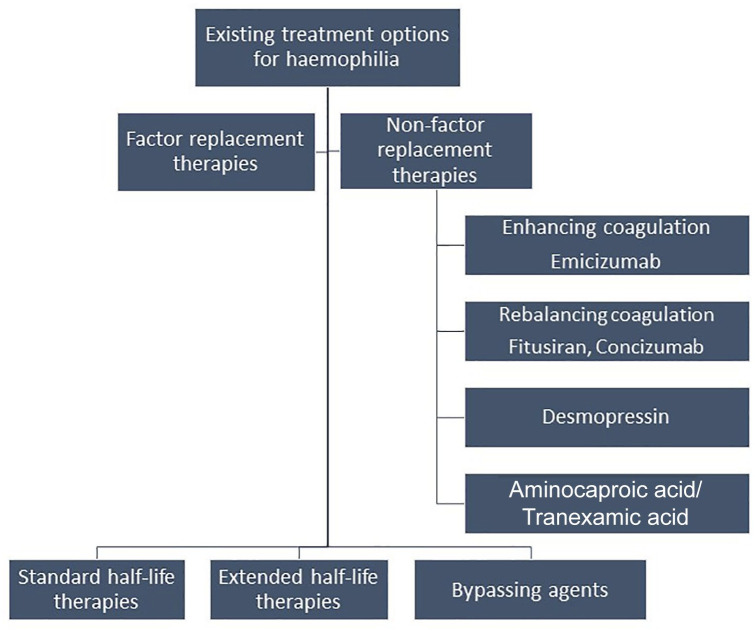
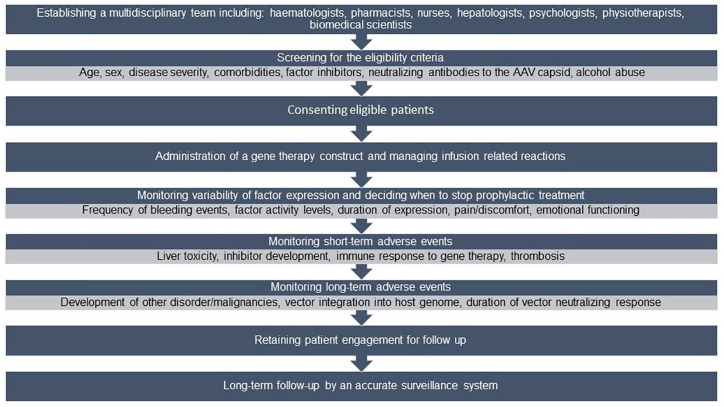
Haemophilia is an X-linked lifelong congenital bleeding disorder that is caused by insufficient levels of factor VIII (FVIII; haemophilia A) or factor IX (FIX; haemophilia B) and characterized by spontaneous and trauma-related bleeding episodes. The cornerstone of the treatment, factor replacement, constitutes several difficulties, including frequent injections due to the short half-life of recombinant factors, intravenous administration and the risk of inhibitor development. While extended half-life factors and subcutaneous novel molecules enhanced the quality of life, initial successes with gene therapy offer a significant hope for cure. Although adeno-associated viral (AAV)-based gene therapy is one of the most emerging approaches for treatment of haemophilia, there are still challenges in vector immunogenicity, potency and efficacy, genotoxicity and persistence. As the approval for the first gene therapy product is coming closer, eligibility criteria for patient selection, multidisciplinary approach for optimal delivery and follow-up and development of new pricing policies and reimbursement models should be concerned. Therefore, this review addresses the unmet needs of current haemophilia treatment and explains the rationale and principles of gene therapy. Limitations and challenges are discussed from a global and national perspective and recommendations are provided to adopt the gene therapies faster and more sufficient for the haemophilia patients in developing countries like Turkey.
血友病是一种X连锁的终身先天性出血性疾病,由凝血因子VIII(FVIII;A型血友病)或凝血因子IX(FIX;B型血友病)水平不足引起,其特征为自发性出血发作和与创伤相关的出血发作。治疗的基石——凝血因子替代疗法存在诸多困难,包括由于重组凝血因子半衰期短而需要频繁注射、静脉给药以及产生抑制剂的风险。虽然延长半衰期的凝血因子和皮下注射的新型分子提高了生活质量,但基因治疗的初步成功为治愈带来了巨大希望。尽管基于腺相关病毒(AAV)的基因治疗是治疗血友病最具潜力的新方法之一,但在载体免疫原性、效力和疗效、基因毒性和持久性方面仍存在挑战。随着首个基因治疗产品的获批日益临近,应关注患者选择的资格标准、优化给药和随访的多学科方法以及新定价政策和报销模式的制定。因此,本综述阐述了当前血友病治疗中未满足的需求,并解释了基因治疗的基本原理和原则。从全球和国家层面讨论了局限性和挑战,并提出了建议,以便在土耳其等发展中国家更快、更充分地采用基因治疗方法治疗血友病患者。