Molecular Inflammation Group, Biomedical Research Institute of Murcia (IMIB), Murcia, Spain; Laboratoire de Structure et Fonction des Membranes Biologiques, Université Libre de Bruxelles, Brussels, Belgium.
Molecular Inflammation Group, Biomedical Research Institute of Murcia (IMIB), Murcia, Spain; Department of Biochemistry and Molecular Biology B and Immunology, Faculty of Biology, University of Murcia, Spain.
Prog Lipid Res. 2022 Jul;87:101182. doi: 10.1016/j.plipres.2022.101182. Epub 2022 Jul 25.
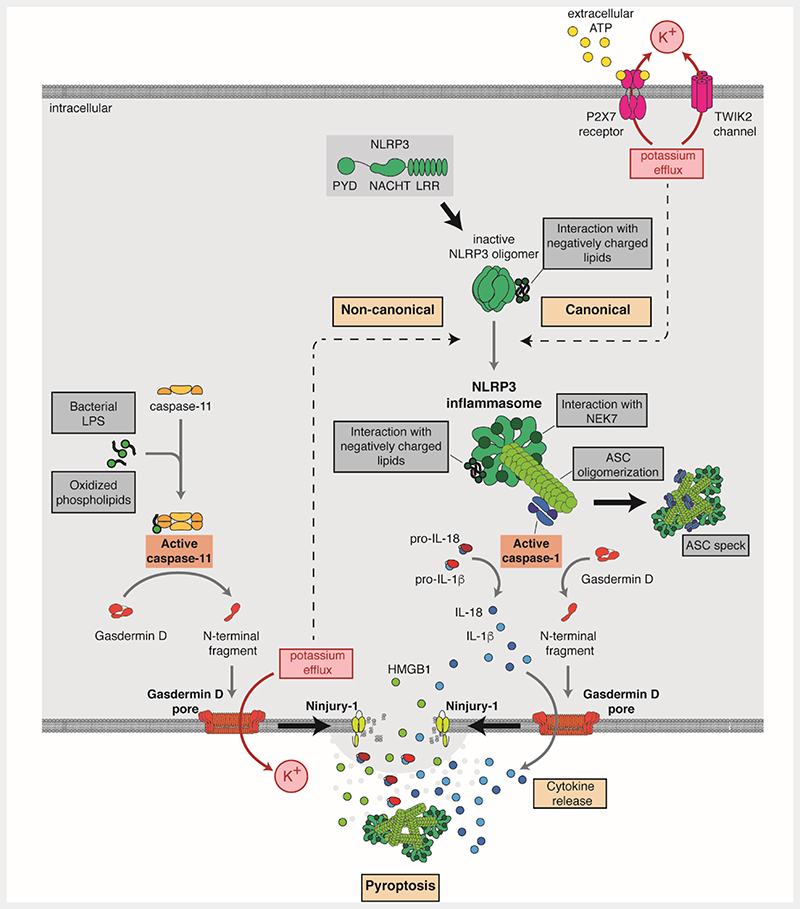
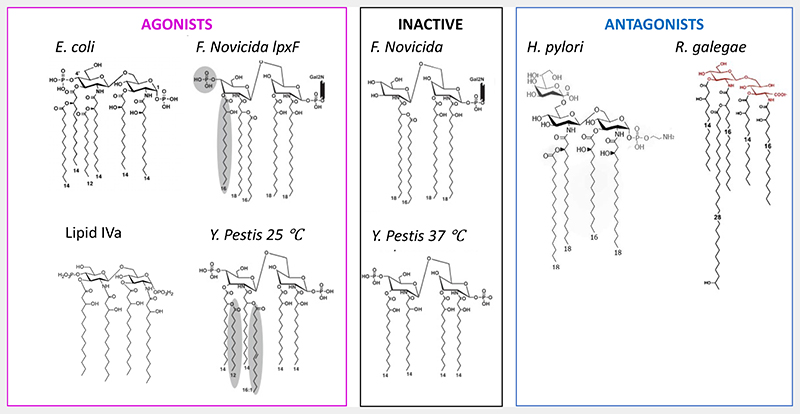
The inflammatory response is a complex regulated effector mechanism of the innate immune system that is initiated after tissue injury or infection. The NLRP3 inflammasome is an important initiator of inflammation by regulating the activation of caspase-1, the maturation of pro-inflammatory cytokines and the induction of pyroptotic cell death. Numerous studies demonstrate that the NLRP3 inflammasome could be modulated by lipids, existing a relation between lipids and the activation of different inflammatory processes. In this review we will summarize how the mechanism of NLRP3 inflammasome activation is regulated by different lipids and how these lipids control specific cellular localization of NLRP3 during activation. Although being a cytosolic protein, NLRP3 interacts with lipids accessible in neighbor membranes. Also, the modulation of NLRP3 by endogenous lipids has been found causative of different metabolic diseases and bacterial-pathogenic lipids lead to NLRP3 activation during infection. The understanding of the modulation of the NLRP3 inflammasome by lipids has resulted not only in a better knowledge about the mechanism of NLRP3 activation and its implication in disease, but also opens a new avenue for the development of novel therapeutics and vaccines, as NLRP3 could be modulated by synthetic lipids used as adjuvants.
炎症反应是先天免疫系统的一种复杂调节效应机制,在组织损伤或感染后启动。NLRP3 炎性小体通过调节半胱天冬酶-1 的激活、促炎细胞因子的成熟和细胞焦亡的诱导,是炎症的重要启动子。大量研究表明,脂质可以调节 NLRP3 炎性小体,脂质与不同炎症过程的激活之间存在联系。在这篇综述中,我们将总结不同脂质如何调节 NLRP3 炎性小体的激活机制,以及这些脂质如何在激活过程中控制 NLRP3 的特定细胞定位。尽管 NLRP3 是一种胞浆蛋白,但它与相邻膜中可及的脂质相互作用。此外,内源性脂质对 NLRP3 的调节已被发现与不同的代谢性疾病有关,而细菌病原体脂质在感染过程中导致 NLRP3 的激活。对脂质调节 NLRP3 炎性小体的理解不仅使我们更好地了解了 NLRP3 激活的机制及其在疾病中的意义,而且为新型治疗方法和疫苗的开发开辟了新的途径,因为合成脂质可以作为佐剂来调节 NLRP3。