Graduate School of Medical Science and Engineering, Korea Advanced Institute of Science and Technology, Daejeon, 34141, Republic of Korea.
Department of Surgery, Yonsei University College of Medicine, Seoul, 03722, Republic of Korea.
Cancer Immunol Immunother. 2023 Feb;72(2):371-384. doi: 10.1007/s00262-022-03258-6. Epub 2022 Jul 28.
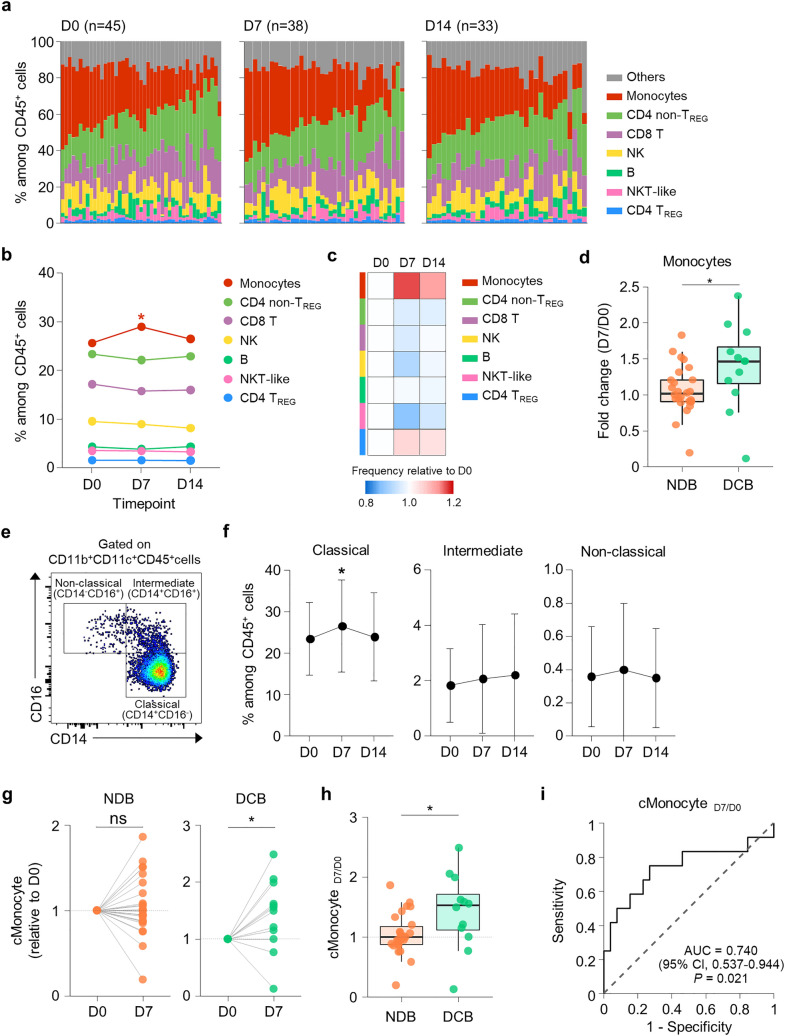
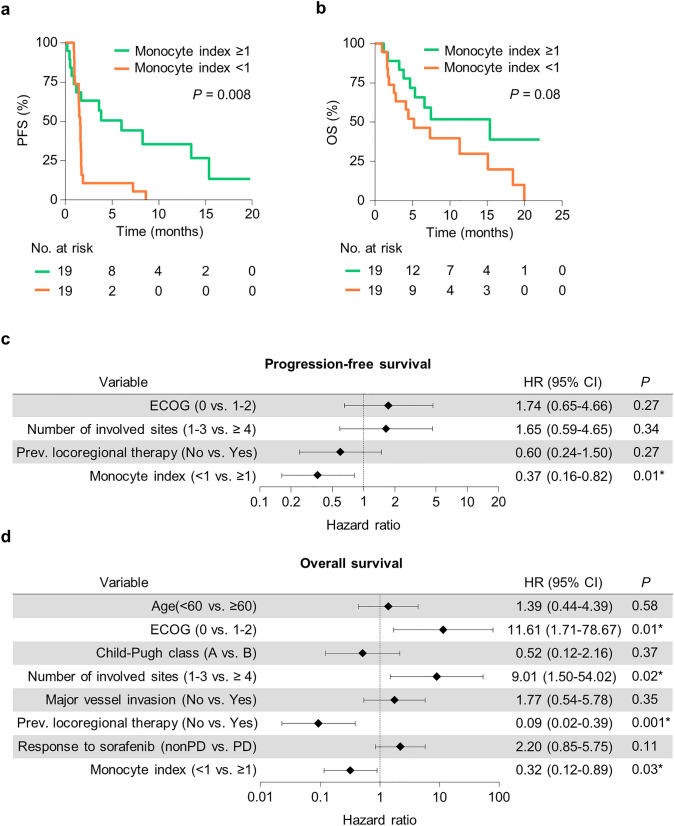
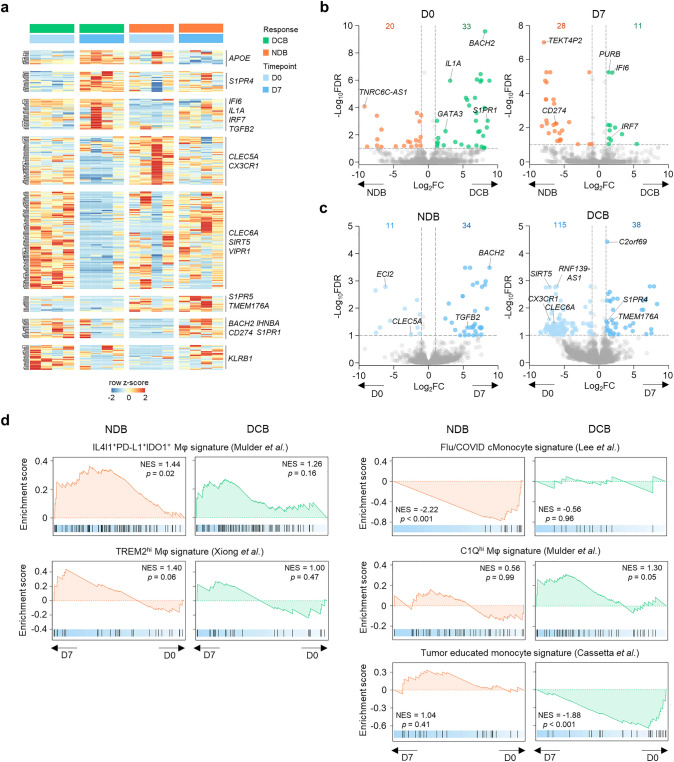
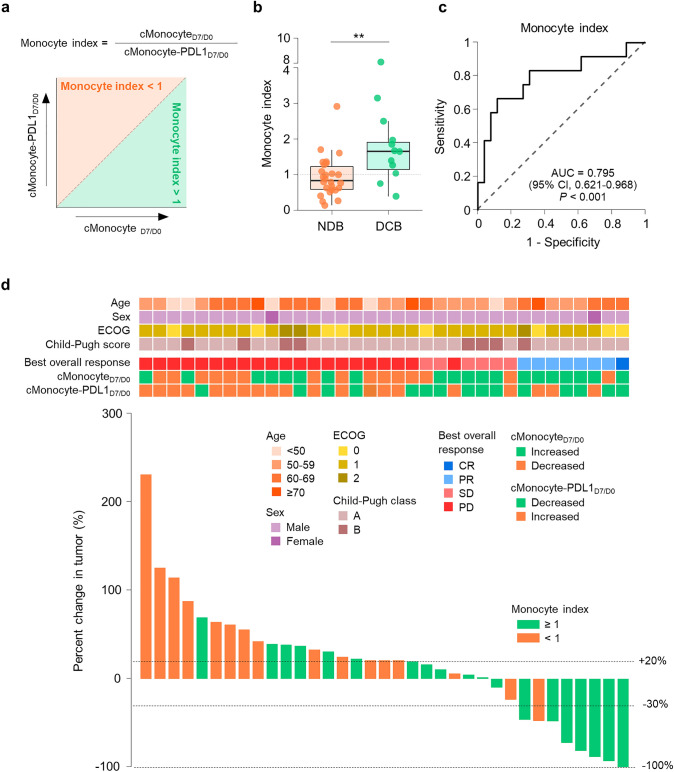
Immune checkpoint inhibitors are effective for advanced hepatocellular carcinoma (HCC), but there remains a need for peripheral blood biomarkers to predict the clinical response. Here, we analyzed the peripheral blood of 45 patients with advanced HCC who underwent nivolumab. During treatment, frequency of classical monocytes (CD14CD16) was increased on day 7, and the fold increase in the frequency on day 7 over day 0 (cMonocyte) was significantly higher in patients with durable clinical benefit (DCB) than in patients with non-DCB (NDB). When we analyzed transcriptomes of classical monocytes, CD274, gene encoding PD-L1, was upregulated in NDB patients compared to DCB patients at day 7. Notably, gene signature of suppressive tumor-associated macrophages, or IL4l1PD-L1IDO1 macrophages, was enriched after treatment in NDB patients, but not in DCB patients. Accordingly, the fold increase in the frequency of PD-L1 classical monocytes at day 7 over day 0 (cMonocyte-PDL1) was higher in NDB patients than DCB patients. The combined biomarker cMonocyte/cMonocyte-PDL1 was termed the "monocyte index", which was significantly higher in DCB patients than NDB patients. Moreover, the monocyte index was an independent prognostic factor for survival. Overall, our results suggest that early changes of circulating classical monocytes, represented as a monocyte index, could predict clinical outcomes of advanced HCC patients undergoing anti-PD-1 therapy.
免疫检查点抑制剂对晚期肝细胞癌(HCC)有效,但仍需要外周血生物标志物来预测临床反应。在这里,我们分析了 45 名接受纳武单抗治疗的晚期 HCC 患者的外周血。在治疗过程中,第 7 天经典单核细胞(CD14CD16)的频率增加,并且第 7 天相对于第 0 天(cMonocyte)的频率增加倍数在具有持久临床获益(DCB)的患者中明显高于无持久临床获益(NDB)的患者。当我们分析经典单核细胞的转录组时,与 DCB 患者相比,NDB 患者在第 7 天的 CD274 基因(编码 PD-L1)上调。值得注意的是,在 NDB 患者中,治疗后抑制性肿瘤相关巨噬细胞或 IL4l1PD-L1IDO1 巨噬细胞的基因特征富集,但在 DCB 患者中没有。因此,与 DCB 患者相比,NDB 患者第 7 天相对于第 0 天的 PD-L1 经典单核细胞的频率增加倍数(cMonocyte-PDL1)更高。将第 7 天相对于第 0 天的经典单核细胞频率的增加倍数(cMonocyte-PDL1)称为“单核细胞指数”,该指数在 DCB 患者中明显高于 NDB 患者。此外,单核细胞指数是生存的独立预后因素。总体而言,我们的结果表明,循环经典单核细胞的早期变化,表现为单核细胞指数,可能预测接受抗 PD-1 治疗的晚期 HCC 患者的临床结局。