Maternal, Fetal, and Neonatal Research Center, Family Health Institute, Tehran University of Medical Sciences, Sarv Ave., North Nejatolahi Street, Tehran, 1598718311, Iran.
Department of Neonatology, Yas Women Hospital, Tehran University of Medical Sciences, Tehran, Iran.
J Med Case Rep. 2022 Jul 28;16(1):305. doi: 10.1186/s13256-022-03506-4.
Although the use of a peripherally inserted central catheter (PICC) has many advantages for the treatment of neonates, catheter malposition may result in serious complications that could be life-threatening. We report the case of a 10-day-old neonate with cardiac tamponade secondary to a PICC line who was successfully treated by pericardiocentesis.
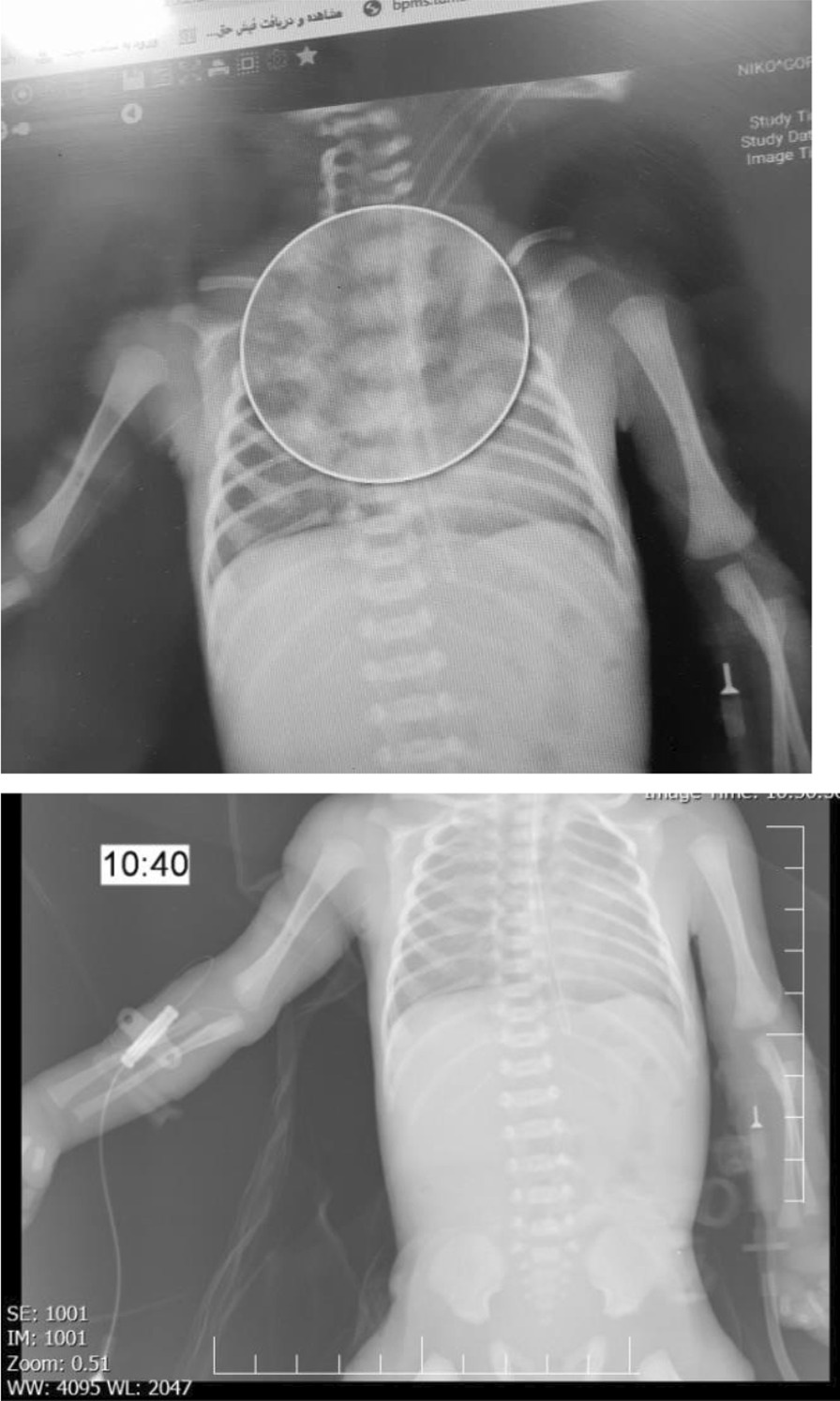
An Iranian (Asian) preterm male neonate was born by Cesarean section with a birth weight of 1190 g and a first-minute Apgar score of 7. Based on an increased respiratory distress syndrome (RDS) score from 4 to 7, resuscitation measures and intubation were performed at the neonatal intensive care unit (NICU). On day 3 after birth, a PICC line was inserted for parenteral therapy. A chest X-ray confirmed that the tip of the PICC line was in the appropriate position. Mechanical ventilation was discontinued 72 h post-NICU admission because of the improved respiratory condition. On the day 10 post-NICU admission, he suddenly developed hypotonia, apnea, hypoxia, hypotension, and bradycardia. Resuscitation and ventilation support were immediately started, and inotropic drugs were also given. Emergency echocardiography showed a severe pericardial effusion with tamponade. The PICC line was removed, and urgent pericardiocentesis was carried out. The respiratory situation gradually improved, the O saturation increased to 95%, and vital signs remained stable.
Dramatic improvement of the neonate's clinical responses after pericardial drainage and PICC removal were suggestive of PICC displacement, pericardial perforation, and cardiac tamponade.
尽管外周静脉置入中心静脉导管(PICC)在治疗新生儿方面有许多优势,但导管位置不当可能导致严重的并发症,甚至危及生命。我们报告了一例因 PICC 线导致心脏压塞的 10 天大的新生儿病例,该病例通过心包穿刺术成功治疗。
一名伊朗(亚洲)早产儿男婴经剖宫产出生,体重 1190 克,出生时 1 分钟 Apgar 评分为 7 分。根据呼吸窘迫综合征(RDS)评分从 4 分增加到 7 分,在新生儿重症监护病房(NICU)进行复苏措施和插管。出生后第 3 天,为患儿进行了 PICC 置管以进行肠外治疗。胸部 X 光片证实 PICC 尖端位置合适。由于呼吸状况改善,NICU 入院后 72 小时停止机械通气。NICU 入院第 10 天,患儿突然出现低血压、呼吸暂停、缺氧、低血压和心动过缓。立即开始复苏和通气支持,并给予正性肌力药物。紧急超声心动图显示严重的心包积液伴压塞。拔除 PICC 导管,并进行紧急心包穿刺术。呼吸情况逐渐改善,氧饱和度增加到 95%,生命体征保持稳定。
心包引流和 PICC 拔除后患儿临床症状的显著改善提示 PICC 移位、心包穿孔和心脏压塞。