Department of Global Development Studies and Department of Medicine, Queen's University, Kingston, ON, Canada.
Department of Psychiatry and Department of Psychology, Queen's University, Kingston, ON, Canada.
Int J Soc Psychiatry. 2023 May;69(3):532-542. doi: 10.1177/00207640221114252. Epub 2022 Jul 28.
South Africa (SA) has one of the highest rates of youth unemployment and youth who are not in employment, education or training (NEET), even higher among Black South Africans. SA's NEET rates are 3 times those of UK; 5.4 times of Germany; 1.3 times of Brazil; and 2.5 times of Malaysia. Given that youths between 15 and 24 years of age make up 24% of the total population, these are significant challenges for the economy and further fuel the cyclical, pervasive and enduring nature of poverty. We hypothesised that rural youth who are NEET would have a greater prevalence of mental disorders and higher rates of substance use compared to their non-NEET counterparts. The objective of the study is to determine the differences in rates of psychological distress and substance use between NEET and non-NEET rural African 14- to 24-year-old young men.
The study took place in a remote and rural district municipality in KwaZulu-Natal, South Africa. We divided the district's five sub-municipalities into two clusters (large and small) and randomly selected one from each cluster for inclusion in the study. We further randomly selected wards from each sub-municipality and then rural settlements from each ward, for inclusion in the study. We recruited young men as part of a larger study to explore sociocultural factors important in gender-based violence in rural SA. We compared 15- to 19-year old and 20- to 24-year old youth NEET and non-NEET on rates of psychological distress symptoms (depression, anxiety, suicidal thoughts, hopelessness and worthlessness) and substance misuse (including alcohol, cannabis, other recreational drugs) using a Multivariate Analysis of Variance (MANOVA) statistics at < .005 level of significance level.
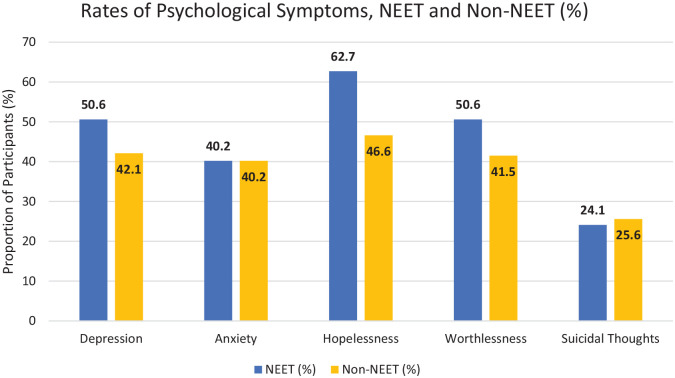
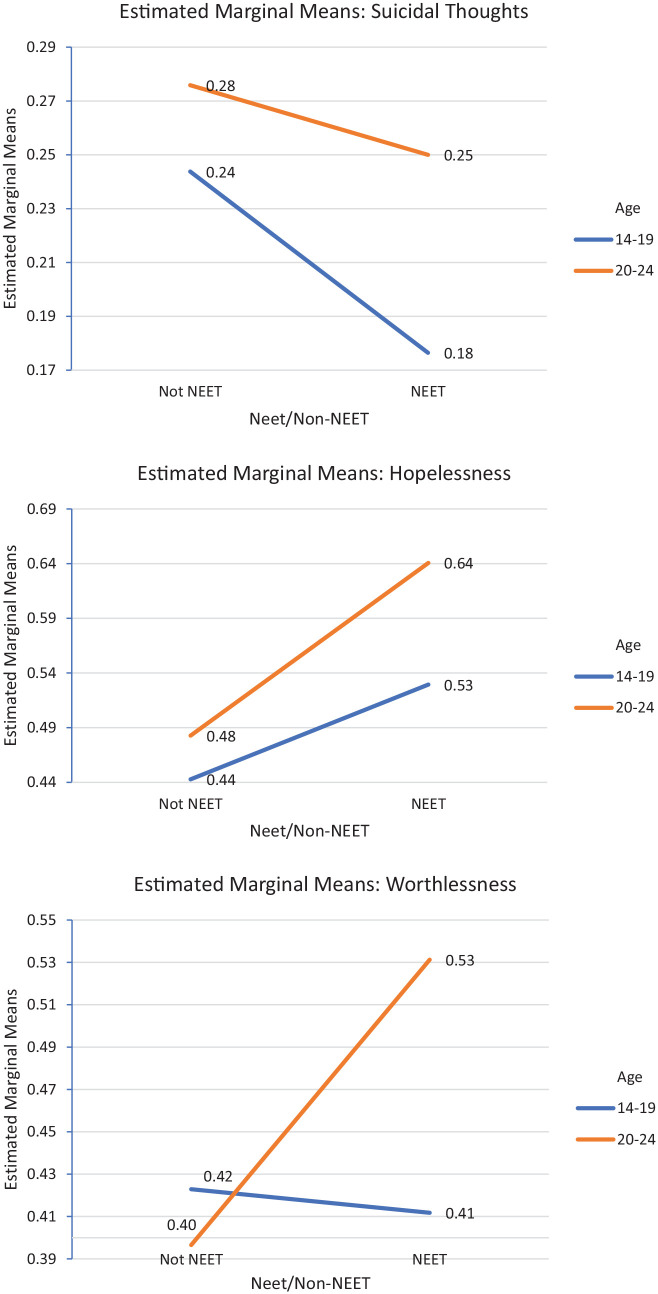
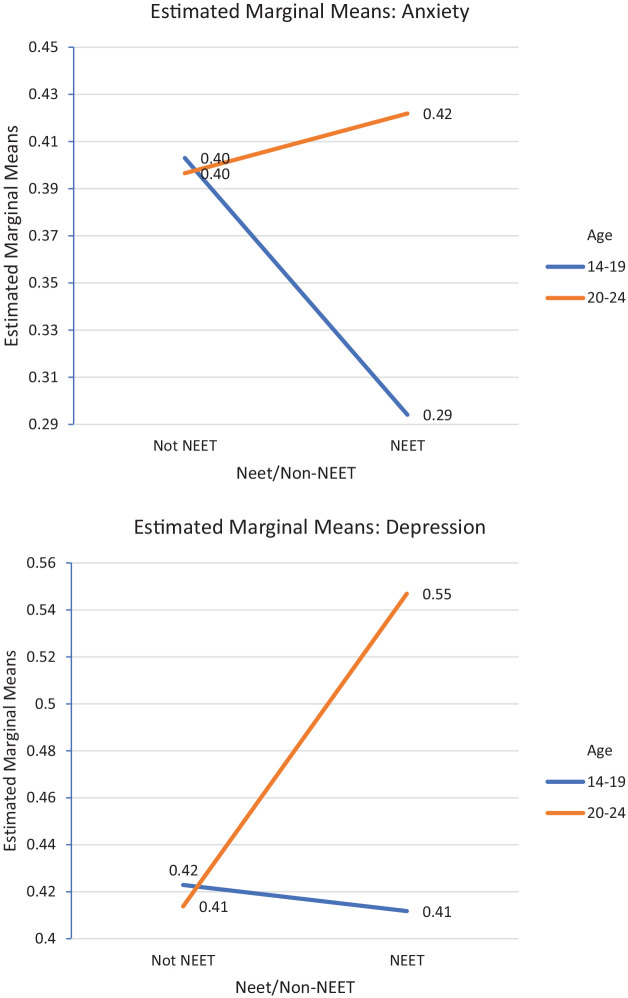
About 23% of the 355 male participants were NEET. There were no statistically significant differences in psychological distress or substance use between youth NEET and non-NEET, controlling for age.
The study highlights difficult transitions to post-secondary education and work for Black youth in rural SA where opportunities for employment are limited. Education, training and employment appear to offer limited benefit.
南非(SA)的青年失业率和未就业、未接受教育或培训(NEET)的青年率都位居世界前列,其中黑人南非青年的这两项比率更高。南非的 NEET 率是英国的 3 倍;是德国的 5.4 倍;是巴西的 1.3 倍;是马来西亚的 2.5 倍。鉴于 15 至 24 岁的青年占总人口的 24%,这对经济构成了重大挑战,并进一步加剧了贫困的周期性、普遍性和持久性。我们假设,农村地区的 NEET 青年比非 NEET 青年更普遍患有精神障碍和更高的物质使用率。本研究的目的是确定农村地区 14 至 24 岁非洲青年中,NEET 青年与非 NEET 青年之间心理困扰和物质使用率的差异。
本研究在南非夸祖鲁-纳塔尔省的一个偏远农村地区进行。我们将该地区的五个分区划分为两个集群(大集群和小集群),并随机选择每个集群中的一个分区纳入研究。我们进一步从每个分区随机选择一个行政区,然后从每个行政区随机选择农村定居点纳入研究。我们招募青年男性作为一项更大研究的一部分,以探讨南非农村地区性别暴力中重要的社会文化因素。我们使用多元方差分析(MANOVA)统计,在统计学上显著水平为<.005,比较了 15 至 19 岁和 20 至 24 岁的青年 NEET 和非 NEET 在心理困扰症状(抑郁、焦虑、自杀念头、绝望和无价值感)和物质滥用(包括酒精、大麻、其他娱乐性药物)方面的发生率。
在 355 名男性参与者中,约有 23%是 NEET。控制年龄后,青年 NEET 和非 NEET 在心理困扰或物质使用方面没有统计学上的显著差异。
本研究强调了南非农村地区黑人青年在接受中学后教育和就业方面面临的困难,因为那里的就业机会有限。教育、培训和就业似乎没有带来多大好处。