Department of Neurology, The First Hospital of Jilin University, Changchun, China.
Neurol Sci. 2022 Nov;43(11):6309-6321. doi: 10.1007/s10072-022-06301-7. Epub 2022 Jul 29.
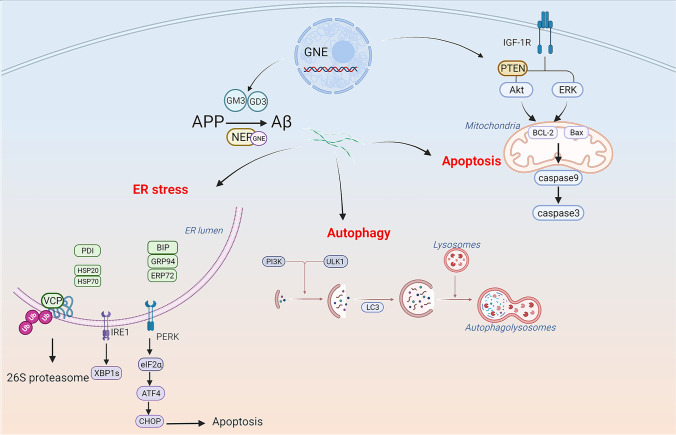
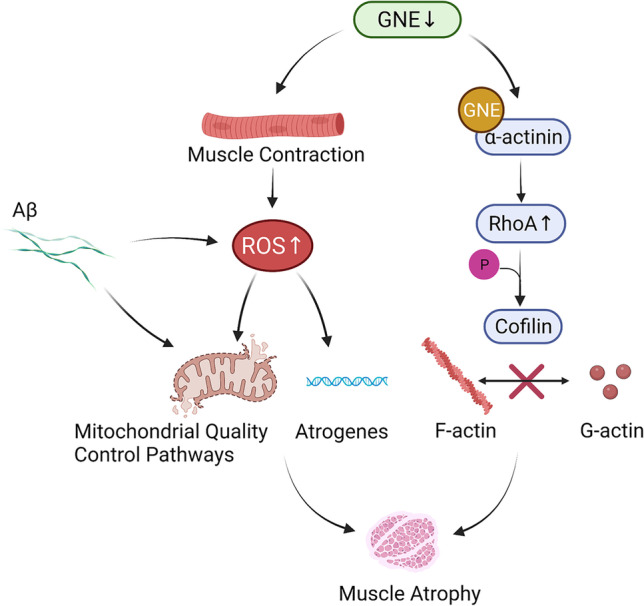
GNE myopathy is a hereditary muscle disorder characterized by muscle atrophy and weakness initially involving the lower distal extremities. The treatment of GNE myopathy mainly focuses on a sialic acid deficiency caused by a mutation in the GNE gene, but it has not achieved the expected effect. The main pathological features of GNE myopathy are myofiber atrophy and rimmed vacuoles, including accumulation of amyloid β, which is mainly found in atrophic muscle fibers. Although the role of amyloid β and other misfolded proteins on the nervous system has been widely recognized, the cause and process of the formation of amyloid β in the pathological process of GNE myopathy are unclear. In addition, amyloid β has been reported to be linked to quality control mechanisms of proteins, such as molecular chaperones, the ubiquitin-proteasome system, and the autophagy-lysosome system. Herein, we summarize the possible reasons for amyloid β deposition and illustrate amyloid β-mediated events in the cells and their role in muscle atrophy in GNE myopathy. This review represents an overview of amyloid β and GNE myopathy that could help identify a potential mechanism and thereby a plausible therapeutic for the disease.
GNE 肌病是一种遗传性肌肉疾病,其特征是肌肉萎缩和无力,最初涉及下肢远端。GNE 肌病的治疗主要集中在由 GNE 基因突变引起的唾液酸缺乏上,但尚未达到预期效果。GNE 肌病的主要病理特征是肌纤维萎缩和边缘空泡,包括淀粉样 β 的积累,主要存在于萎缩的肌纤维中。尽管淀粉样 β 和其他错误折叠蛋白对神经系统的作用已被广泛认可,但在 GNE 肌病的病理过程中淀粉样 β 形成的原因和过程尚不清楚。此外,已有报道称淀粉样 β 与蛋白质的质量控制机制有关,如分子伴侣、泛素-蛋白酶体系统和自噬-溶酶体系统。本文总结了淀粉样 β 沉积的可能原因,并阐述了淀粉样 β 在细胞内介导的事件及其在 GNE 肌病肌肉萎缩中的作用。本综述代表了对淀粉样 β 和 GNE 肌病的概述,有助于确定潜在的机制,并为该疾病提供合理的治疗方法。