Department of Microbiology, NYU Grossman School of Medicine, Alexandria Center for Life Science (ACLS), United States.
Genome Technology Center, Office of Science and Research, NYU Langone Health, United States.
EBioMedicine. 2022 Aug;82:104141. doi: 10.1016/j.ebiom.2022.104141. Epub 2022 Jul 26.
In 2021, Delta became the predominant SARS-CoV-2 variant worldwide. While vaccines have effectively prevented COVID-19 hospitalization and death, vaccine breakthrough infections increasingly occurred. The precise role of clinical and genomic determinants in Delta infections is not known, and whether they contributed to increased rates of breakthrough infections compared to unvaccinated controls.
We studied SARS-CoV-2 variant distribution, dynamics, and adaptive selection over time in relation to vaccine status, phylogenetic relatedness of viruses, full genome mutation profiles, and associated clinical and demographic parameters.
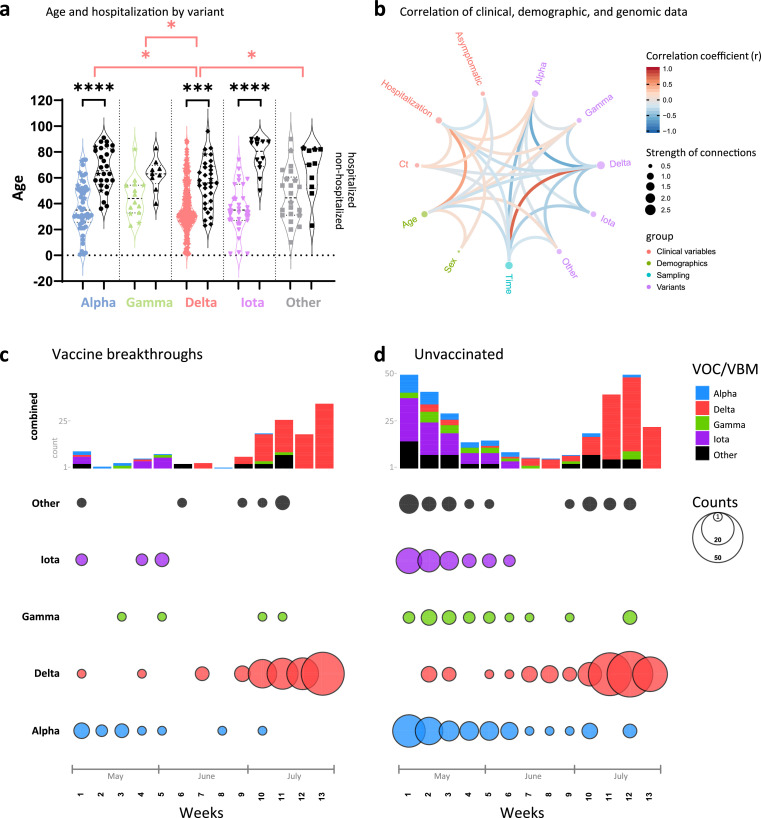
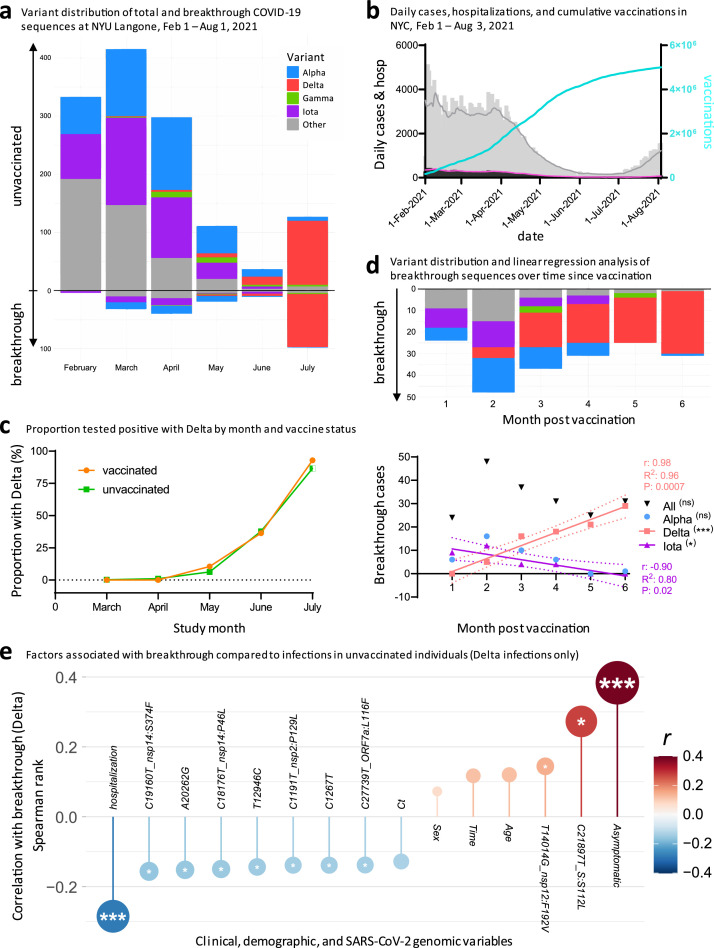
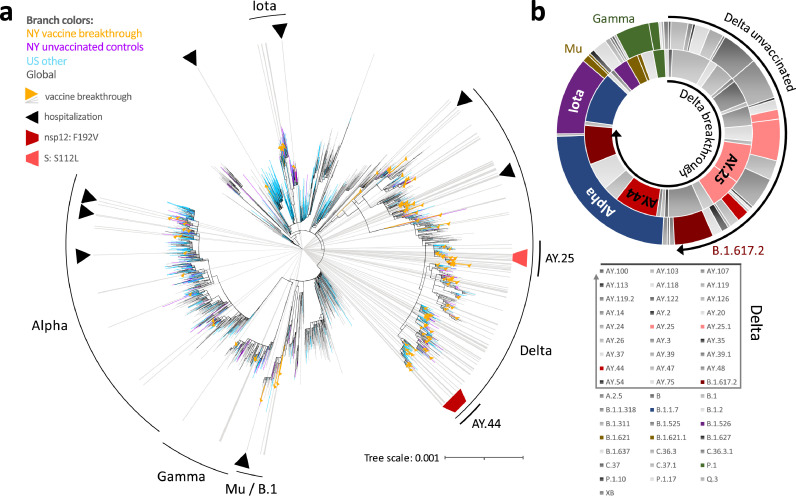
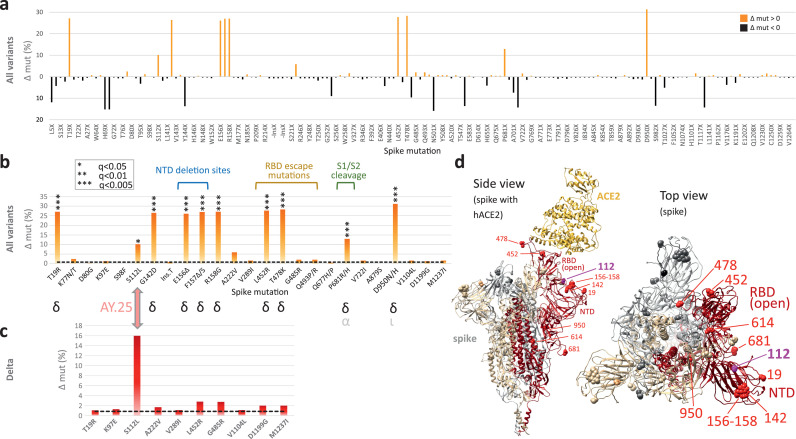
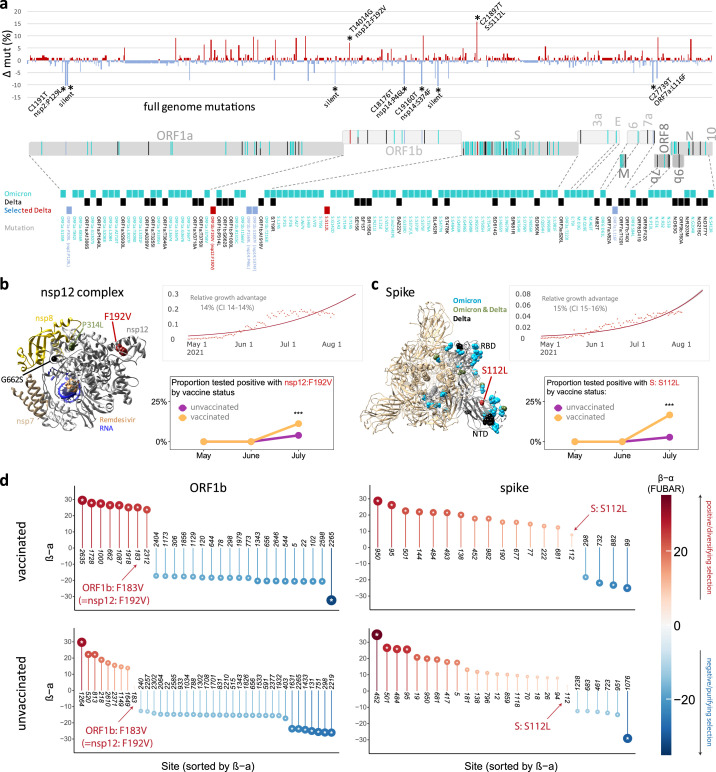
We show a steep and near-complete replacement of circulating variants with Delta between May and August 2021 in metropolitan New York. We observed an increase of the Delta sublineage AY.25 (14% in vaccinated, 7% in unvaccinated), its spike mutation S112L, and AY.44 (8% in vaccinated, 2% in unvaccinated) with its nsp12 mutation F192V in breakthroughs. Delta infections were associated with younger age and lower hospitalization rates than Alpha. Delta breakthrough infections increased significantly with time since vaccination, and, after adjusting for confounders, they rose at similar rates as in unvaccinated individuals.
We observed a modest adaptation of Delta genomes in breakthrough infections in New York, suggesting an improved genomic framework to support Delta's epidemic growth in times of waning vaccine protection despite limited impact on vaccine escape.
The study was supported by NYU institutional funds. The NYULH Genome Technology Center is partially supported by the Cancer Center Support Grant P30CA016087 at the Laura and Isaac Perlmutter Cancer Center.
2021 年,Delta 成为全球主要的 SARS-CoV-2 变体。虽然疫苗有效地预防了 COVID-19 住院和死亡,但疫苗突破性感染越来越多地发生。临床和基因组决定因素在 Delta 感染中的精确作用尚不清楚,与未接种疫苗的对照组相比,它们是否导致突破性感染率增加。
我们研究了 SARS-CoV-2 变体分布、随时间的动态变化以及与疫苗接种状态、病毒的系统发育关系、全基因组突变谱以及相关临床和人口统计学参数的适应性选择。
我们发现,2021 年 5 月至 8 月,在纽约大都市区,循环变体与 Delta 之间的替代率急剧上升且几乎完全替代。我们观察到 Delta 亚系 AY.25(接种疫苗者中为 14%,未接种疫苗者中为 7%)及其 Spike 突变 S112L 和 AY.44(接种疫苗者中为 8%,未接种疫苗者中为 2%)及其 nsp12 突变 F192V 在突破性感染中的增加。与 Alpha 相比,Delta 感染与年龄较小和住院率较低有关。Delta 突破性感染随着接种疫苗后时间的推移而显著增加,并且在调整混杂因素后,其增长率与未接种疫苗者相似。
我们观察到在纽约的突破性感染中,Delta 基因组发生了适度的适应,这表明在疫苗保护作用减弱的情况下,尽管对疫苗逃逸的影响有限,但 Delta 仍具有更好的基因组框架来支持其流行增长。
本研究由纽约大学机构资金支持。NYULH 基因组技术中心部分得到 Laura and Isaac Perlmutter 癌症中心的癌症中心支持赠款 P30CA016087 的支持。