Quijano-Rubio Clara, Silginer Manuela, Weller Michael
Laboratory of Molecular Neuro-Oncology, Department of Neurology, University Hospital Zurich, Zurich, Switzerland.
University of Zurich, Zurich, Switzerland.
Cell Death Discov. 2022 Jul 29;8(1):341. doi: 10.1038/s41420-022-01133-y.
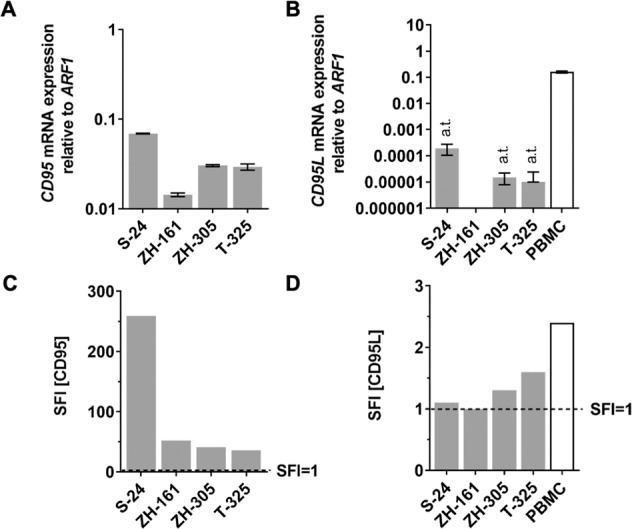
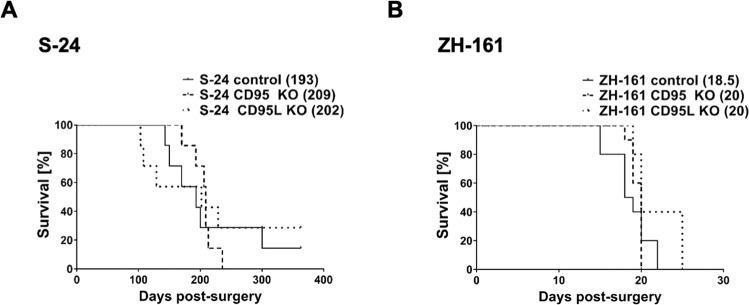
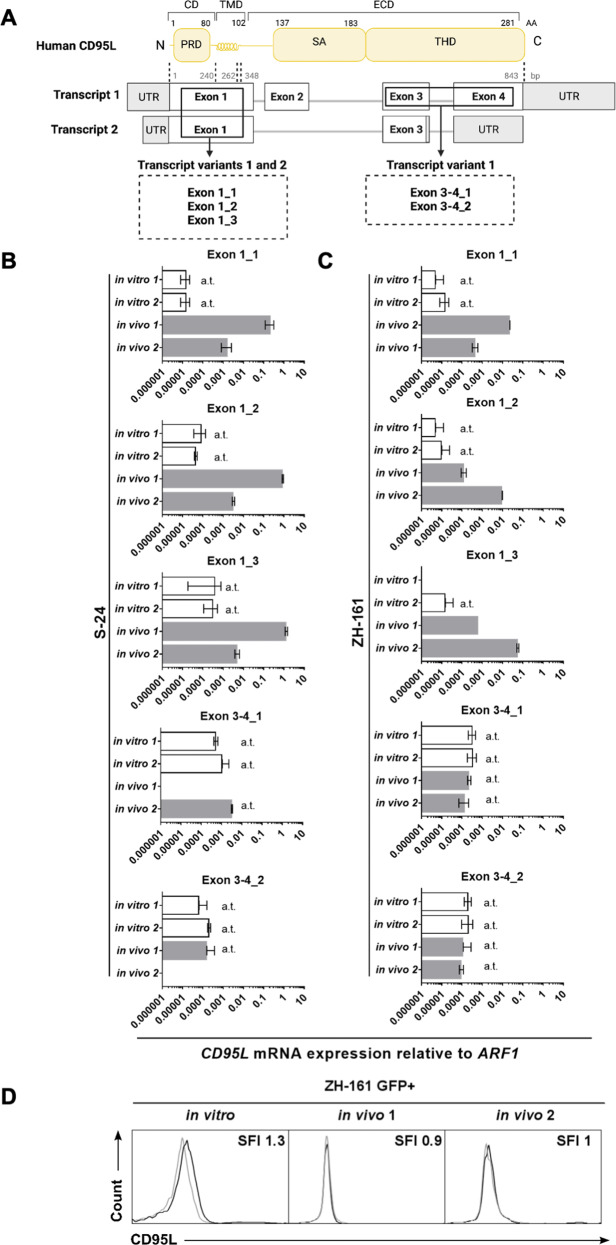
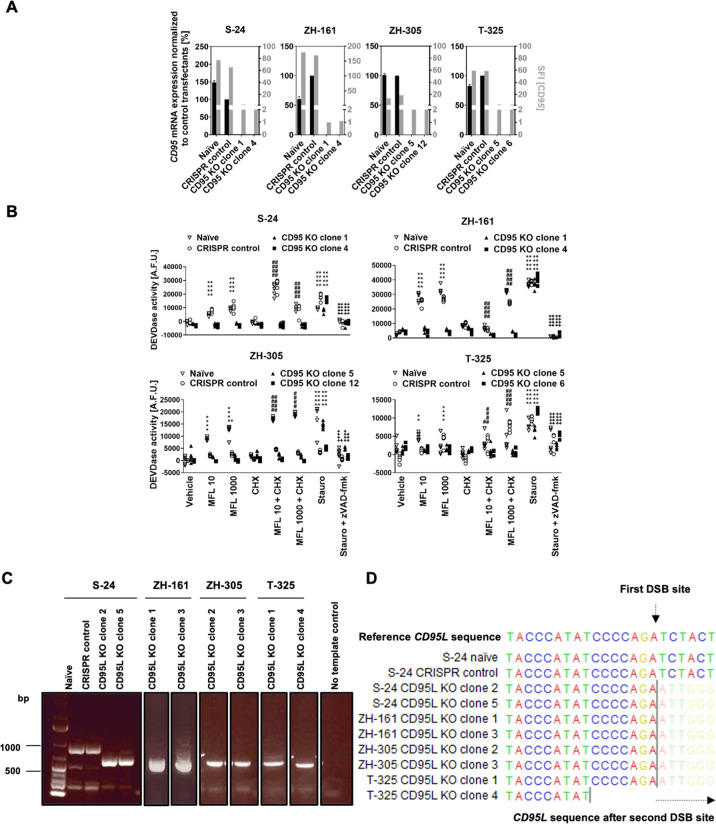
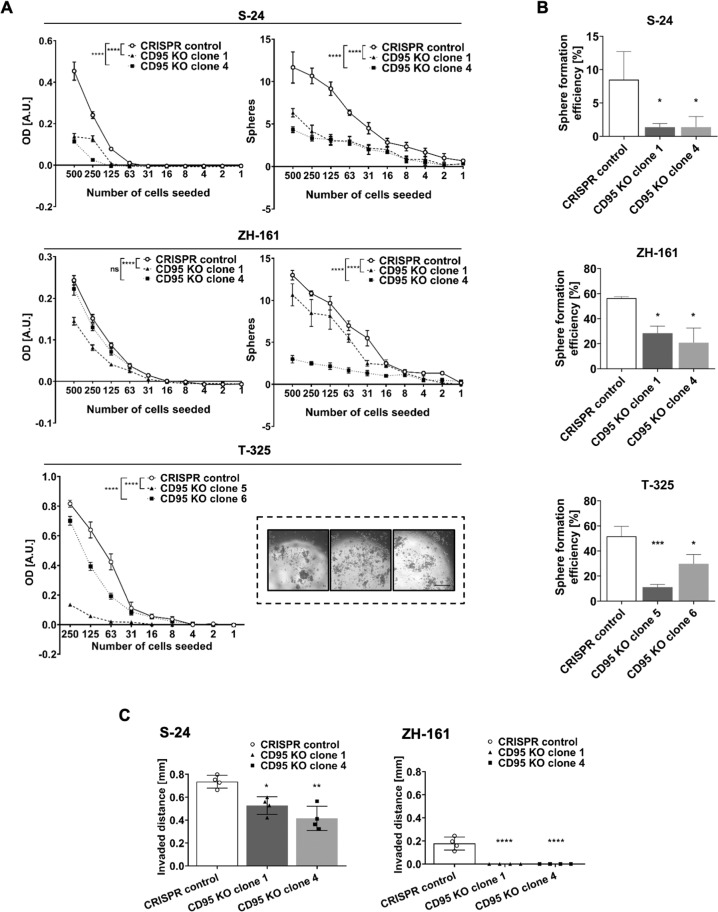
CD95 (Fas/APO-1) is a multifunctional cell surface receptor with antithetic roles. First described to mediate cell death, interactions of CD95 with its natural ligand, CD95L, have also been described to induce tumor-promoting signaling leading to proliferation, invasion and stem cell maintenance, mainly in cancer cells that are resistant to CD95-mediated apoptosis. While activation of CD95-mediated apoptosis in cancer cells may not be clinically practicable due to toxicity, inhibition of tumor-promoting CD95 signaling holds therapeutic potential. In the present study, we characterized CD95 and CD95L expression in human glioma-initiating cells (GIC), a glioblastoma cell population with stem cell features, and investigated the consequences of CRISPR-Cas9-mediated CD95 or CD95L gene deletion. In vitro, GIC expressed CD95 but not CD95L and were sensitive to CD95-mediated apoptosis. Upon genetic deletion of CD95, GIC acquired resistance to CD95L-induced apoptosis but exhibited inferior clonogenic growth, sphere-forming capacity, and invasiveness compared with control cells, suggesting the existence of CD95L-independent constitutive CD95 signaling with tumor-promoting properties in GIC. In vivo, GIC expressed CD95 and a non-canonical form of CD95L lacking the CD95-binding region. CD95 genetic deletion did not prolong survival in immunocompromised GIC-bearing mice. Altogether, these data indicate that canonical CD95L may not be expressed in human GIC and suggest the existence of a CD95L-independent CD95-signaling pathway that maintains some malignancy traits of GIC. The lack of altered survival of tumor-bearing mice after genetic deletion of CD95 suggests that CD95 signaling is not essential to maintain the growth of human GIC xenografted into the brains of nude mice. The ligand-independent tumor-promoting role of constitutive CD95 in our GIC models in vitro highlights the complexity and challenges associated with targeting CD95 with therapeutic intent.
CD95(Fas/APO-1)是一种具有相反作用的多功能细胞表面受体。最初被描述为介导细胞死亡,然而CD95与其天然配体CD95L的相互作用也被发现可诱导促进肿瘤的信号传导,从而导致增殖、侵袭和干细胞维持,主要发生在对CD95介导的凋亡具有抗性的癌细胞中。虽然由于毒性,激活癌细胞中CD95介导的凋亡在临床上可能不可行,但抑制促进肿瘤的CD95信号传导具有治疗潜力。在本研究中,我们对人胶质瘤起始细胞(GIC)(一种具有干细胞特征的胶质母细胞瘤细胞群体)中的CD95和CD95L表达进行了表征,并研究了CRISPR-Cas9介导的CD95或CD95L基因缺失的后果。在体外,GIC表达CD95但不表达CD95L,并且对CD95介导的凋亡敏感。CD95基因缺失后,GIC获得了对CD95L诱导的凋亡的抗性,但与对照细胞相比,其克隆形成生长、成球能力和侵袭性较差,这表明在GIC中存在具有促进肿瘤特性的不依赖CD95L的组成型CD95信号传导。在体内,GIC表达CD95和一种缺乏CD95结合区域的非经典形式的CD95L。CD95基因缺失并未延长免疫缺陷的荷GIC小鼠的存活时间。总之,这些数据表明人GIC中可能不表达经典的CD95L,并提示存在不依赖CD95L的CD95信号通路,该通路维持了GIC的一些恶性特征。CD95基因缺失后荷瘤小鼠存活时间未改变,这表明CD95信号传导对于维持移植到裸鼠脑内的人GIC的生长并非必不可少。在我们的体外GIC模型中,组成型CD95不依赖配体的促进肿瘤作用凸显了以治疗为目的靶向CD95所涉及的复杂性和挑战。