Wu Peijie, Yang Xiuqing, Qiao Ling, Gong Yanju
School of Basic Medical Sciences, Chengdu University of Traditional Chinese Medicine, Chengdu 611130, China.
Department of Pharmacy, Chengdu Women's and Children's Central Hospital, School of Medicine, University of Electronic Science and Technology of China, Chengdu 610041, China.
J Oncol. 2022 Jul 22;2022:3850674. doi: 10.1155/2022/3850674. eCollection 2022.
Many studies have demonstrated the promising utility of DNA methylation and miRNA as biomarkers for colorectal cancer (CRC) early detection. However, mRNA is rarely reported. This study aimed to identify novel fecal-based mRNA signatures.
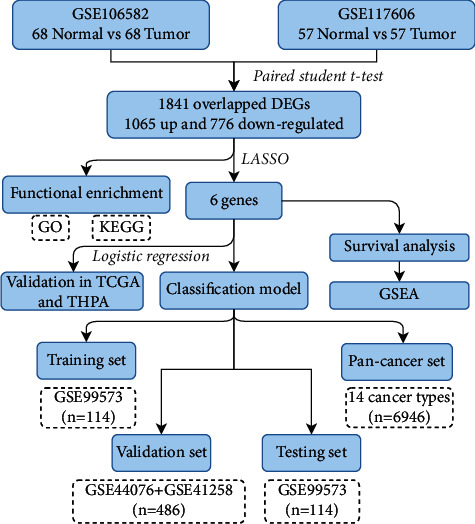
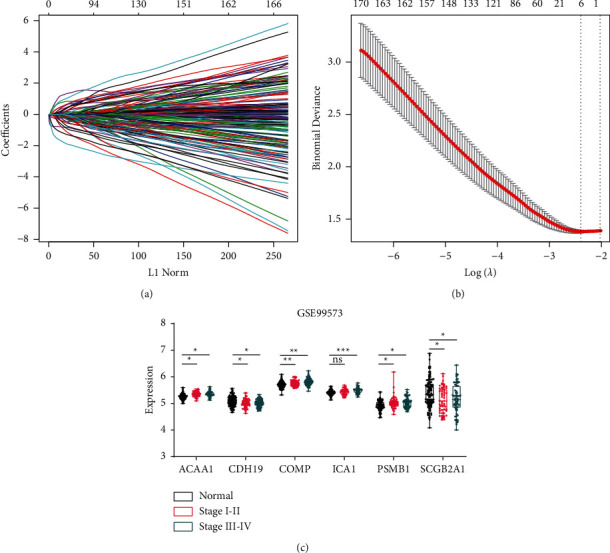
The differentially expressed genes (DEGs) were first determined between CRCs and matched normal samples by integrating multiple datasets. Then, Least Absolute Shrinkage and Selection Operator (LASSO) regression was used to reduce the number of candidates of aberrantly expressed genes. Next, the potential functions were investigated for the candidate signatures and their ability to detect CRC and pan-cancers was comprehensively evaluated.
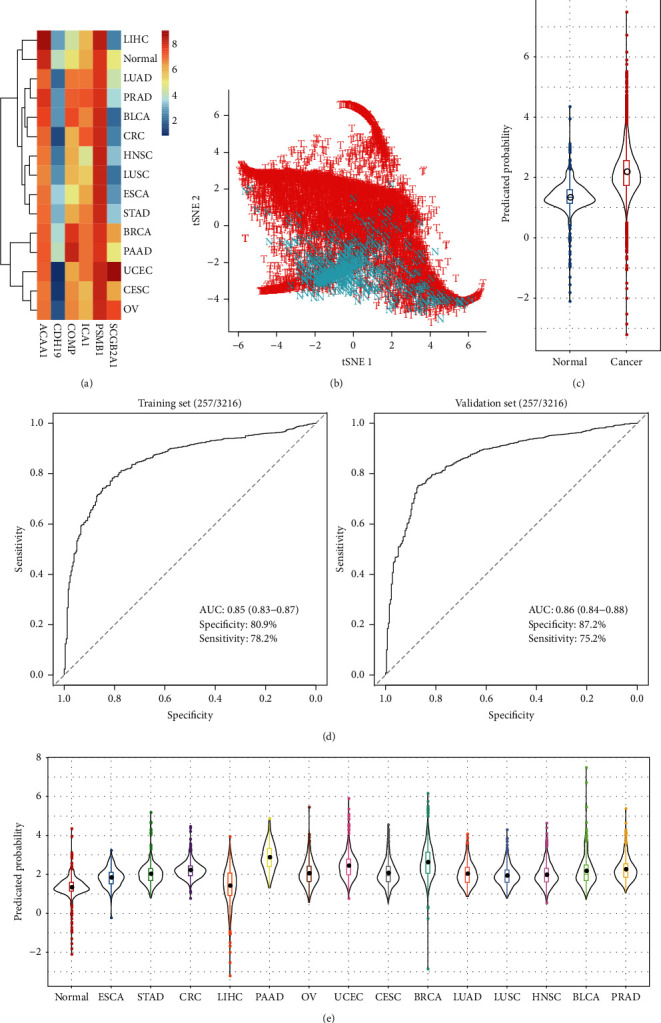
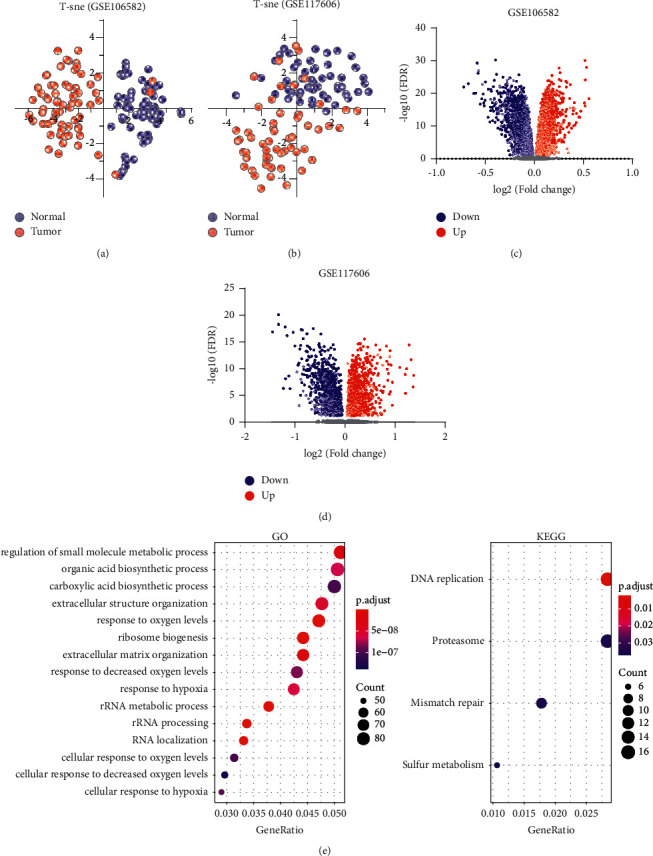
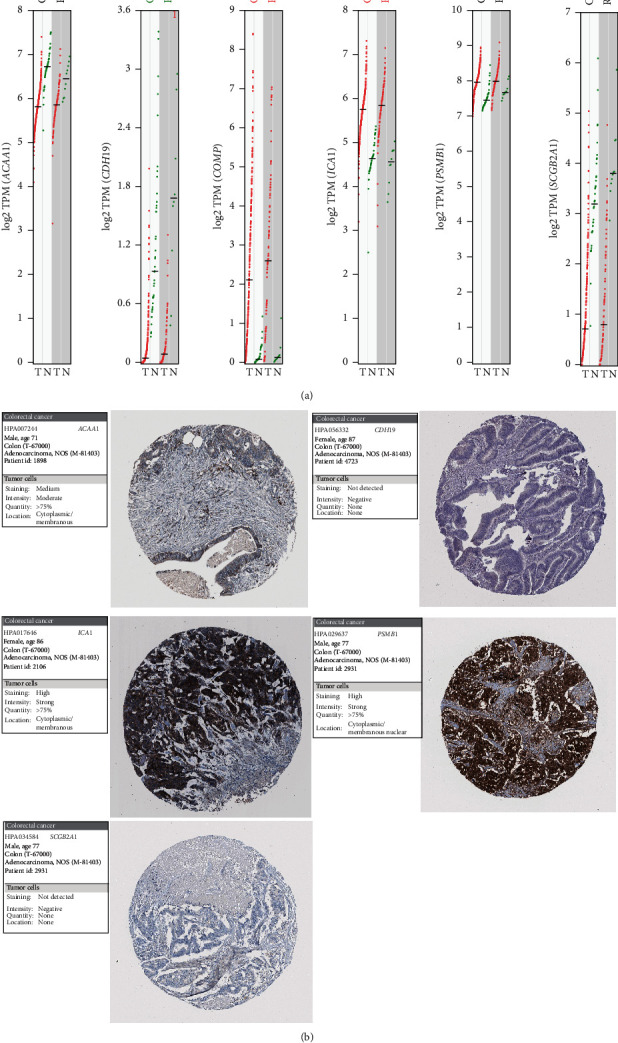
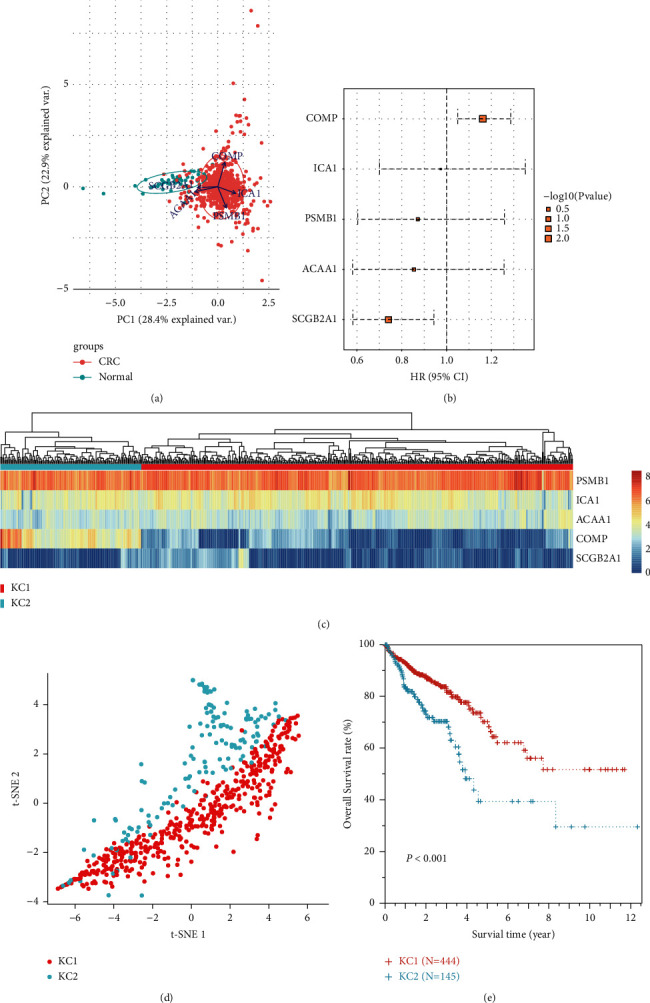
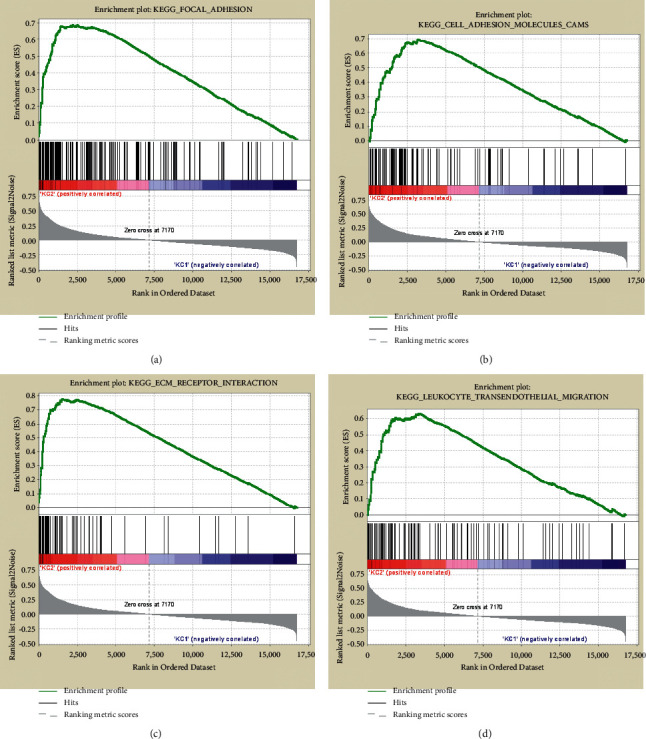
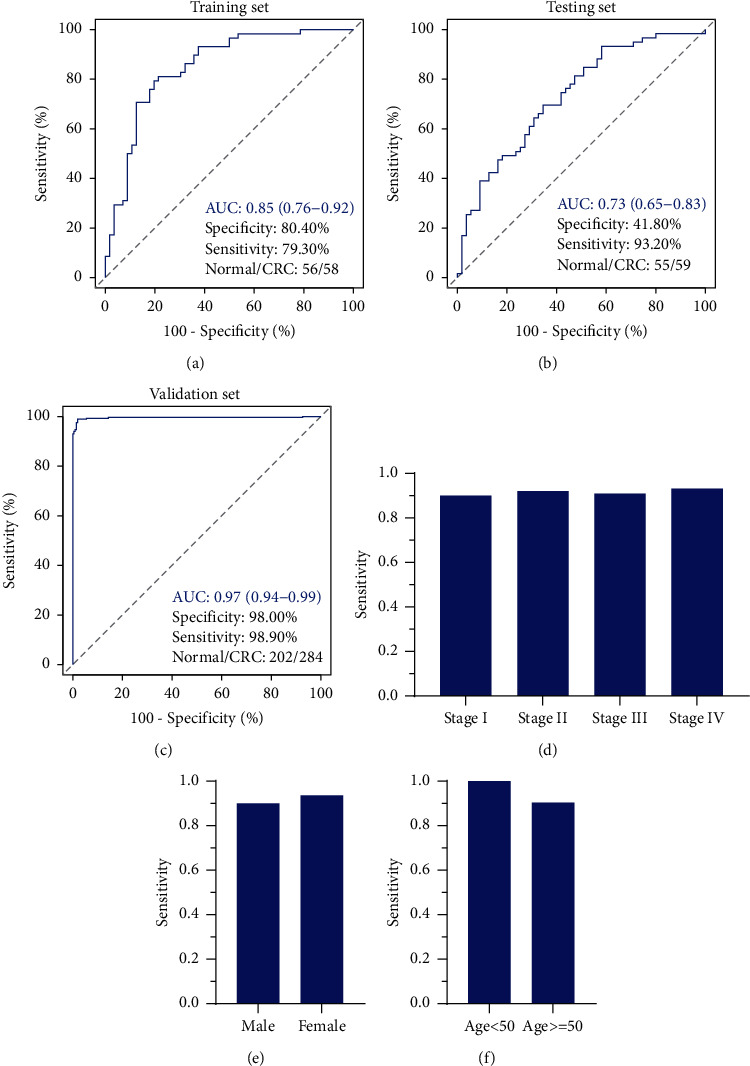
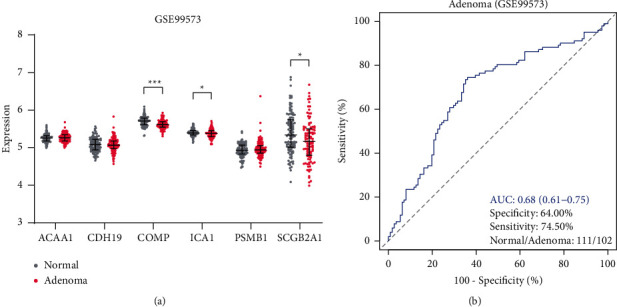
We identified 1841 common DEGs in two independent datasets. Functional enrichment analysis revealed they were mainly related to extracellular structure, biosynthesis, and cell adhesion. The CRC classifier was established based on six genes screened by LASSO regression. Sensitivity, specificity, and area under the ROC curve (AUC) for CRC detection were 79.30%, 80.40%, and 0.85 (0.76-0.92) in the training set, and these indexes achieved 93.20%, 41.80%, and 0.73 (0.65-0.83) in the testing set. For validation set, the sensitivity, specificity, and AUC were 98.90%, 98.00%, and 0.97 (0.94-0.99). The average sensitivities exceeded 90.00% for CRCs with different clinical features. For adenomas detection, the sensitivity and specificity were 74.50% and 64.00%. Besides, the six genes obtained an average AUC of 0.855 for pan-cancer detection.
The six-gene signatures showed ability to detect CRC and pan-cancer samples, which could be served as potential diagnostic markers.
许多研究已证明DNA甲基化和微小RNA作为生物标志物在结直肠癌(CRC)早期检测中具有广阔的应用前景。然而,信使核糖核酸(mRNA)的相关报道却很少。本研究旨在识别基于粪便的新型mRNA特征。
首先通过整合多个数据集来确定CRC与匹配的正常样本之间的差异表达基因(DEG)。然后,使用最小绝对收缩和选择算子(LASSO)回归来减少异常表达基因的候选数量。接下来,研究候选特征的潜在功能,并全面评估其检测CRC和泛癌的能力。
我们在两个独立数据集中鉴定出1841个常见的DEG。功能富集分析表明,它们主要与细胞外结构、生物合成和细胞粘附有关。基于LASSO回归筛选出的六个基因建立了CRC分类器。在训练集中,CRC检测的灵敏度、特异性和ROC曲线下面积(AUC)分别为79.30%、80.40%和0.85(0.76 - 0.92),在测试集中这些指标分别为93.20%、41.80%和0.73(0.65 - 0.83)。在验证集中,灵敏度、特异性和AUC分别为98.90%、98.00%和0.97(0.94 - 0.99)。对于具有不同临床特征的CRC,平均灵敏度超过90.00%。对于腺瘤检测,灵敏度和特异性分别为74.50%和64.00%。此外,这六个基因在泛癌检测中的平均AUC为0.855。
这六个基因特征显示出检测CRC和泛癌样本的能力,可作为潜在的诊断标志物。