Wang Houhong, Cui Yayun, Gong Huihui, Xu Jianguo, Huang Shuqin, Tang Amao
Department of General Surgery, The Affiliated Bozhou Hospital of Anhui Medical University, Bozhou, China.
Department of Cancer Radiotherapy, The First Affiliated Hospital of USTC, Division of Life Sciences and Medicine, (Anhui Provincial Cancer Hospital), University of Science and Technology of China, Hefei, China.
Front Bioeng Biotechnol. 2022 Jul 13;10:929979. doi: 10.3389/fbioe.2022.929979. eCollection 2022.
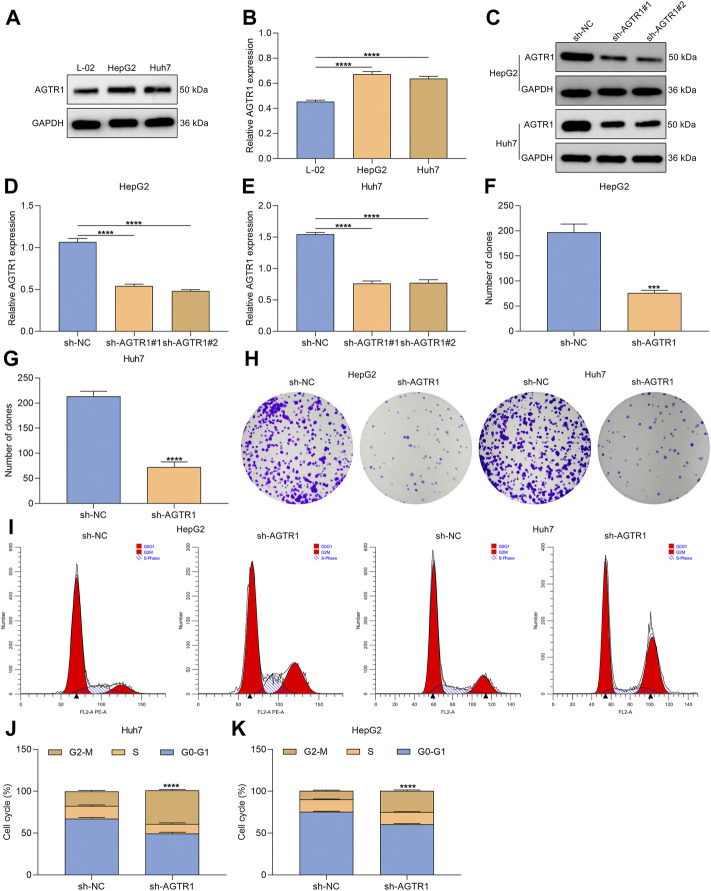
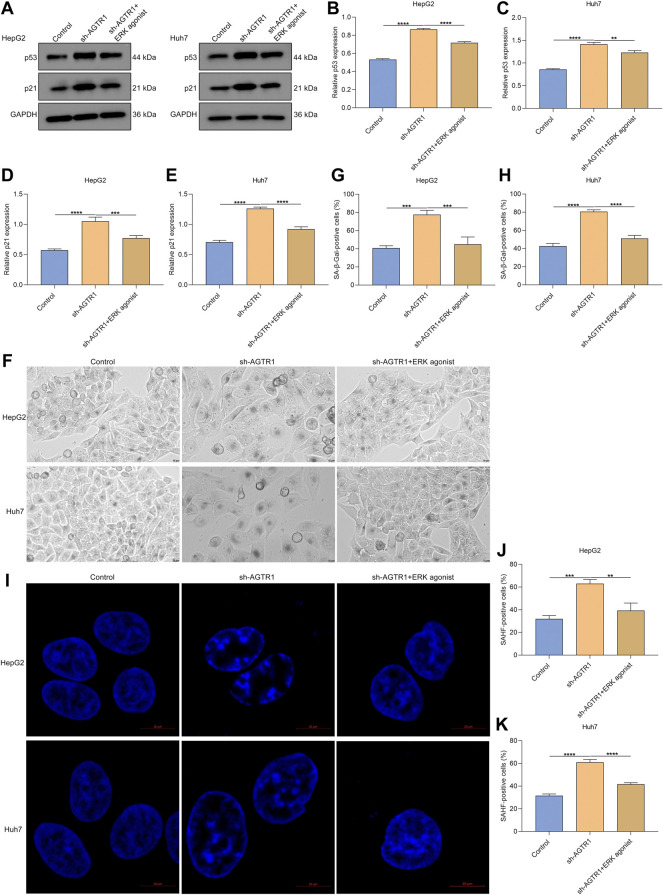
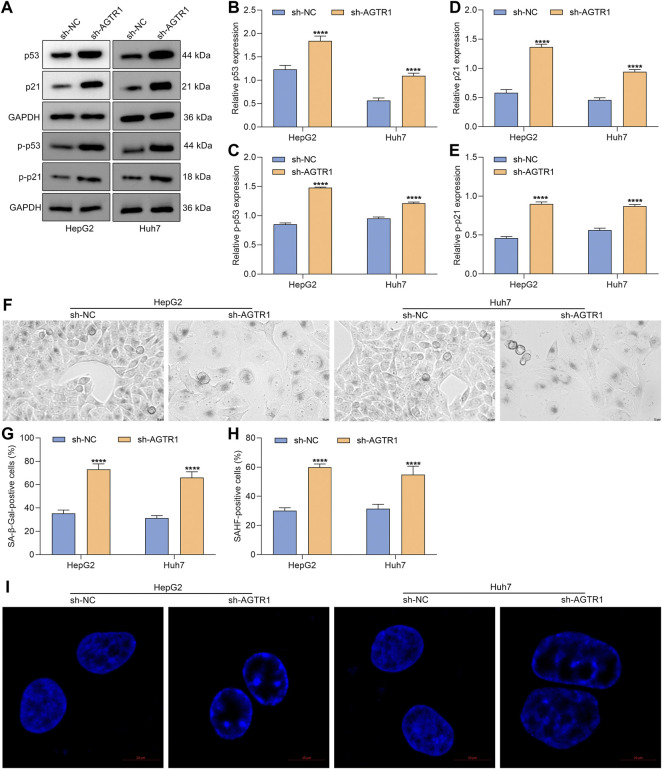
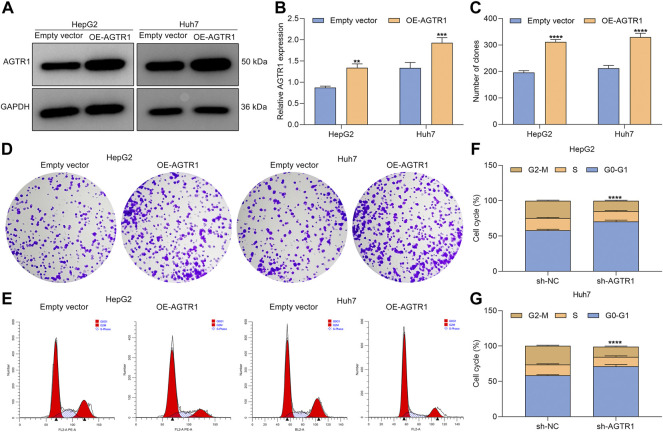
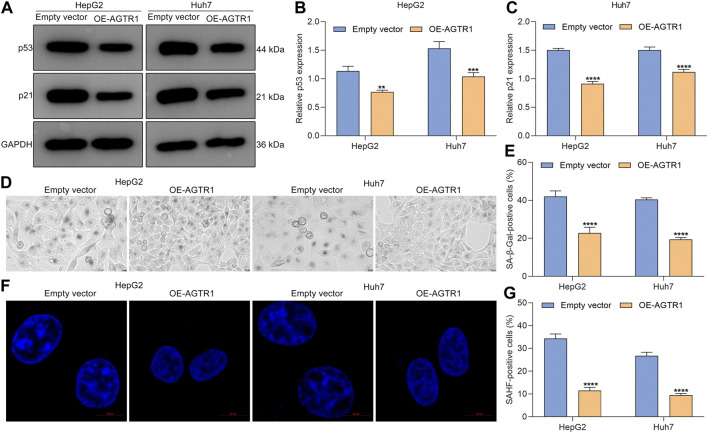
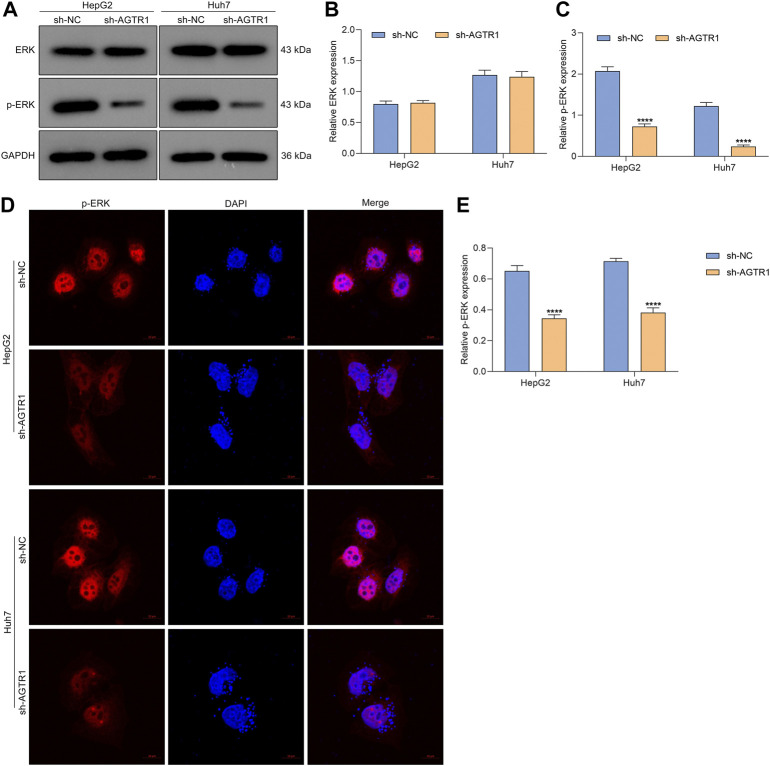
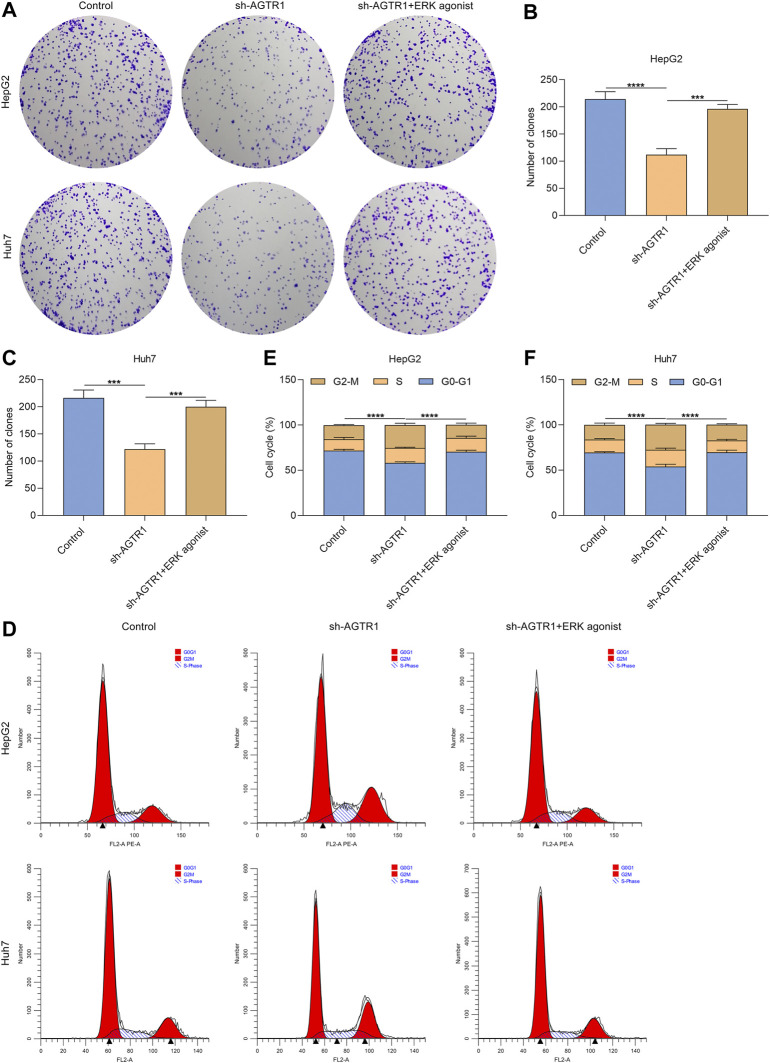
Cellular senescence is an effective barrier against tumorigenesis. Hence, it is of significance to characterize key features of cellular senescence and the induction of senescence in hepatocellular carcinoma (HCC) cells via pharmacological interventions. Our study determined the biological roles as well as mechanisms of angiotensin II type I receptor (AGTR1) on cellular senescence in HCC. Lentivirus vector-mediated overexpression or knockdown of AGTR1 was conducted in HCC cells, respectively. A volume of 8 μM sorafenib was used to induce cellular senescence, and ERK was activated by 30 ng/ml ERK agonist EGF. Proliferation was evaluated clone formation assay. HCC cell senescence was examined by flow cytometry for cell cycle, senescence-associated β-galactosidase (SA-β-gal) staining, and senescence-associated heterochromatin foci (SAHF) analysis. AGTR1, p53, p21, extracellular signal-regulated kinase (ERK), and p-ERK expression were assessed through Western blot or immunofluorescence. AGTR1-knockout HCC cells displayed the attenuated proliferative capacity, G2-M phase arrest, increased expression of p53 and p21, and elevated percentages of SA-β-gal- and SAHF-positive cells. In sorafenib-exposed HCC cells, overexpressed AGTR1 enhanced the proliferative capacity and alleviated G2-M phase arrest as well as decreased p53 and p21 expression and the proportions of SA-β-gal- and SAHF-positive cells. Moreover, AGTR1 knockdown attenuated the activity of p-ERK in HCC cells, and ERK agonist ameliorated AGTR1 knockdown-induced cellular senescence. This study demonstrates that suppression of AGTR1 induces cellular senescence in HCC through inactivating ERK signaling. The significant synergistic effect of AGTR1 suppression and sorafenib might represent a potential combination therapy for HCC.
细胞衰老对肿瘤发生是一种有效的屏障。因此,表征细胞衰老的关键特征以及通过药理学干预诱导肝癌(HCC)细胞衰老具有重要意义。我们的研究确定了血管紧张素II 1型受体(AGTR1)在HCC细胞衰老中的生物学作用及其机制。分别在HCC细胞中进行慢病毒载体介导的AGTR1过表达或敲低。使用8 μM索拉非尼诱导细胞衰老,并用30 ng/ml ERK激动剂表皮生长因子(EGF)激活ERK。通过克隆形成试验评估细胞增殖。通过流式细胞术检测细胞周期、衰老相关β-半乳糖苷酶(SA-β-gal)染色以及衰老相关异染色质灶(SAHF)分析来检测HCC细胞衰老情况。通过蛋白质免疫印迹法或免疫荧光法评估AGTR1、p53、p21、细胞外信号调节激酶(ERK)和磷酸化ERK(p-ERK)的表达。AGTR1基因敲除的HCC细胞表现出增殖能力减弱、G2-M期阻滞、p53和p21表达增加以及SA-β-gal和SAHF阳性细胞百分比升高。在索拉非尼处理的HCC细胞中,过表达的AGTR1增强了增殖能力,减轻了G2-M期阻滞,并降低了p53和p21的表达以及SA-β-gal和SAHF阳性细胞的比例。此外,AGTR1敲低减弱了HCC细胞中p-ERK的活性,而ERK激动剂改善了AGTR1敲低诱导的细胞衰老。本研究表明,抑制AGTR1通过使ERK信号失活诱导HCC细胞衰老。AGTR1抑制与索拉非尼的显著协同效应可能代表了一种潜在的HCC联合治疗方法。