Klein Jenny A, Haydar Tarik F
Graduate Program for Neuroscience, Boston University, Boston, MA, United States.
Children's National Hospital, Center for Neuroscience Research, Washington, DC, United States.
Front Cell Neurosci. 2022 Jul 15;16:941855. doi: 10.3389/fncel.2022.941855. eCollection 2022.
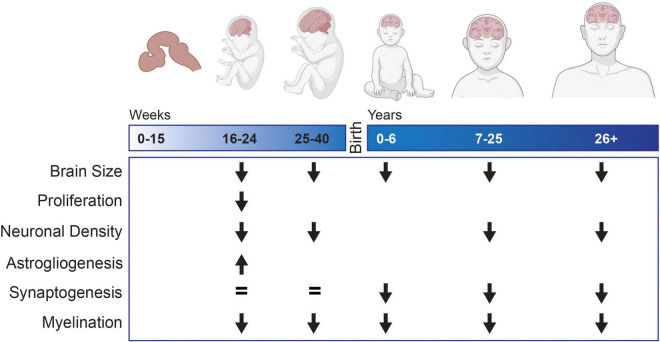
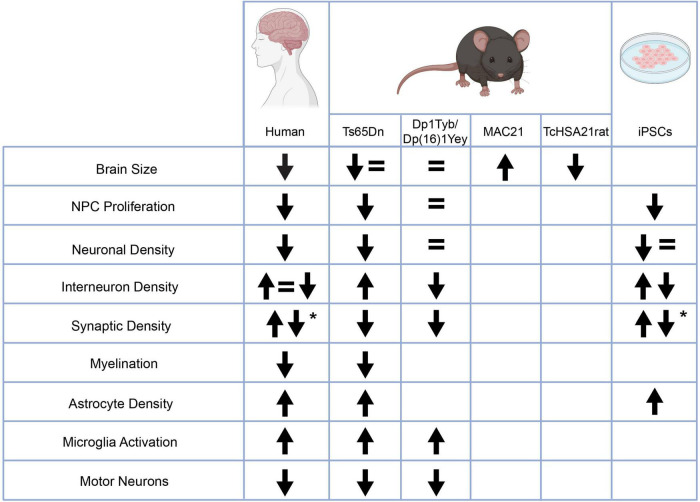
Great strides have been made over the past 30 years in understanding the neurodevelopmental changes underlying the intellectual disability (ID) in Down syndrome (DS). Detailed studies of human tissue coupled with findings from rodent and induced pluripotent stem cells (iPSCs) model systems have uncovered the changes in neurogenesis, synaptic connectivity, and myelination that drive the anatomical and physiological changes resulting in the disability. However, there remain significant conflicting data between human studies and the models. To fully understand the development of ID in DS, these inconsistencies need to be reconciled. Here, we review the well documented neurodevelopmental phenotypes found in individuals with DS and examine the degree to which widely used models recapitulate these phenotypes. Resolving these areas of discord will further research on the molecular underpinnings and identify potential treatments to improve the independence and quality of life of people with DS.
在过去30年里,我们在理解唐氏综合征(DS)所致智力残疾(ID)背后的神经发育变化方面取得了巨大进展。对人体组织的详细研究,再加上来自啮齿动物和诱导多能干细胞(iPSC)模型系统的研究结果,揭示了神经发生、突触连接和髓鞘形成的变化,这些变化驱动了解剖学和生理学变化,进而导致了残疾。然而,人体研究和模型之间仍存在大量相互矛盾的数据。为了全面了解DS中ID的发展,需要调和这些不一致之处。在这里,我们回顾了DS患者中记录充分的神经发育表型,并研究了广泛使用的模型重现这些表型的程度。解决这些不一致的领域将进一步推动对分子基础的研究,并确定潜在的治疗方法,以提高DS患者的独立性和生活质量。