• 文献检索
  • 文档翻译
  • 深度研究
  • 学术资讯
  • Suppr Zotero 插件Zotero 插件
  • 邀请有礼
  • 套餐&价格
  • 历史记录
应用&插件
Suppr Zotero 插件Zotero 插件浏览器插件Mac 客户端Windows 客户端微信小程序
定价
高级版会员购买积分包购买API积分包
服务
文献检索文档翻译深度研究API 文档MCP 服务
关于我们
关于 Suppr公司介绍联系我们用户协议隐私条款
关注我们

Suppr 超能文献

核心技术专利:CN118964589B侵权必究
粤ICP备2023148730 号-1Suppr @ 2026

文献检索

告别复杂PubMed语法,用中文像聊天一样搜索,搜遍4000万医学文献。AI智能推荐,让科研检索更轻松。

立即免费搜索

文件翻译

保留排版,准确专业,支持PDF/Word/PPT等文件格式,支持 12+语言互译。

免费翻译文档

深度研究

AI帮你快速写综述,25分钟生成高质量综述,智能提取关键信息,辅助科研写作。

立即免费体验

奥陶纪-志留纪之交上扬子地区古气候和古环境变化。

Changes in palaeoclimate and palaeoenvironment in the Upper Yangtze area (South China) during the Ordovician-Silurian transition.

机构信息

College of Earth Science and Engineering, Shandong University of Science and Technology, 579 Qianwangang Road, Huangdao District, Qingdao, 266590, Shandong Province, People's Republic of China.

Chengdu Institute of Geology and Mineral Resources, China Geological Survey, Chengdu, 610081, Sichuan Province, People's Republic of China.

出版信息

Sci Rep. 2022 Aug 1;12(1):13186. doi: 10.1038/s41598-022-17105-2.

DOI:10.1038/s41598-022-17105-2
PMID:35915216
原文链接:https://pmc.ncbi.nlm.nih.gov/articles/PMC9343391/
Abstract

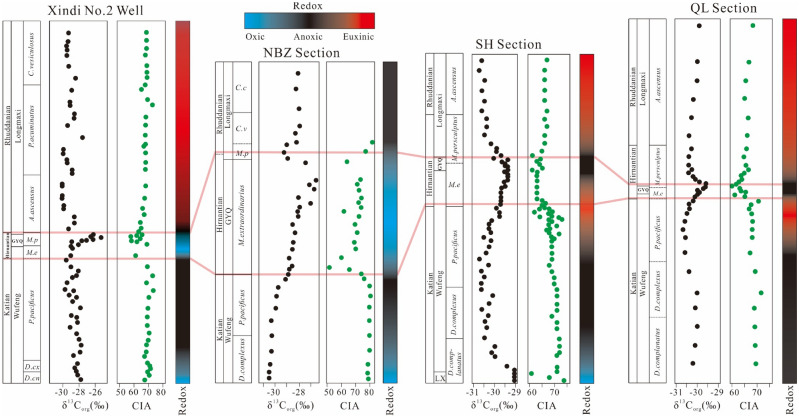
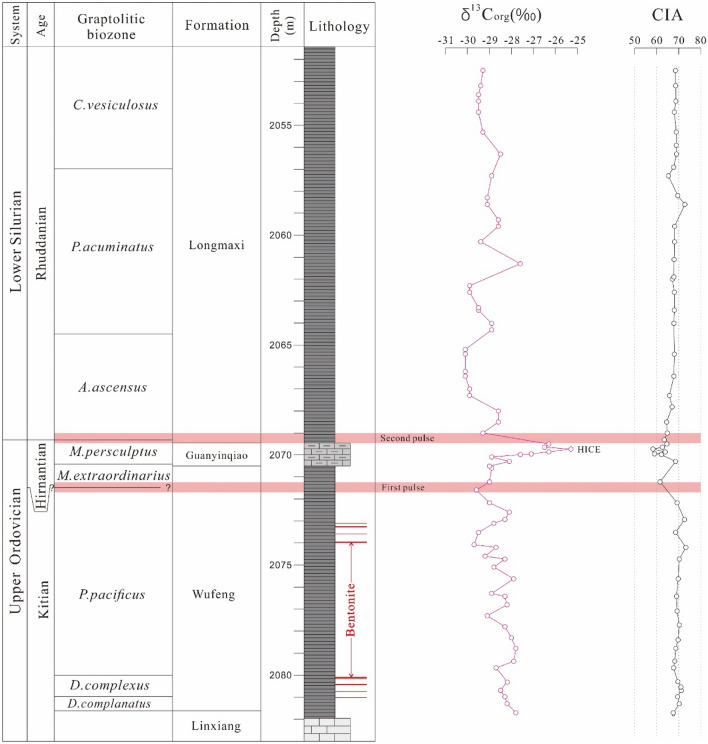
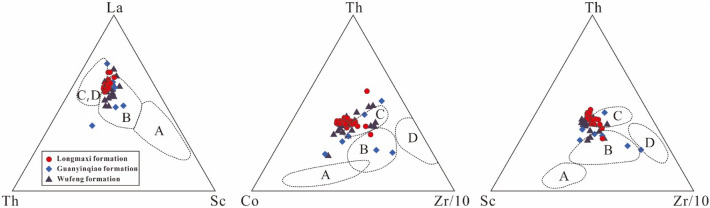
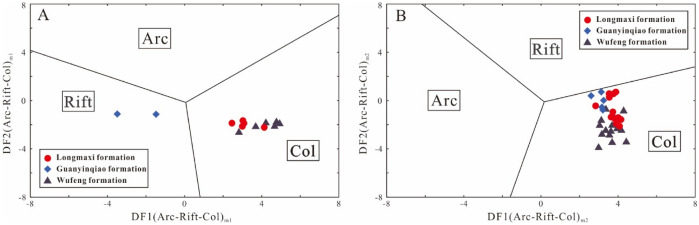
The Ordovician-Silurian transition was a critical period in geological history, during which profound changes in climatic, biotic, and oceanic conditions occurred. To explore the provenance, palaeoclimate, and palaeoredox conditions in the Sichuan Basin during the Late Ordovician-early Silurian interval, we conducted mineralogical, geochemical, and isotopic analyses of three formations (Wufeng, Guanyinqiao and Longmaxi formations) in the Xindi No. 2 well. The ternary and bivariate diagrams indicate that the provenance is mainly felsic igneous rocks and originated mainly from a collisional setting, presumably due to an active continental margin. The chemical index of alteration (CIA) values in the lower Wufeng and Longmaxi formations are relatively high (67.48-73.57), indicating a warm and humid climate. In contrast, the CIA values declined rapidly (58.30-64.66) during the late Katian to early Hirnantian, which had a fluctuating cold and dry climate and was interrupted by a transient warm and humid climate. The palaeoredox indices (Mo concentrations and Mo/U, U/Th, V/Cr, Ni/Co, and V/V + Ni values) during the Late Ordovician-early Silurian indicate two cycles of water column euxinia. The first cycle occurred during Wufeng Formation deposition, with bottom waters evolving from oxic-suboxic to suboxic-anoxic. Most samples show relatively low redox-sensitive trace element concentrations during the Guanyinqiao Formation, pointing to oxic-suboxic conditions. The second cycle, during the late Hirnantian, transitioned from oxic to euxinic water conditions. Our δC data are comparable to previously reported records and exhibit a strong correlation between the Hirnantian isotopic carbon excursion (HICE), climate change, and redox conditions. We suggest that the variations in the δC values are related to two elements: (1) increased photosynthetic activity under oxic water conditions, and (2) increased carbonate weathering exposed by the glacio-eustatic sea- level. In addition, the high δC values might indicate a more shelf-proximal setting during Xindi No. 2 well deposition. The δC isotopic data effectively constrain the timing of the Late Ordovician mass extinction (LOME) and the evolution of the temporal changes in the climatic and ocean redox conditions, suggesting an apparent stratigraphic coincidence between climate and redox fluctuations and two-phase extinctions, which implies a strong causal relationship. The LOME was systematically driven by the combination of cooler glacial temperatures, glacio-eustatic sea-level fluctuations, and anoxic water conditions that caused the two pulses of extinction in the Yangtze shelf sea.

摘要

奥陶纪-志留纪过渡时期是地质历史上的一个关键时期,在此期间,气候、生物和海洋条件发生了深刻的变化。为了探究四川盆地晚奥陶世-早志留世期间的物源、古气候和古氧化还原条件,我们对新地 2 号井的三个地层(五峰组、观音桥组和龙马溪组)进行了矿物学、地球化学和同位素分析。三元和二元图解表明,物源主要为长英质火成岩,主要来源于碰撞环境,可能是由于活动大陆边缘。下五峰组和龙马溪组的化学蚀变指数(CIA)值相对较高(67.48-73.57),表明气候温暖湿润。相比之下,在大灭绝晚期至早赫南特期,CIA 值迅速下降(58.30-64.66),气候波动不定,寒冷干燥,期间短暂出现温暖湿润气候。晚奥陶世-早志留世的古氧化还原指标(Mo 浓度和 Mo/U、U/Th、V/Cr、Ni/Co 和 V/V+Ni 值)表明,水柱缺氧事件发生了两个循环。第一个循环发生在五峰组沉积期间,底层水从氧化-亚缺氧演变为亚缺氧-缺氧。观音桥组的大多数样品显示相对较低的氧化还原敏感微量元素浓度,表明氧化-亚缺氧条件。第二个循环发生在晚赫南特期,从氧化转变为缺氧水条件。我们的δC 数据与以前的报告记录相当,并显示出赫南特同位素碳激变(HICE)、气候变化和氧化还原条件之间的强烈相关性。我们认为,δC 值的变化与两个因素有关:(1)在含氧水条件下光合作用活性的增加,以及(2)冰川海平面变化暴露的碳酸盐风化作用的增加。此外,高 δC 值可能表明新地 2 号井沉积期间更靠近陆架的位置。δC 同位素数据有效地约束了晚奥陶世大灭绝(LOME)的时间,并揭示了气候和海洋氧化还原条件随时间变化的演化,表明气候和氧化还原波动与两个阶段灭绝之间存在明显的地层一致性,这意味着两者之间存在强烈的因果关系。LOME 是由较冷的冰川温度、冰川海平面波动和缺氧水条件的综合作用驱动的,这导致了扬子陆架海的两次灭绝脉冲。
https://cdn.ncbi.nlm.nih.gov/pmc/blobs/a2af/9343391/013a45ab7f6a/41598_2022_17105_Fig15_HTML.jpg
https://cdn.ncbi.nlm.nih.gov/pmc/blobs/a2af/9343391/e57b79694afd/41598_2022_17105_Fig1_HTML.jpg
https://cdn.ncbi.nlm.nih.gov/pmc/blobs/a2af/9343391/e60fef931f64/41598_2022_17105_Fig2_HTML.jpg
https://cdn.ncbi.nlm.nih.gov/pmc/blobs/a2af/9343391/b0841c6869aa/41598_2022_17105_Fig3_HTML.jpg
https://cdn.ncbi.nlm.nih.gov/pmc/blobs/a2af/9343391/2c0fc29a4852/41598_2022_17105_Fig4_HTML.jpg
https://cdn.ncbi.nlm.nih.gov/pmc/blobs/a2af/9343391/09f377038c23/41598_2022_17105_Fig5_HTML.jpg
https://cdn.ncbi.nlm.nih.gov/pmc/blobs/a2af/9343391/66356f269855/41598_2022_17105_Fig6_HTML.jpg
https://cdn.ncbi.nlm.nih.gov/pmc/blobs/a2af/9343391/2410da2099b9/41598_2022_17105_Fig7_HTML.jpg
https://cdn.ncbi.nlm.nih.gov/pmc/blobs/a2af/9343391/34a3a590d466/41598_2022_17105_Fig8_HTML.jpg
https://cdn.ncbi.nlm.nih.gov/pmc/blobs/a2af/9343391/55a414ed82d8/41598_2022_17105_Fig9_HTML.jpg
https://cdn.ncbi.nlm.nih.gov/pmc/blobs/a2af/9343391/25aef5d770e4/41598_2022_17105_Fig10_HTML.jpg
https://cdn.ncbi.nlm.nih.gov/pmc/blobs/a2af/9343391/7f9f2a3927b9/41598_2022_17105_Fig11_HTML.jpg
https://cdn.ncbi.nlm.nih.gov/pmc/blobs/a2af/9343391/1a88cd1d305a/41598_2022_17105_Fig12_HTML.jpg
https://cdn.ncbi.nlm.nih.gov/pmc/blobs/a2af/9343391/e4cfb62a8c1a/41598_2022_17105_Fig13_HTML.jpg
https://cdn.ncbi.nlm.nih.gov/pmc/blobs/a2af/9343391/926e21740ee2/41598_2022_17105_Fig14_HTML.jpg
https://cdn.ncbi.nlm.nih.gov/pmc/blobs/a2af/9343391/013a45ab7f6a/41598_2022_17105_Fig15_HTML.jpg
https://cdn.ncbi.nlm.nih.gov/pmc/blobs/a2af/9343391/e57b79694afd/41598_2022_17105_Fig1_HTML.jpg
https://cdn.ncbi.nlm.nih.gov/pmc/blobs/a2af/9343391/e60fef931f64/41598_2022_17105_Fig2_HTML.jpg
https://cdn.ncbi.nlm.nih.gov/pmc/blobs/a2af/9343391/b0841c6869aa/41598_2022_17105_Fig3_HTML.jpg
https://cdn.ncbi.nlm.nih.gov/pmc/blobs/a2af/9343391/2c0fc29a4852/41598_2022_17105_Fig4_HTML.jpg
https://cdn.ncbi.nlm.nih.gov/pmc/blobs/a2af/9343391/09f377038c23/41598_2022_17105_Fig5_HTML.jpg
https://cdn.ncbi.nlm.nih.gov/pmc/blobs/a2af/9343391/66356f269855/41598_2022_17105_Fig6_HTML.jpg
https://cdn.ncbi.nlm.nih.gov/pmc/blobs/a2af/9343391/2410da2099b9/41598_2022_17105_Fig7_HTML.jpg
https://cdn.ncbi.nlm.nih.gov/pmc/blobs/a2af/9343391/34a3a590d466/41598_2022_17105_Fig8_HTML.jpg
https://cdn.ncbi.nlm.nih.gov/pmc/blobs/a2af/9343391/55a414ed82d8/41598_2022_17105_Fig9_HTML.jpg
https://cdn.ncbi.nlm.nih.gov/pmc/blobs/a2af/9343391/25aef5d770e4/41598_2022_17105_Fig10_HTML.jpg
https://cdn.ncbi.nlm.nih.gov/pmc/blobs/a2af/9343391/7f9f2a3927b9/41598_2022_17105_Fig11_HTML.jpg
https://cdn.ncbi.nlm.nih.gov/pmc/blobs/a2af/9343391/1a88cd1d305a/41598_2022_17105_Fig12_HTML.jpg
https://cdn.ncbi.nlm.nih.gov/pmc/blobs/a2af/9343391/e4cfb62a8c1a/41598_2022_17105_Fig13_HTML.jpg
https://cdn.ncbi.nlm.nih.gov/pmc/blobs/a2af/9343391/926e21740ee2/41598_2022_17105_Fig14_HTML.jpg
https://cdn.ncbi.nlm.nih.gov/pmc/blobs/a2af/9343391/013a45ab7f6a/41598_2022_17105_Fig15_HTML.jpg

相似文献

1
Changes in palaeoclimate and palaeoenvironment in the Upper Yangtze area (South China) during the Ordovician-Silurian transition.奥陶纪-志留纪之交上扬子地区古气候和古环境变化。
Sci Rep. 2022 Aug 1;12(1):13186. doi: 10.1038/s41598-022-17105-2.
2
Rare Earth Element Characteristics of Shales from Wufeng-Longmaxi Formations in Deep-Buried Areas of the Northern Sichuan Basin, Southern China: Implications for Provenance, Depositional Conditions, and Paleoclimate.中国南方四川盆地北部深埋区五峰-龙马溪组页岩的稀土元素特征:对物源、沉积条件及古气候的启示
ACS Omega. 2024 Jan 1;9(2):2088-2103. doi: 10.1021/acsomega.3c03086. eCollection 2024 Jan 16.
3
Reconstructing the Climatic-Oceanic Environment and Exploring the Enrichment Mechanism of Organic Matter in the Black Shale across the Late Ordovician-Early Silurian Transition on the Upper Yangtze Platform Using Geochemical Proxies.利用地球化学指标重建上扬子地台上奥陶统—志留系过渡时期的气候海洋环境并探讨黑色页岩中有机质的富集机制
ACS Omega. 2020 Oct 19;5(42):27442-27454. doi: 10.1021/acsomega.0c03912. eCollection 2020 Oct 27.
4
Geochemical Changes in the Late Ordovician to Early Silurian Interval in the Northern Margin of the Upper Yangtze Platform, Southern China: Implications for Hydrothermal Influences and Paleocean Redox Circumstances.中国南方上扬子地台北缘晚奥陶世至早志留世期间的地球化学变化:对热液影响和古海洋氧化还原环境的启示
ACS Omega. 2023 Mar 28;8(14):13078-13096. doi: 10.1021/acsomega.3c00277. eCollection 2023 Apr 11.
5
Elemental Geochemical Characteristics of Shales from Wufeng-Longmaxi Formations in the Southern Margin of the Qinling Orogenic Belt, China: Implications for Depositional Controls on Organic Matter.中国秦岭造山带南缘五峰组—龙马溪组页岩的元素地球化学特征:对有机质沉积控制的启示
ACS Omega. 2024 Jul 15;9(29):31488-31507. doi: 10.1021/acsomega.4c01129. eCollection 2024 Jul 23.
6
Different controls on the Hg spikes linked the two pulses of the Late Ordovician mass extinction in South China.不同的汞峰值控制因素将华南地区奥陶纪末期大灭绝的两个脉冲联系起来。
Sci Rep. 2022 Mar 25;12(1):5195. doi: 10.1038/s41598-022-08941-3.
7
Abrupt global-ocean anoxia during the Late Ordovician-early Silurian detected using uranium isotopes of marine carbonates.利用海洋碳酸盐铀同位素检测到奥陶纪晚期-志留纪早期的突发性全球海洋缺氧事件。
Proc Natl Acad Sci U S A. 2018 Jun 5;115(23):5896-5901. doi: 10.1073/pnas.1802438115. Epub 2018 May 21.
8
Integrated carbon, sulfur, and nitrogen isotope chemostratigraphy of the Ediacaran Lantian Formation in South China: Spatial gradient, ocean redox oscillation, and fossil distribution.中国南方埃迪卡拉纪蓝田组碳、硫和氮同位素综合化学地层学:空间梯度、海洋氧化还原振荡与化石分布
Geobiology. 2017 Jul;15(4):552-571. doi: 10.1111/gbi.12226. Epub 2017 Jan 6.
9
Isotopic evidence of environmental changes during the Devonian-Carboniferous transition in South China and its implications for the biotic crisis.华南泥盆纪-石炭纪之交环境变化的同位素证据及其对生物危机的意义。
Geobiology. 2023 Sep;21(5):592-611. doi: 10.1111/gbi.12559. Epub 2023 May 17.
10
Biogeographic and bathymetric determinants of brachiopod extinction and survival during the Late Ordovician mass extinction.晚奥陶世大灭绝期间腕足动物灭绝和生存的生物地理及测深学决定因素
Proc Biol Sci. 2016 Apr 27;283(1829). doi: 10.1098/rspb.2016.0007.

引用本文的文献

1
Depositional environment of the late Paleocene-early Eocene Sinjar Formation, Iraq: Implications from facies analysis, mineralogical and geochemical proxies.伊拉克晚古新世-早始新世辛贾尔组的沉积环境:来自相分析、矿物学和地球化学指标的启示
Heliyon. 2024 Feb 10;10(4):e25657. doi: 10.1016/j.heliyon.2024.e25657. eCollection 2024 Feb 29.

本文引用的文献

1
The magnitude and duration of Late Ordovician-Early Silurian glaciation.晚奥陶世-早志留世冰川作用的规模和持续时间。
Science. 2011 Feb 18;331(6019):903-6. doi: 10.1126/science.1200803. Epub 2011 Jan 27.
2
Geochemistry of approximately 1.9 Ga sedimentary rocks from northeastern Labrador, Canada.加拿大拉布拉多东北部约19亿年前沉积岩的地球化学特征
Geochim Cosmochim Acta. 1997;61(19):4115-37. doi: 10.1016/s0016-7037(97)00214-7.