Department of Gynecology and Obstetrics, HanDan Central Hospital, Handan, Hebei 056008, P.R. China.
Oncol Rep. 2022 Oct;48(4). doi: 10.3892/or.2022.8384. Epub 2022 Aug 3.
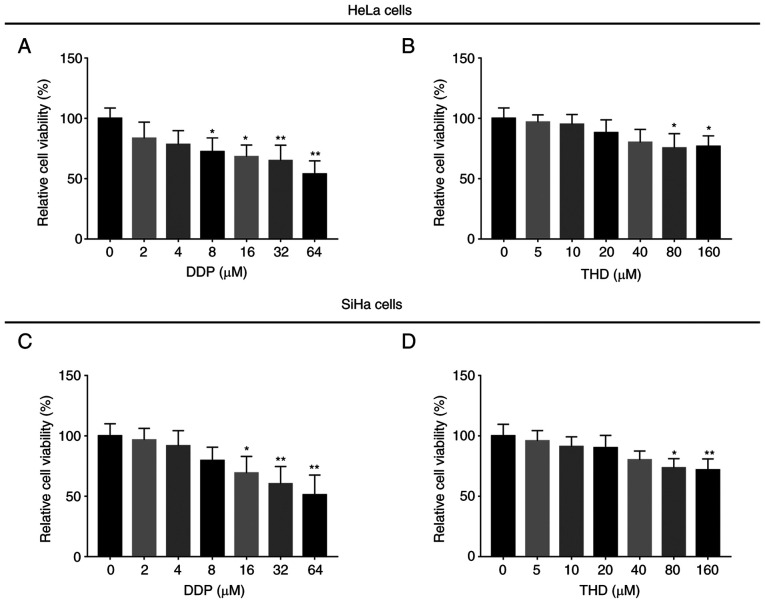
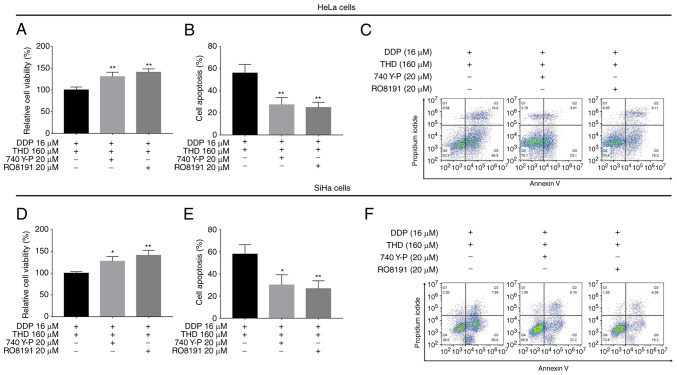
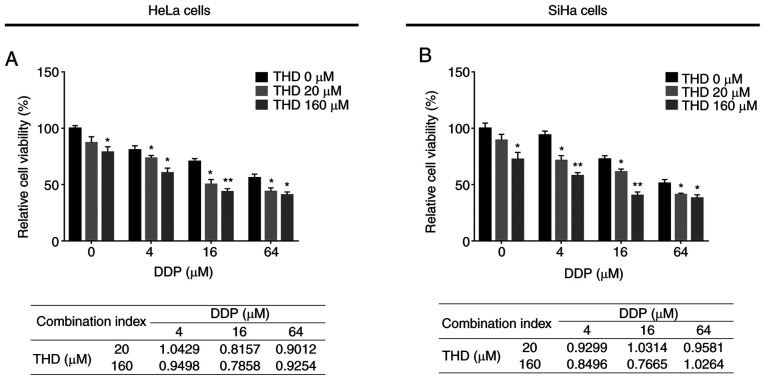
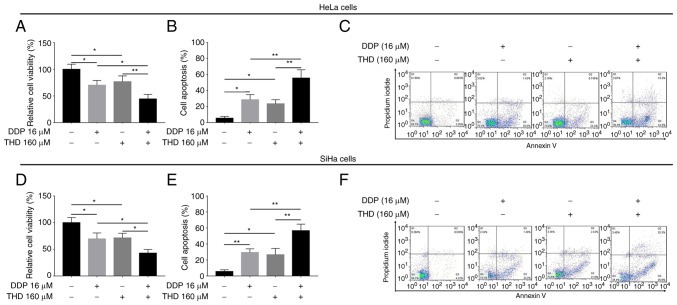
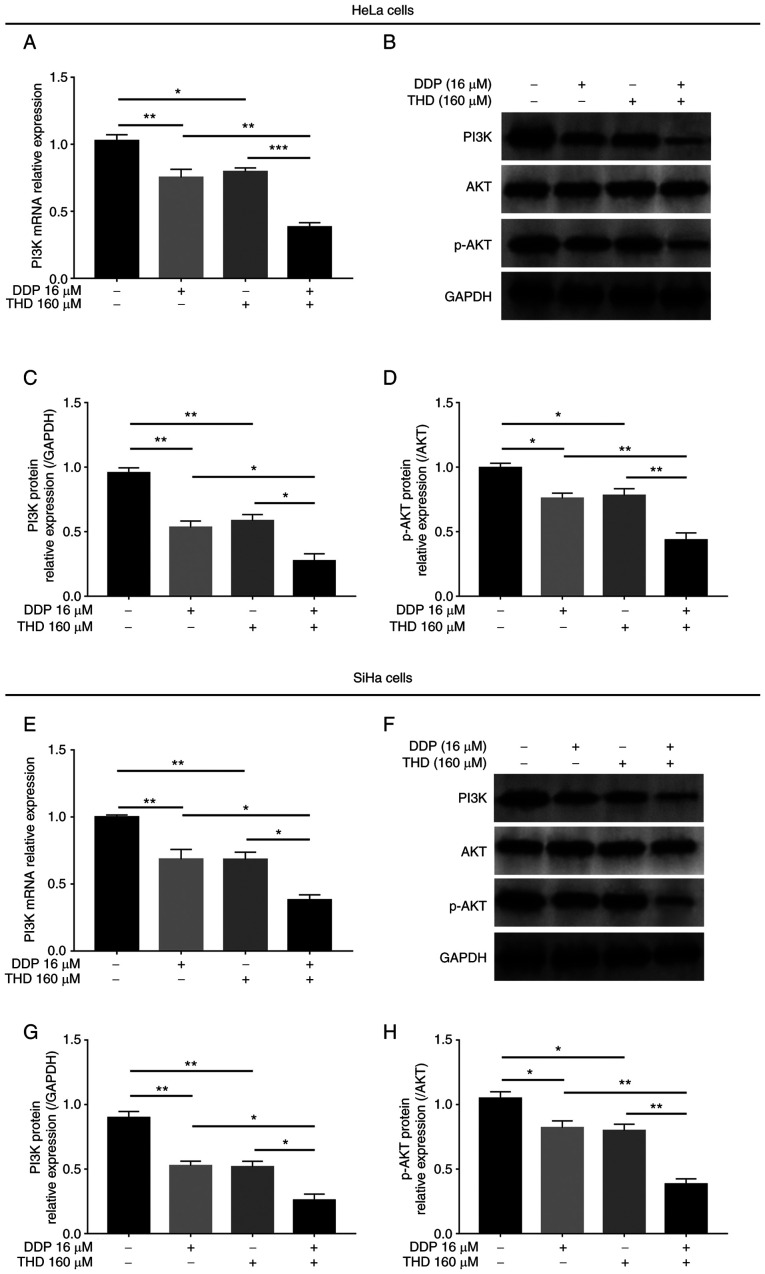
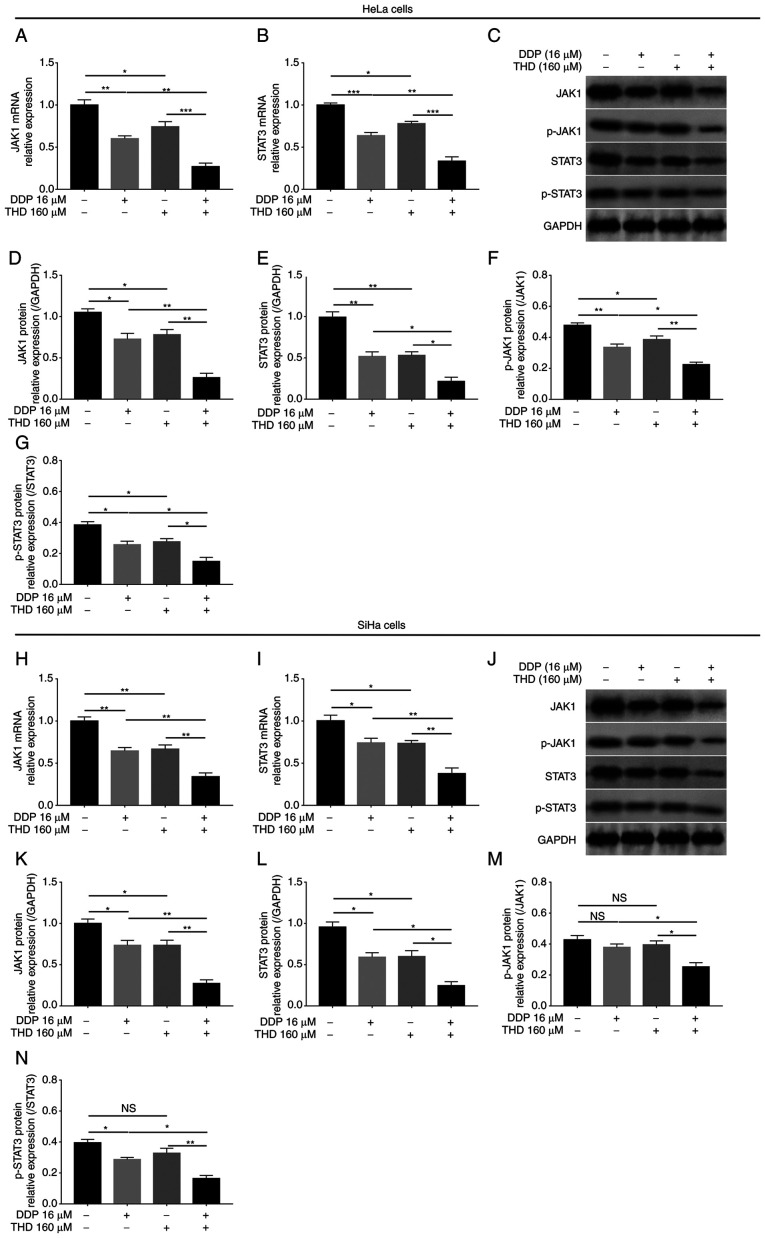
Thalidomide (THD) has been found to synergize with cisplatin (DDP) in certain types of cancers; however, their combined use in the treatment of cervical cancer has not been reported to date, at least to the best of our knowledge. Thus, the present study aimed to explore the synergistic effects of THD and DDP and determine their regulatory effects on the phosphoinositide 3‑kinase (PI3K)/protein kinase B (AKT) and Janus kinase 1 (JAK1)/signal transducer and activator of transcription 3 (STAT3) pathways in cervical cancer. For this purpose, 0‑160 µM THD and 0‑64 µM DDP monotherapy or in combination were used to treat the HeLa and SiHa cervical cancer cell lines. This was followed by the calculation of the combination index (CI) and 160 µM THD and 16 µM DDP were then used to treat the cells. Relative cell viability and apoptosis, as well as the mRNA and protein levels of PI3K, AKT, JAK1 and STAT3 were evaluated. The results revealed that THD and DDP monotherapy suppressed the viability of the HeLa and SiHa cells in a concentration‑dependent manner. Moreover, THD and DDP treatment exerted a more prominent suppressive effect on the relative viability of HeLa and SiHa cells compared with DDP monotherapy at several concentration settings; further CI calculation revealed that the optimal synergistic concentrations were 160 µM for THD and 16 µM for DDP. Subsequently, combined treatment with THD and DDP suppressed relative cell viability, whereas it promoted cell apoptosis compared with THD or DPP monotherapy; it also inhibited the PI3K/AKT and JAK1/STAT3 signaling pathways compared with DPP or THD monotherapy in both HeLa and SiHa cells. On the whole, the present study demonstrated that THD synergizes with DDP to exert suppressive effects on cervical cancer cell lines. This synergistic action also inactivated the PI3K/AKT and JAK1/STAT3 pathways. Thus, these findings suggest that the combined use of THD and DPP may have potential for use in the treatment of cervical cancer.
沙利度胺(THD)已被发现与顺铂(DDP)在某些类型的癌症中具有协同作用;然而,迄今为止,尚未有关于它们联合用于宫颈癌治疗的报道,至少就我们所知是这样。因此,本研究旨在探讨 THD 和 DDP 的协同作用,并确定它们对宫颈癌中磷酸肌醇 3-激酶(PI3K)/蛋白激酶 B(AKT)和 Janus 激酶 1(JAK1)/信号转导和转录激活因子 3(STAT3)通路的调节作用。为此,使用 0-160µM THD 和 0-64µM DDP 单药或联合治疗 HeLa 和 SiHa 宫颈癌细胞系,然后计算组合指数(CI),并使用 160µM THD 和 16µM DDP 治疗细胞。评估相对细胞活力和凋亡以及 PI3K、AKT、JAK1 和 STAT3 的 mRNA 和蛋白水平。结果显示,THD 和 DDP 单药治疗以浓度依赖性方式抑制 HeLa 和 SiHa 细胞的活力。此外,与 DDP 单药治疗相比,THD 和 DDP 治疗在多个浓度设置下对 HeLa 和 SiHa 细胞的相对活力具有更显著的抑制作用;进一步的 CI 计算表明,最佳协同浓度分别为 THD 为 160µM 和 DDP 为 16µM。随后,与 THD 或 DPP 单药治疗相比,联合治疗 THD 和 DPP 抑制相对细胞活力,促进细胞凋亡;与 DPP 或 THD 单药治疗相比,它还抑制了 HeLa 和 SiHa 细胞中的 PI3K/AKT 和 JAK1/STAT3 信号通路。总的来说,本研究表明 THD 与 DDP 协同作用对宫颈癌细胞系发挥抑制作用。这种协同作用还使 PI3K/AKT 和 JAK1/STAT3 通路失活。因此,这些发现表明 THD 和 DDP 的联合使用可能具有用于治疗宫颈癌的潜力。