Department of Biochemistry and Molecular Biology, University of Georgia, Athens, Georgia, USA.
Department of Biochemistry and Molecular Biology, University of Georgia, Athens, Georgia, USA; Department of Chemistry, University of Georgia, Athens, Georgia, USA; Complex Carbohydrate Research Center, University of Georgia, Athens, Georgia, USA.
J Biol Chem. 2022 Sep;298(9):102329. doi: 10.1016/j.jbc.2022.102329. Epub 2022 Jul 31.
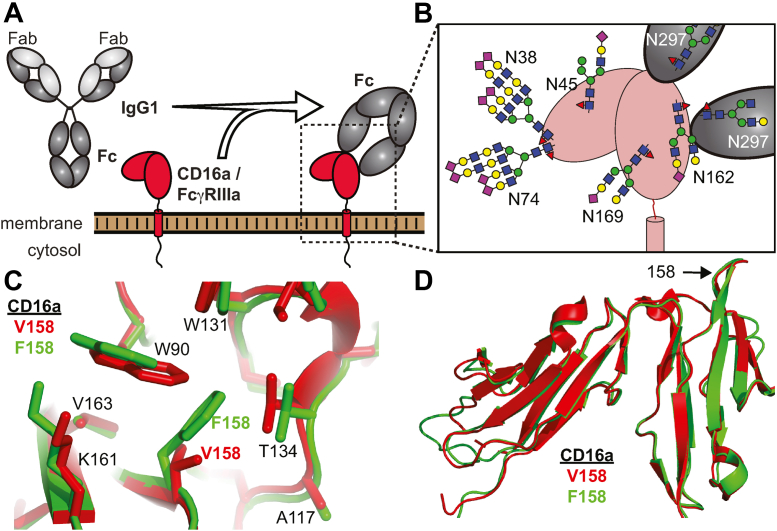
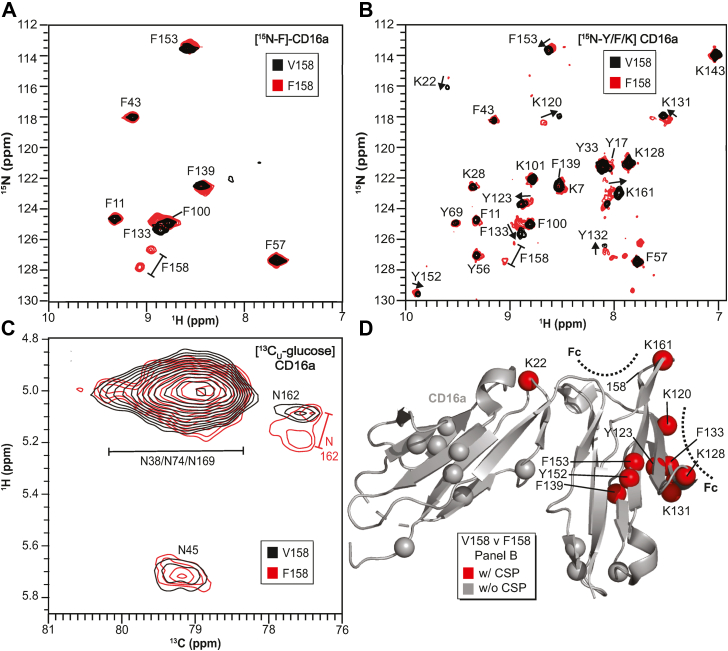
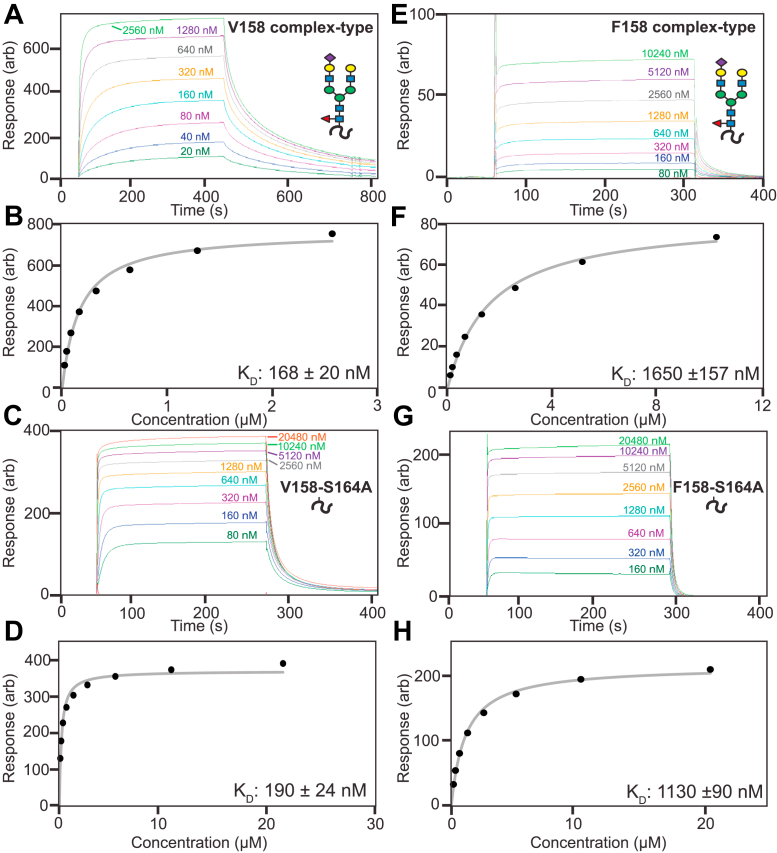
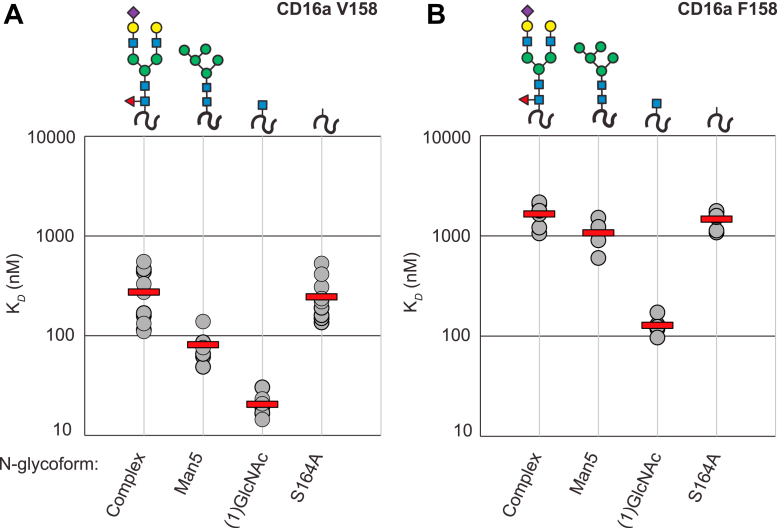
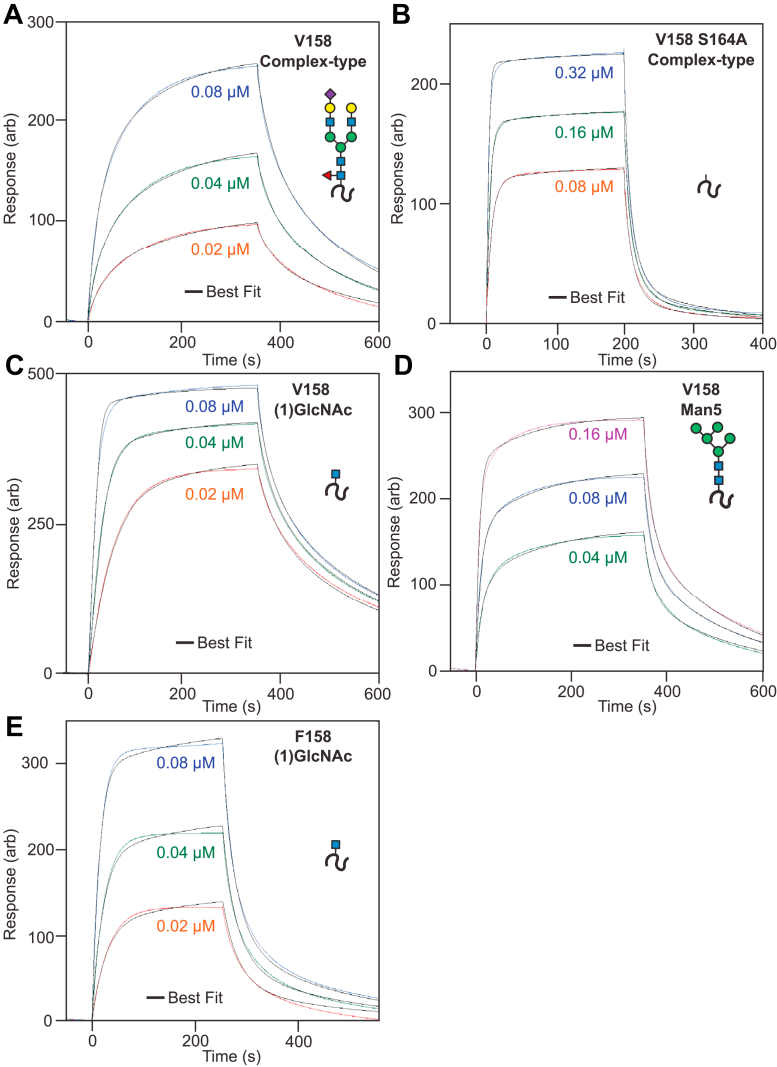
Antibodies engage Fc γ receptors (FcγRs) to elicit healing cellular immune responses following binding to a target antigen. Fc γ receptor IIIa/CD16a triggers natural killer cells to destroy target tissues with cytotoxic proteins and enhances phagocytosis mediated by macrophages. Multiple variables affect CD16a antibody-binding strength and the resulting immune response, including a genetic polymorphism. The predominant CD16a F158 allotype binds antibodies with less affinity than the less common V158 allotype. This polymorphism likewise affects cellular immune responses and clinical efficacy of antibodies relying on CD16a engagement, though it remains unclear how V/F158 affects CD16a structure. Another relevant variable shown to affect affinity is composition of the CD16a asparagine-linked (N)-glycans. It is currently not known how N-glycan composition affects CD16a F158 affinity. Here, we determined N-glycan composition affects the V158 and F158 allotypes similarly, and N-glycan composition does not explain differences in V158 and F158 binding affinity. Our analysis of binding kinetics indicated the N162 glycan slows the binding event, and shortening the N-glycans or removing the N162 glycan increased the speed of binding. F158 displayed a slower binding rate than V158. Surprisingly, we found N-glycan composition had a smaller effect on the dissociation rate. We also identified conformational heterogeneity of CD16a F158 backbone amide and N162 glycan resonances using NMR spectroscopy. Residues exhibiting chemical shift perturbations between V158 and F158 mapped to the antibody-binding interface. These data support a model for CD16a F158 with increased interface conformational heterogeneity, reducing the population of binding-competent forms available and decreasing affinity.
抗体与靶抗原结合后,通过与 Fcγ 受体(FcγR)结合引发愈合的细胞免疫应答。Fcγ 受体 IIIa/CD16a 触发自然杀伤细胞用细胞毒性蛋白破坏靶组织,并增强巨噬细胞介导的吞噬作用。多种变量影响 CD16a 抗体结合强度和由此产生的免疫反应,包括遗传多态性。主要的 CD16a F158 同种型与抗体的结合亲和力低于较少见的 V158 同种型。这种多态性同样影响依赖 CD16a 结合的细胞免疫反应和抗体的临床疗效,但尚不清楚 V/F158 如何影响 CD16a 的结构。另一个相关的变量是显示影响亲和力的 CD16a 天冬酰胺连接(N)-聚糖的组成。目前尚不清楚 N-糖链组成如何影响 CD16a F158 的亲和力。在这里,我们确定 N-糖链组成对 V158 和 F158 同种型的影响相似,并且 N-糖链组成不能解释 V158 和 F158 结合亲和力的差异。我们对结合动力学的分析表明,N162 聚糖会减缓结合事件,缩短 N-聚糖或去除 N162 聚糖会增加结合速度。F158 的结合速度比 V158 慢。令人惊讶的是,我们发现 N-糖链组成对解离速率的影响较小。我们还使用 NMR 光谱学鉴定了 CD16a F158 骨架酰胺和 N162 聚糖共振的构象异质性。在 V158 和 F158 之间表现出化学位移扰动的残基映射到抗体结合界面。这些数据支持 CD16a F158 具有增加的界面构象异质性的模型,减少了可用的结合能力形式的数量,并降低了亲和力。