MRC Human Genetics Unit, Institute of Genetics and Cancer, University of Edinburgh, Edinburgh, UK.
MRC Centre for Reproductive Health, Queen's Medical Research Institute, The University of Edinburgh, Edinburgh, UK.
Liver Int. 2023 Jan;43(1):208-220. doi: 10.1111/liv.15383. Epub 2022 Sep 15.
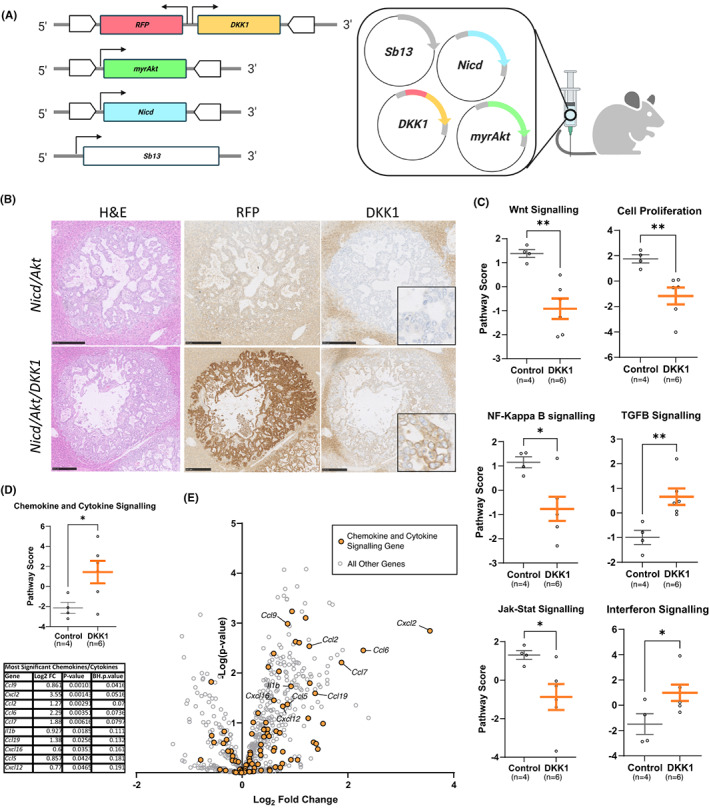
Dickkopf-1 (DKK1) is associated with poor prognosis in intrahepatic cholangiocarcinoma (iCCA), but the mechanisms behind this are unclear. Here, we show that DKK1 plays an immune regulatory role in vivo and inhibition reduces tumour growth.
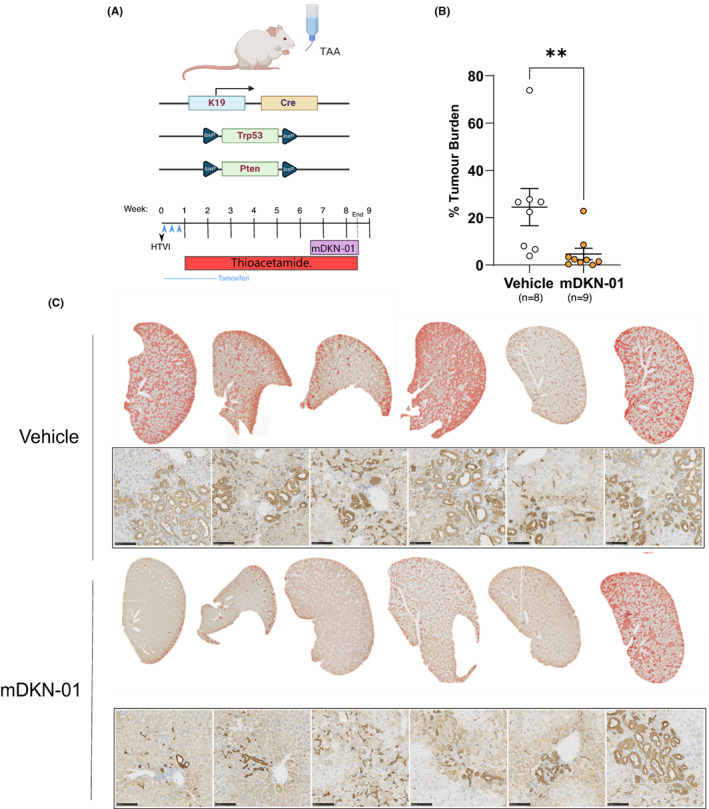
Various in vivo GEMM mouse models and patient samples were utilized to assess the effects of tumour specific DKK1 overexpression in iCCA. DKK1-driven changes to the tumour immune microenvironment were characterized by immunostaining and gene expression analysis. DKK1 overexpressing and damage-induced models of iCCA were used to demonstrate the therapeutic efficacy of DKK1 inhibition in these contexts using the anti-DKK1 therapeutic, DKN-01.
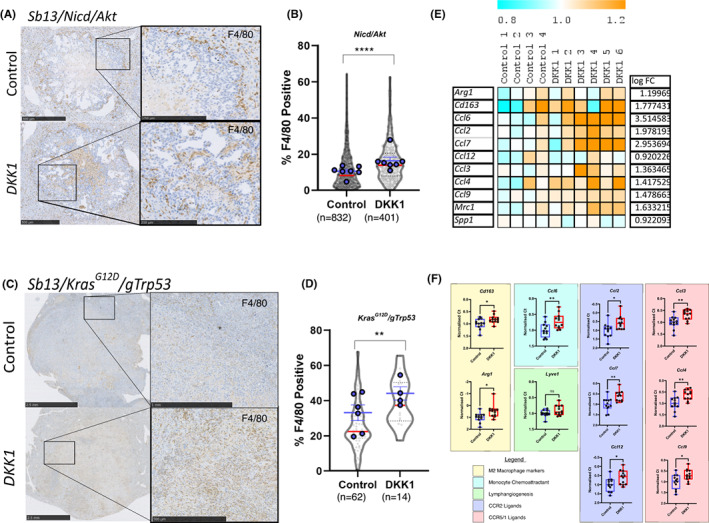
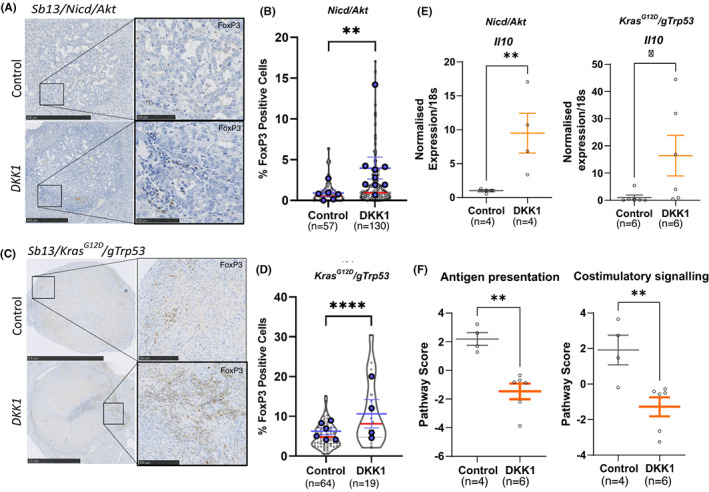
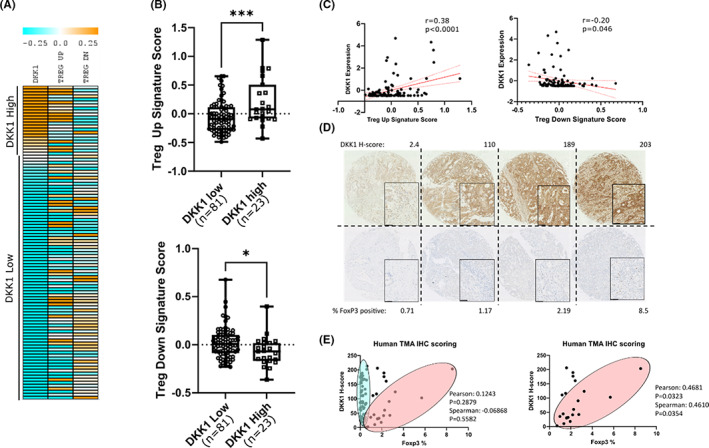
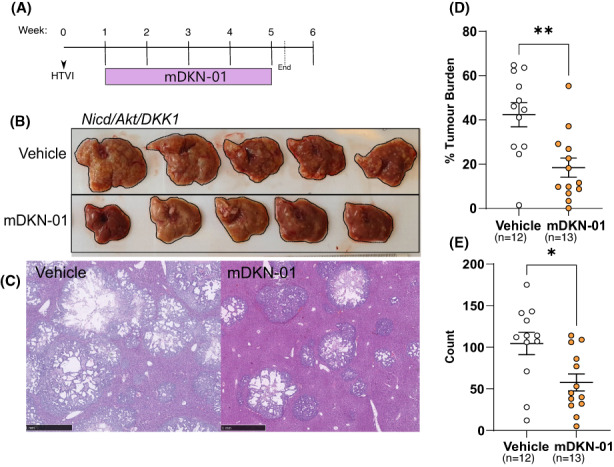
DKK1 overexpression in mouse models of iCCA drives an increase in chemokine and cytokine signalling, the recruitment of regulatory macrophages, and promotes the formation of a tolerogenic niche with higher numbers of regulatory T cells. We show a similar association of DKK1 with FOXP3 and regulatory T cells in patient tissue and gene expression data, demonstrating these effects are relevant to human iCCA. Finally, we demonstrate that inhibition of DKK1 with the monoclonal antibody mDKN-01 is effective at reducing tumour burden in two distinct mouse models of the disease.
DKK1 promotes tumour immune evasion in iCCA through the recruitment of immune suppressive macrophages. Targeting DKK1 with a neutralizing antibody is effective at reducing tumour growth in vivo. As such, DKK1 targeted and immune modulatory therapies may be an effective strategy in iCCA patients with high DKK1 tumour expression or tolerogenic immune phenotypes.
Dickkopf-1(DKK1)与肝内胆管癌(iCCA)的预后不良相关,但背后的机制尚不清楚。在这里,我们表明 DKK1 在体内发挥免疫调节作用,抑制 DKK1 可减少肿瘤生长。
利用各种体内 GEMM 小鼠模型和患者样本,评估肿瘤特异性 DKK1 在 iCCA 中的过表达的影响。通过免疫染色和基因表达分析来描述 DKK1 驱动的肿瘤免疫微环境变化。使用抗 DKK1 治疗药物 DKN-01,在 DKK1 过表达和损伤诱导的 iCCA 模型中,证明了 DKK1 抑制在这些情况下的治疗效果。
DKK1 在 iCCA 小鼠模型中的过表达会导致趋化因子和细胞因子信号的增加、调节性巨噬细胞的募集,并促进具有更高数量调节性 T 细胞的耐受龛的形成。我们在患者组织和基因表达数据中显示了 DKK1 与 FOXP3 和调节性 T 细胞的类似关联,表明这些影响与人类 iCCA 相关。最后,我们证明了用单克隆抗体 mDKN-01 抑制 DKK1 可有效减少两种不同疾病小鼠模型中的肿瘤负担。
DKK1 通过募集免疫抑制性巨噬细胞促进 iCCA 中的肿瘤免疫逃逸。用中和抗体靶向 DKK1 可有效减少体内肿瘤生长。因此,针对 DKK1 的靶向治疗和免疫调节治疗可能是 DKK1 肿瘤高表达或耐受免疫表型的 iCCA 患者的有效策略。