Department of Rheumatology, Xiangya Hospital, Central South University, Changsha City, Hunan Province, China; Department of Pathophysiology, Xiangya School of Medicine, Central South University, Changsha City, Hunan Province, China; Sepsis Translational Medicine Key Lab of Hunan Province, Central South University, Changsha City, Hunan Province, China.
Department of Rheumatology, Xiangya Hospital, Central South University, Changsha City, Hunan Province, China; Department of Pathophysiology, Xiangya School of Medicine, Central South University, Changsha City, Hunan Province, China; Sepsis Translational Medicine Key Lab of Hunan Province, Central South University, Changsha City, Hunan Province, China; National Clinical Research Center for Geriatric Disorders, Xiangya Hospital, Changsha City, Hunan Province, China.
Autoimmun Rev. 2022 Oct;21(10):103161. doi: 10.1016/j.autrev.2022.103161. Epub 2022 Aug 1.
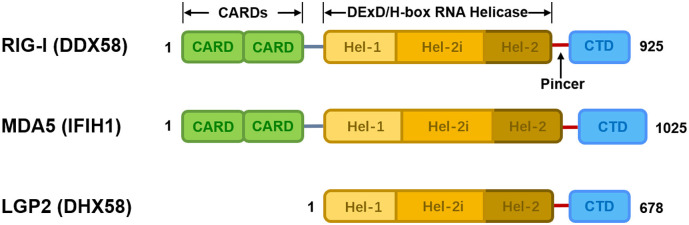
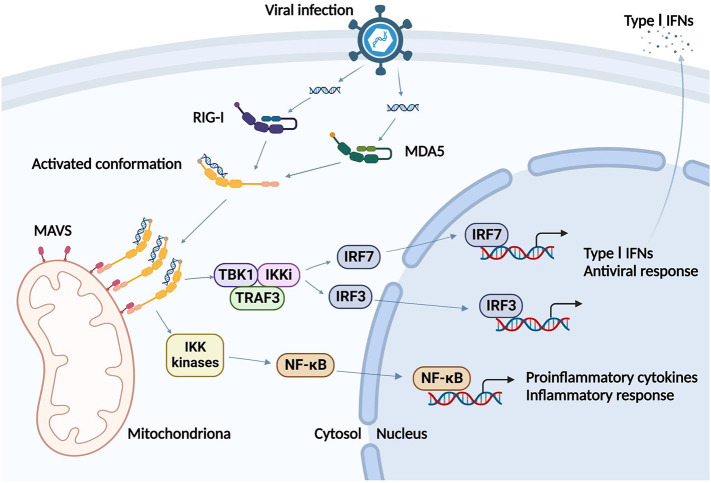
Retinoic acid-inducible gene I (RIG-I)-like receptors (RLRs), which are pivotal sensors of RNA virus invasions, mediate the transcriptional induction of genes encoding type I interferons (IFNs) and proinflammatory cytokines, successfully establishing host antiviral immune response. A few excellent reviews have elaborated on the structural biology of RLRs and the antiviral mechanisms of RLR activation. In this review, we give a basic understanding of RLR biology and summarize recent findings of how RLR signaling cascade is strictly controlled by host regulatory mechanisms, which include RLR-interacting proteins, post-translational modifications and microRNAs (miRNAs). Furthermore, we pay particular attention to the relationship between RLRs and diseases, especially how RLRs participate in SARS-CoV-2, malaria or bacterial infections, how single-nucleotide polymorphisms (SNPs) or mutations in RLRs and antibodies against RLRs lead to autoinflammatory diseases and autoimmune diseases, and how RLRs are involved in anti-tumor immunity. These findings will provide insights and guidance for antiviral and immunomodulatory therapies targeting RLRs.
视黄酸诱导基因 I(RIG-I)样受体(RLRs)是 RNA 病毒入侵的关键传感器,介导编码 I 型干扰素(IFN)和促炎细胞因子的基因的转录诱导,成功建立了宿主抗病毒免疫反应。一些优秀的综述详细阐述了 RLR 的结构生物学和 RLR 激活的抗病毒机制。在这篇综述中,我们对 RLR 生物学有了基本的了解,并总结了 RLR 信号级联如何受到宿主调节机制的严格控制的最新发现,这些机制包括 RLR 相互作用蛋白、翻译后修饰和 microRNAs(miRNAs)。此外,我们特别关注 RLRs 与疾病之间的关系,特别是 RLRs 如何参与 SARS-CoV-2、疟疾或细菌感染,RLRs 中的单核苷酸多态性(SNP)或突变以及针对 RLRs 的抗体如何导致自身炎症性疾病和自身免疫性疾病,以及 RLRs 如何参与抗肿瘤免疫。这些发现将为针对 RLR 的抗病毒和免疫调节治疗提供见解和指导。