MOEMIL Laboratory, School of Optoelectronic Information, University of Electronic Science and Technology of China, Chengdu, Sichuan 610054, China.
Key Laboratory for Human Disease Gene Study of Sichuan Province, Sichuan Provincial People's Hospital, University of Electronic Science and Technology of China, Chengdu, Sichuan 610072, China.
Zool Res. 2022 Sep 18;43(5):738-749. doi: 10.24272/j.issn.2095-8137.2022.025.
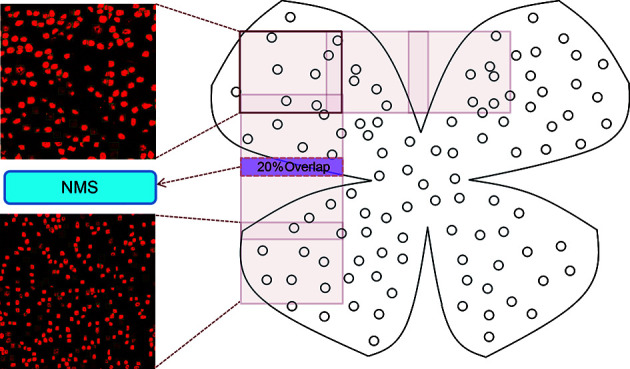
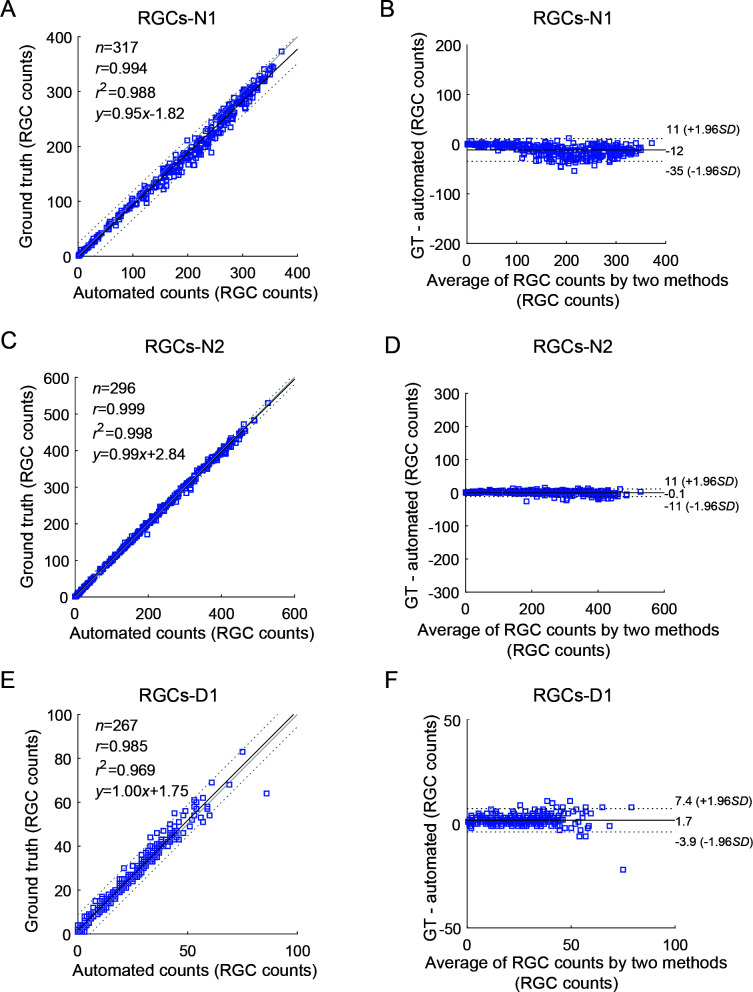
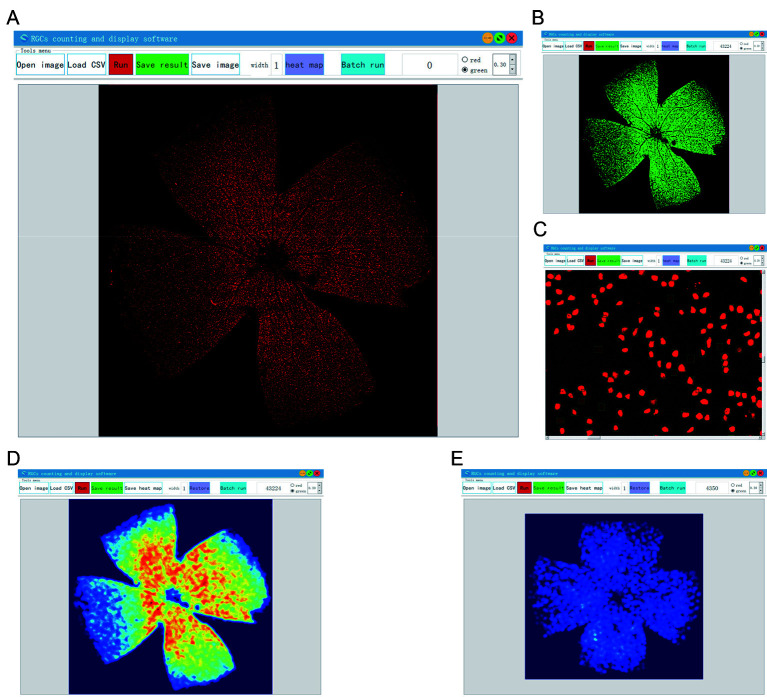
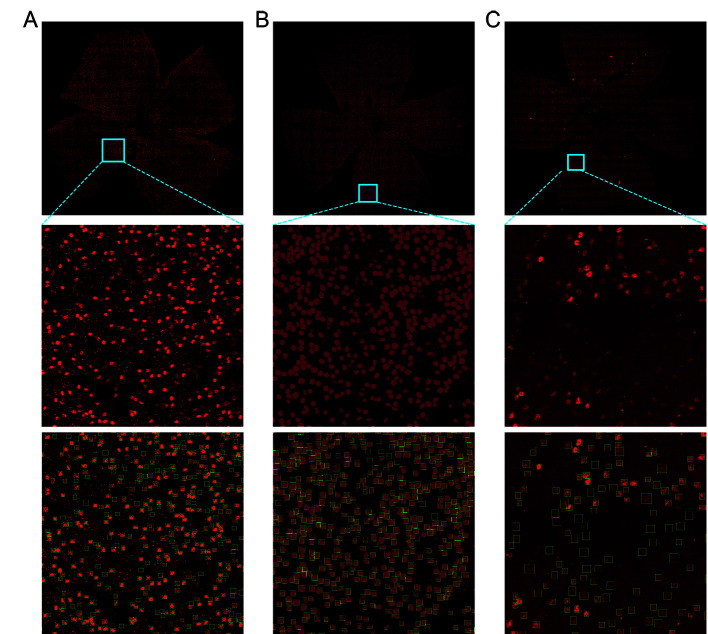
Glaucoma is characterized by the progressive loss of retinal ganglion cells (RGCs), although the pathogenic mechanism remains largely unknown. To study the mechanism and assess RGC degradation, mouse models are often used to simulate human glaucoma and specific markers are used to label and quantify RGCs. However, manually counting RGCs is time-consuming and prone to distortion due to subjective bias. Furthermore, semi-automated counting methods can produce significant differences due to different parameters, thereby failing objective evaluation. Here, to improve counting accuracy and efficiency, we developed an automated algorithm based on the improved YOLOv5 model, which uses five channels instead of one, with a squeeze-and-excitation block added. The complete number of RGCs in an intact mouse retina was obtained by dividing the retina into small overlapping areas and counting, and then merging the divided areas using a non-maximum suppression algorithm. The automated quantification results showed very strong correlation (mean Pearson correlation coefficient of 0.993) with manual counting. Importantly, the model achieved an average precision of 0.981. Furthermore, the graphics processing unit (GPU) calculation time for each retina was less than 1 min. The developed software has been uploaded online as a free and convenient tool for studies using mouse models of glaucoma, which should help elucidate disease pathogenesis and potential therapeutics.
青光眼的特征是视网膜神经节细胞(RGCs)的进行性丧失,尽管其发病机制在很大程度上仍不清楚。为了研究机制和评估 RGC 降解,常使用小鼠模型来模拟人类青光眼,并使用特定标志物来标记和量化 RGCs。然而,手动计数 RGCs 既耗时又容易受到主观偏差的影响而失真。此外,半自动计数方法可能会由于不同的参数而产生显著差异,从而无法进行客观评估。在这里,为了提高计数的准确性和效率,我们开发了一种基于改进的 YOLOv5 模型的自动算法,该算法使用五个通道而不是一个通道,并添加了一个挤压激励块。通过将视网膜划分为小的重叠区域并进行计数,然后使用非极大值抑制算法合并划分区域,从而获得完整的小鼠视网膜中 RGC 的数量。自动量化结果与手动计数显示出非常强的相关性(平均皮尔逊相关系数为 0.993)。重要的是,该模型的平均精度达到了 0.981。此外,每个视网膜的图形处理单元(GPU)计算时间都不到 1 分钟。所开发的软件已在线上传,作为研究青光眼小鼠模型的免费便捷工具,这应该有助于阐明疾病的发病机制和潜在的治疗方法。