Department of Orthopedic Surgery, Graduate School of Medical Sciences, Kyushu University, 3-1-1 Maidashi, Higashi-ku, Fukuoka City, 812-8582, Japan.
Department of Anatomic Pathology, Pathological Sciences, Graduate School of Medical Sciences, Kyushu University, Fukuoka, Japan.
Sci Rep. 2022 Aug 4;12(1):13438. doi: 10.1038/s41598-022-17728-5.
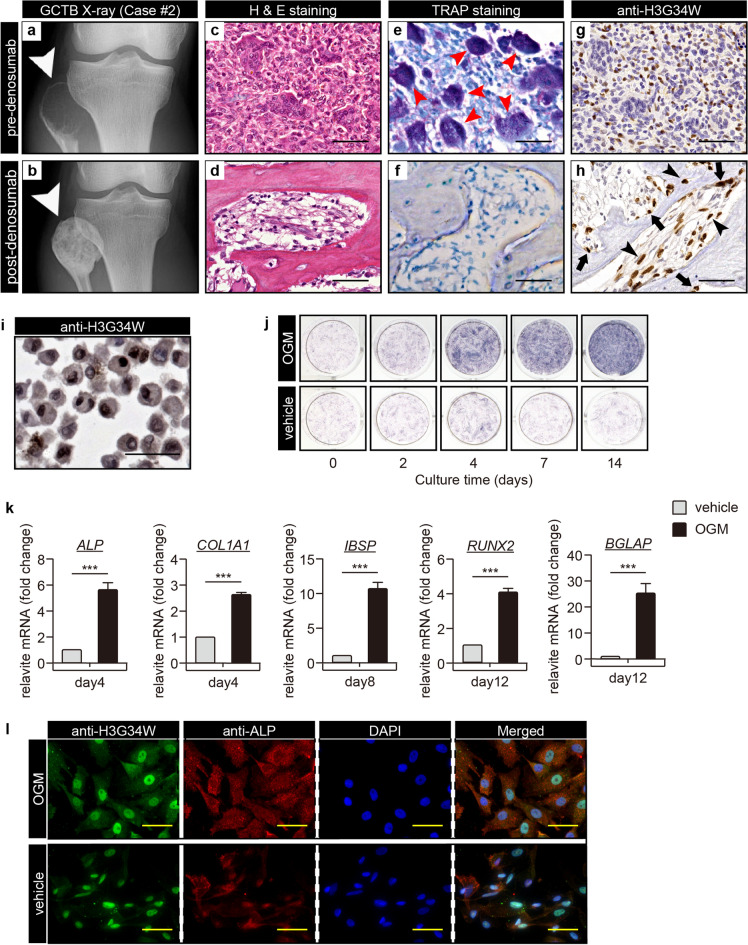
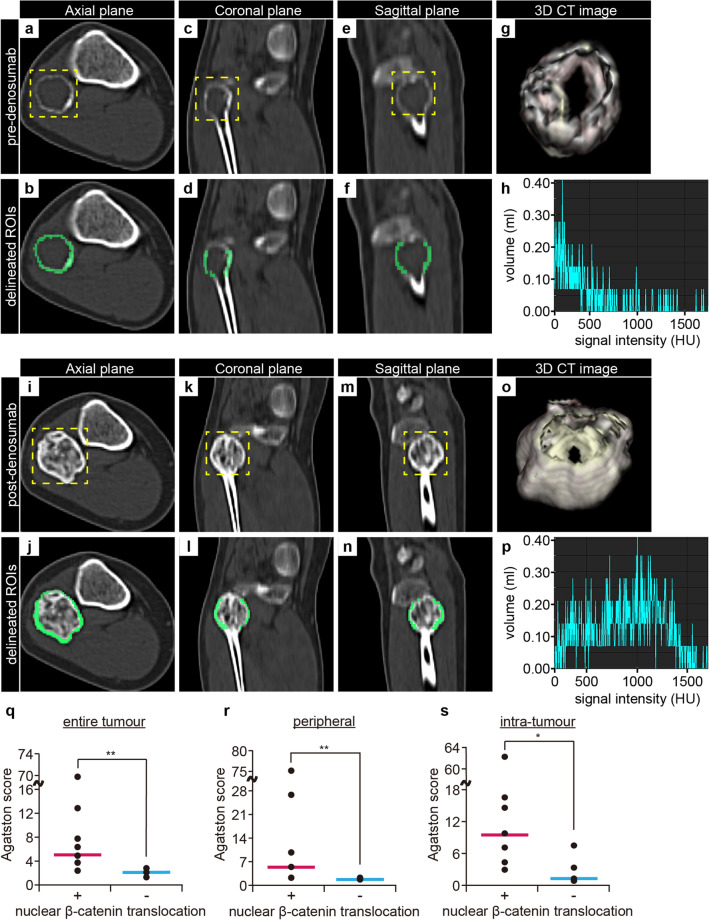
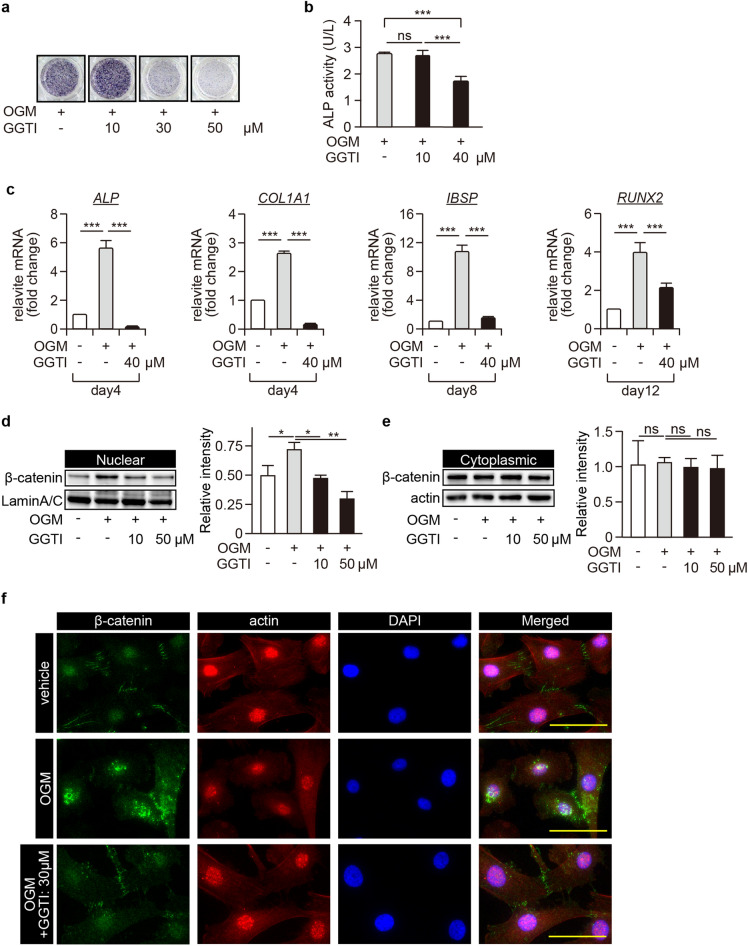
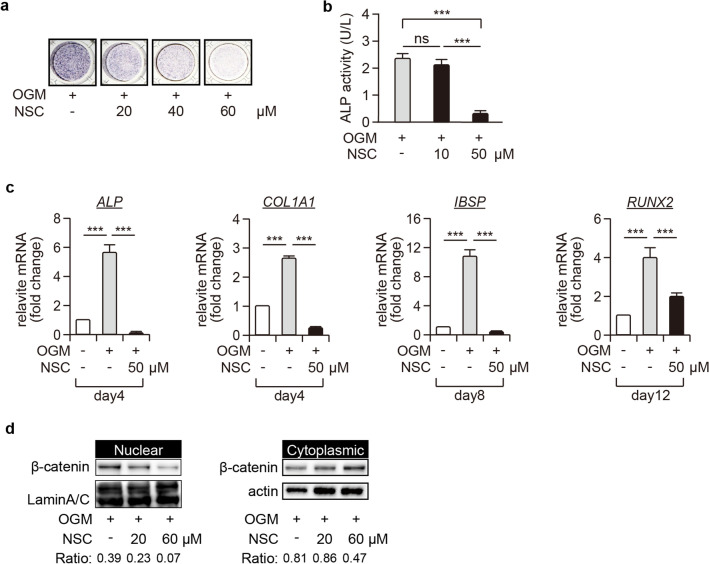
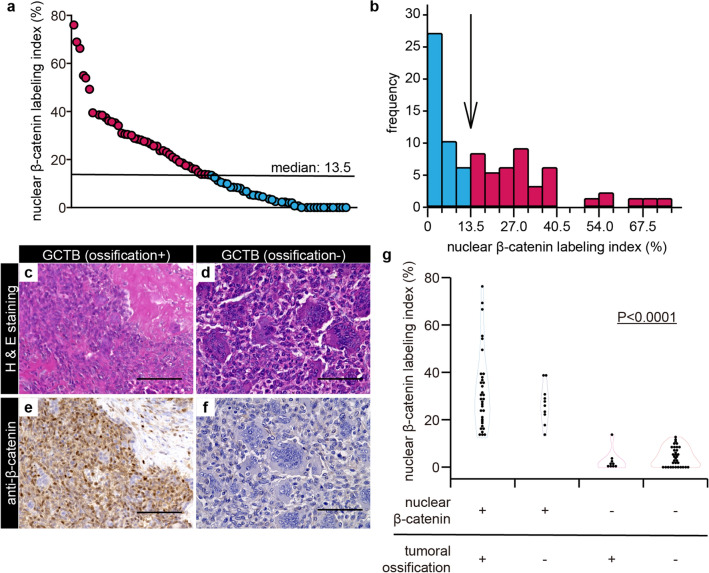
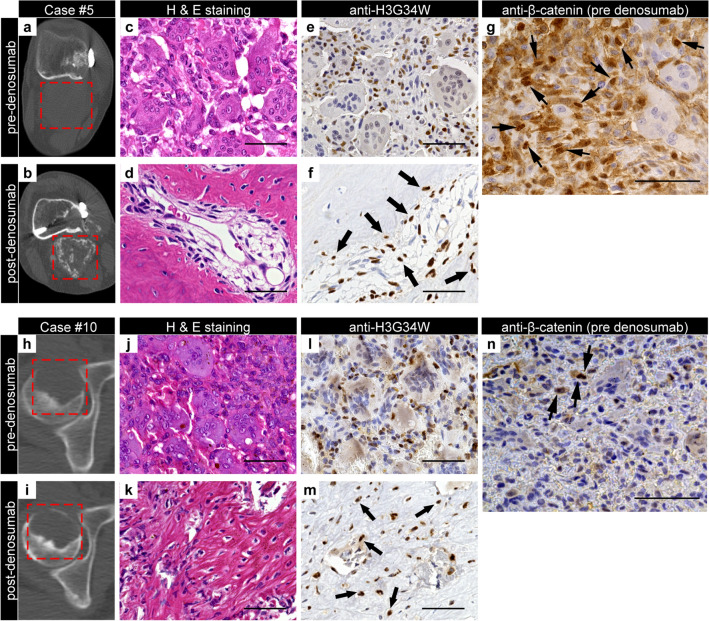
Denosumab is a game-changing drug for giant cell tumor of bone (GCTB); however, its clinical biomarker regarding tumor ossification of GCTB has not been elucidated. In this study, we investigated the relationship between Wnt/β-catenin signaling and the ossification of GCTB and evaluated whether endogenous nuclear β-catenin expression predicted denosumab-induced bone formation in GCTB. Genuine patient-derived primary GCTB tumor stromal cells exhibited osteoblastic characteristics. Identified osteoblastic markers and nuclear β-catenin translocation were significantly upregulated via differentiation induction and were inhibited by treating with Wnt signaling inhibitor, GGTI-286, or selective Rac1-LEF inhibitor, NSC23766. Furthermore, we reviewed the endogenous ossification and nuclear β-catenin translocation of 86 GCTB clinical samples and elucidated that intra-tumoral ossification was significantly associated with the nuclear translocation. Three-dimensional quantitative analyses (n = 13) of tumoral CT images have revealed that the nuclear β-catenin translocation of naïve GCTB samples was significantly involved with the denosumab-induced tumor ossification. Our findings suggest a close relationship between the nuclear β-catenin translocation and the osteoblastic differentiation of GCTB. Investigations of the nuclear β-catenin in naïve GCTB samples may provide a promising biomarker for predicting the ossification of GCTB following denosumab treatment.
地舒单抗是治疗骨巨细胞瘤(GCTB)的突破性药物;然而,其关于 GCTB 肿瘤骨化的临床生物标志物尚未阐明。在这项研究中,我们研究了 Wnt/β-catenin 信号通路与 GCTB 骨化的关系,并评估了内源性核β-catenin 表达是否预测了地舒单抗治疗 GCTB 时的骨形成。从真正的患者来源的原发性 GCTB 肿瘤基质细胞中观察到成骨细胞特征。通过分化诱导,鉴定的成骨细胞标志物和核β-catenin 易位显著上调,并通过 Wnt 信号抑制剂 GGTI-286 或选择性 Rac1-LEF 抑制剂 NSC23766 处理而受到抑制。此外,我们回顾了 86 例 GCTB 临床样本的内源性骨化和核β-catenin 易位,并阐明了肿瘤内骨化与核易位显著相关。对肿瘤 CT 图像进行的三维定量分析(n=13)显示,幼稚 GCTB 样本的核β-catenin 易位与地舒单抗诱导的肿瘤骨化显著相关。我们的研究结果表明,核β-catenin 易位与 GCTB 的成骨细胞分化密切相关。对幼稚 GCTB 样本中核β-catenin 的研究可能为预测地舒单抗治疗后 GCTB 的骨化提供有前途的生物标志物。