Bioproduction Research Institute, National Institute of Advanced Industrial Science and Technology, Tsukuba, Japan.
Department of Basic Science, Graduate School of Arts and Sciences, The University of Tokyo, Tokyo, Japan.
Nat Microbiol. 2022 Aug;7(8):1141-1150. doi: 10.1038/s41564-022-01179-9. Epub 2022 Aug 4.
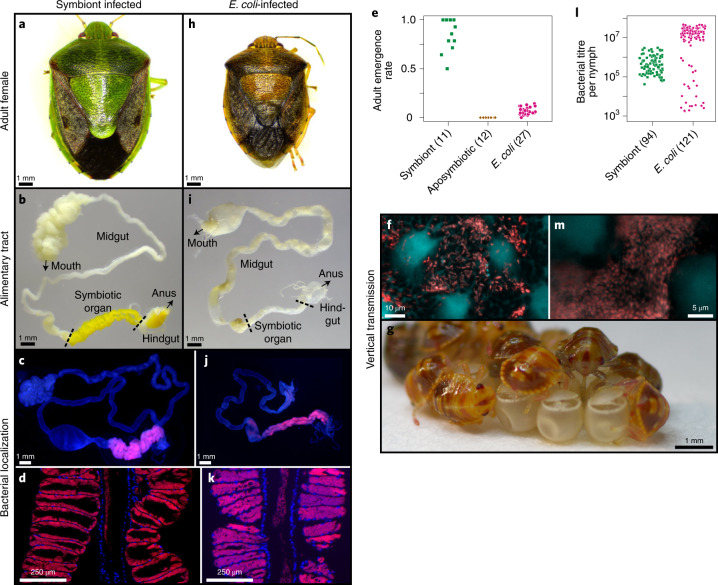
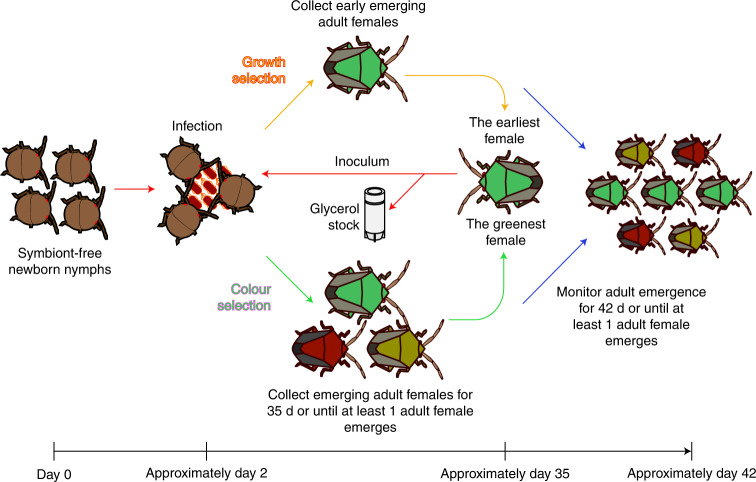
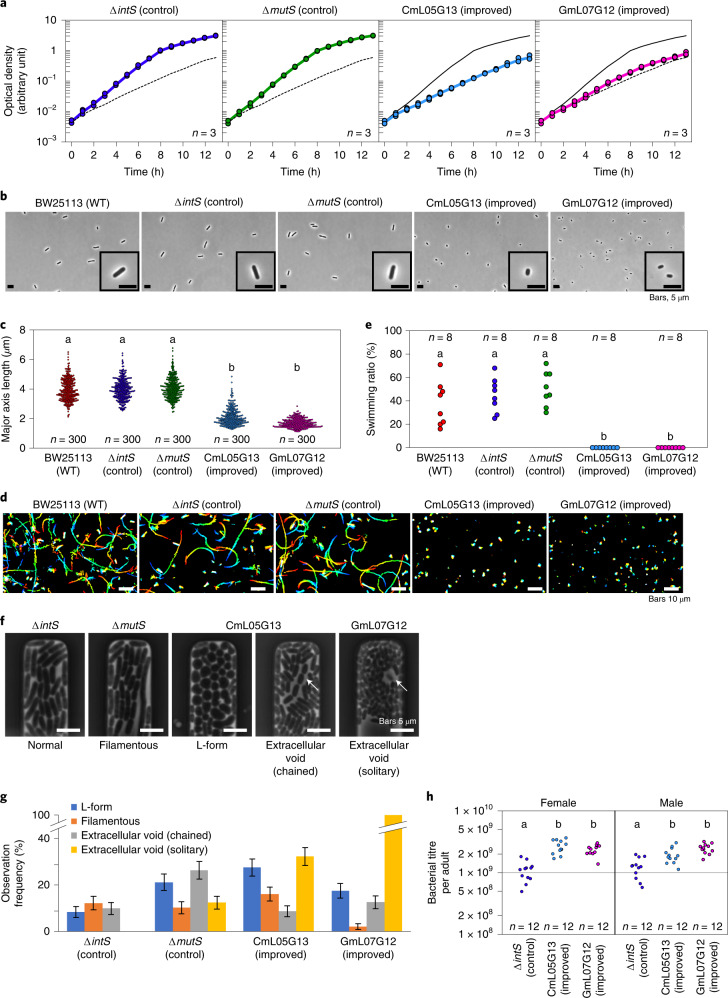
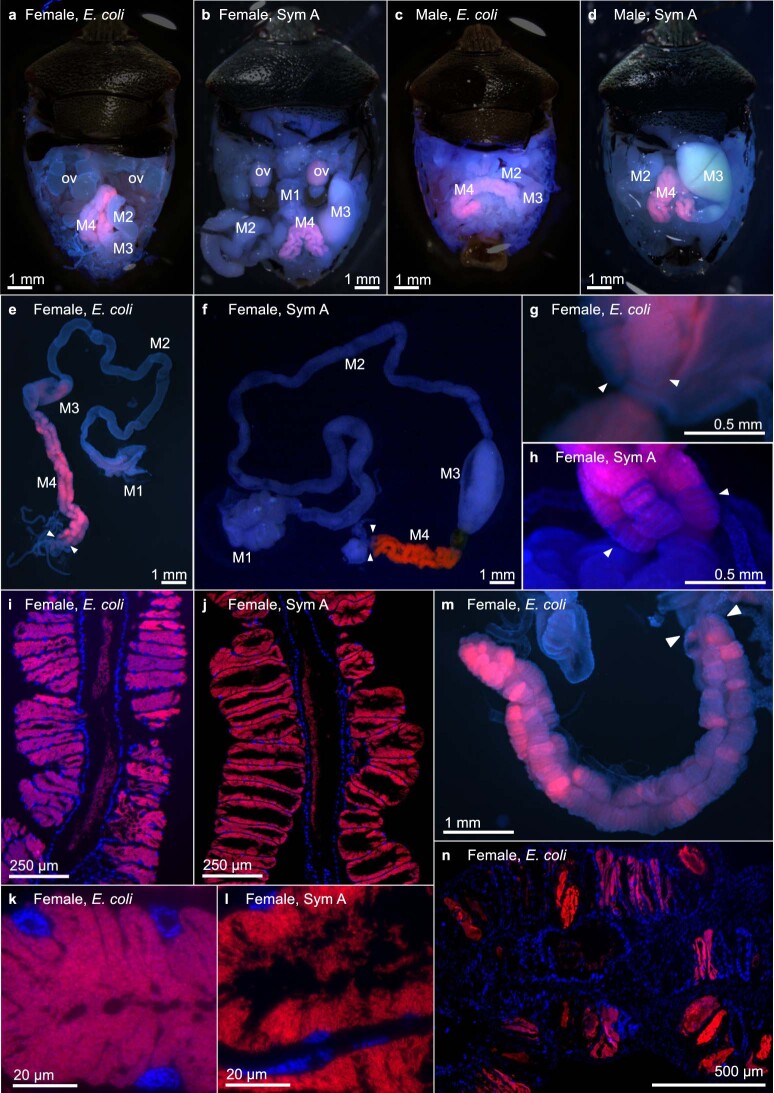
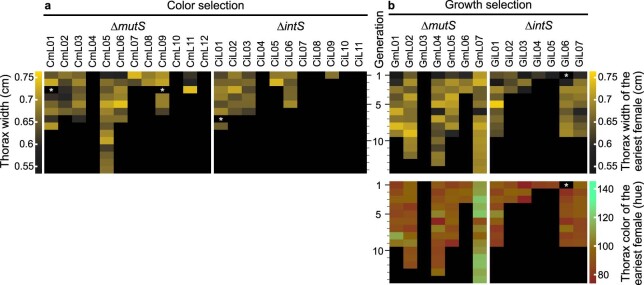
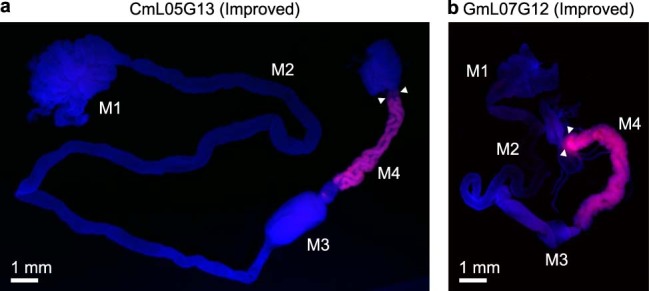
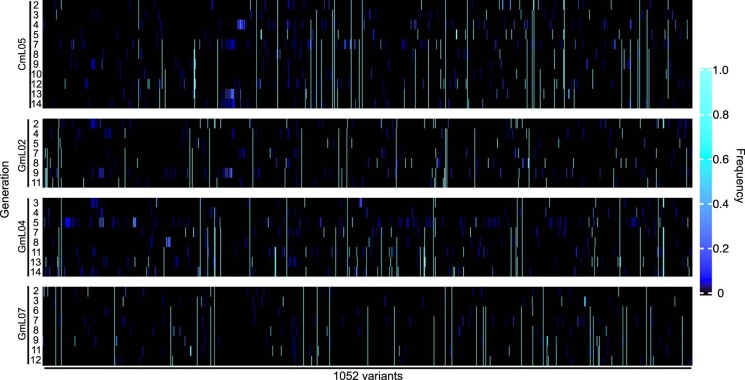
Microorganisms often live in symbiosis with their hosts, and some are considered mutualists, where all species involved benefit from the interaction. How free-living microorganisms have evolved to become mutualists is unclear. Here we report an experimental system in which non-symbiotic Escherichia coli evolves into an insect mutualist. The stinkbug Plautia stali is typically associated with its essential gut symbiont, Pantoea sp., which colonizes a specialized symbiotic organ. When sterilized newborn nymphs were infected with E. coli rather than Pantoea sp., only a few insects survived, in which E. coli exhibited specific localization to the symbiotic organ and vertical transmission to the offspring. Through transgenerational maintenance with P. stali, several hypermutating E. coli lines independently evolved to support the host's high adult emergence and improved body colour; these were called 'mutualistic' E. coli. These mutants exhibited slower bacterial growth, smaller size, loss of flagellar motility and lack of an extracellular matrix. Transcriptomic and genomic analyses of 'mutualistic' E. coli lines revealed independent mutations that disrupted the carbon catabolite repression global transcriptional regulator system. Each mutation reproduced the mutualistic phenotypes when introduced into wild-type E. coli, confirming that single carbon catabolite repression mutations can make E. coli an insect mutualist. These findings provide an experimental system for future work on host-microbe symbioses and may explain why microbial mutualisms are omnipresent in nature.
微生物通常与它们的宿主共生,有些被认为是互利共生体,所有涉及的物种都从相互作用中受益。自由生活的微生物如何进化为互利共生体尚不清楚。在这里,我们报告了一个实验系统,其中非共生的大肠杆菌进化为昆虫共生体。臭虫 Plautia stali 通常与其必需的肠道共生菌 Pantoea sp. 相关联,后者定植于专门的共生器官中。当无菌的新生若虫被大肠杆菌而非 Pantoea sp. 感染时,只有少数昆虫存活,其中大肠杆菌特异性定殖于共生器官并垂直传播给后代。通过与 P. stali 的世代维持,几个超突变的大肠杆菌系独立进化,以支持宿主的高成虫出现率和改善体色;这些被称为“互利共生”大肠杆菌。这些突变体表现出较慢的细菌生长、较小的大小、鞭毛运动能力丧失和缺乏细胞外基质。“互利共生”大肠杆菌系的转录组和基因组分析揭示了独立的突变,破坏了碳分解代谢阻遏全局转录调控系统。当引入野生型大肠杆菌时,每个突变都再现了互利共生表型,证实了单个碳分解代谢阻遏突变可以使大肠杆菌成为昆虫共生体。这些发现为未来的宿主-微生物共生研究提供了一个实验系统,也可能解释了为什么微生物互利共生在自然界中无处不在。