Laboratory of Veterinary Mycoplasmology, College of Veterinary Medicine, Southwest University, Chongqing, 400715, China.
Vet Res. 2022 Aug 4;53(1):62. doi: 10.1186/s13567-022-01074-5.
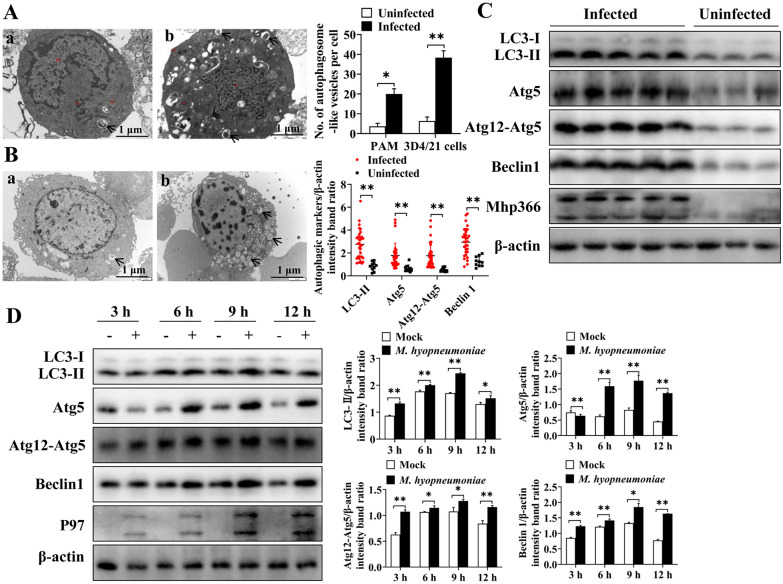
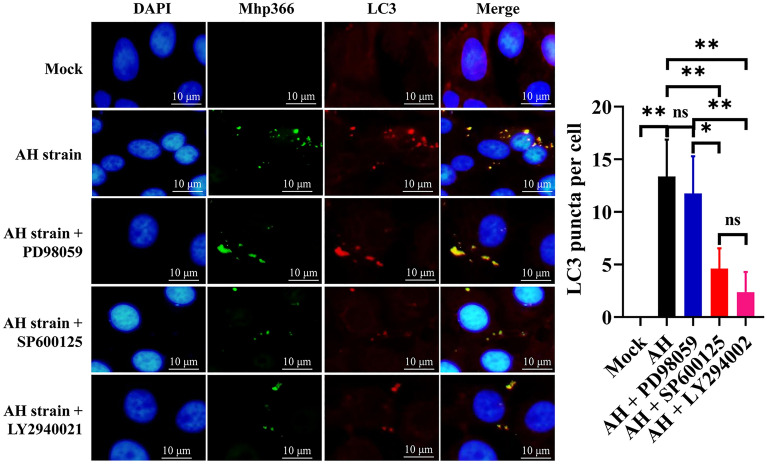
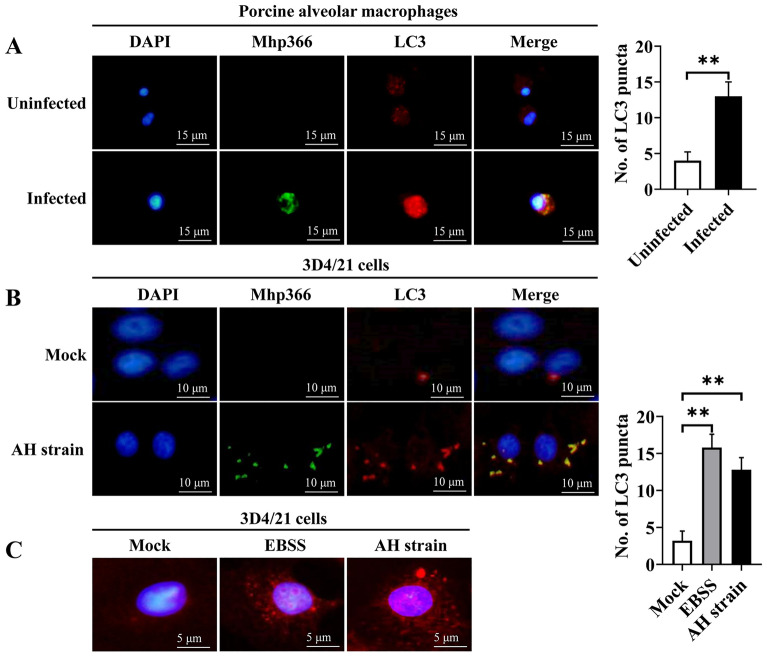
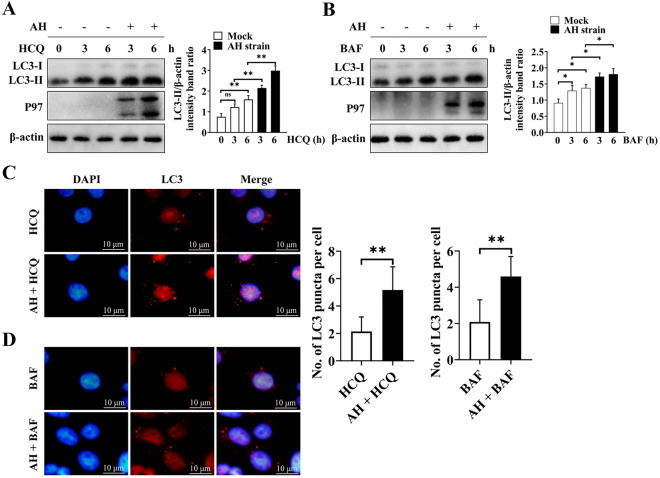
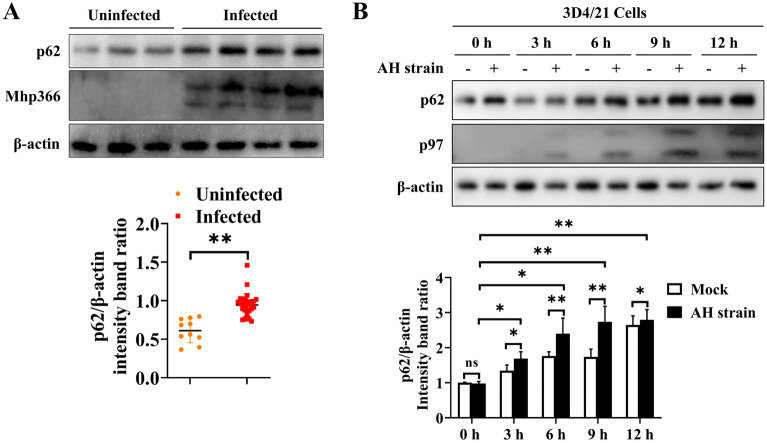
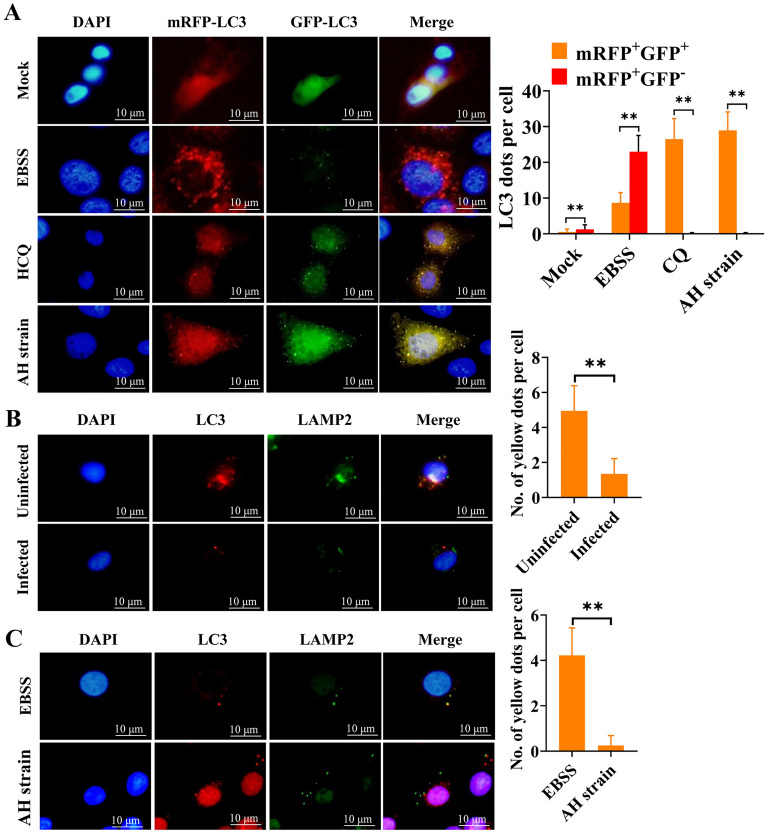
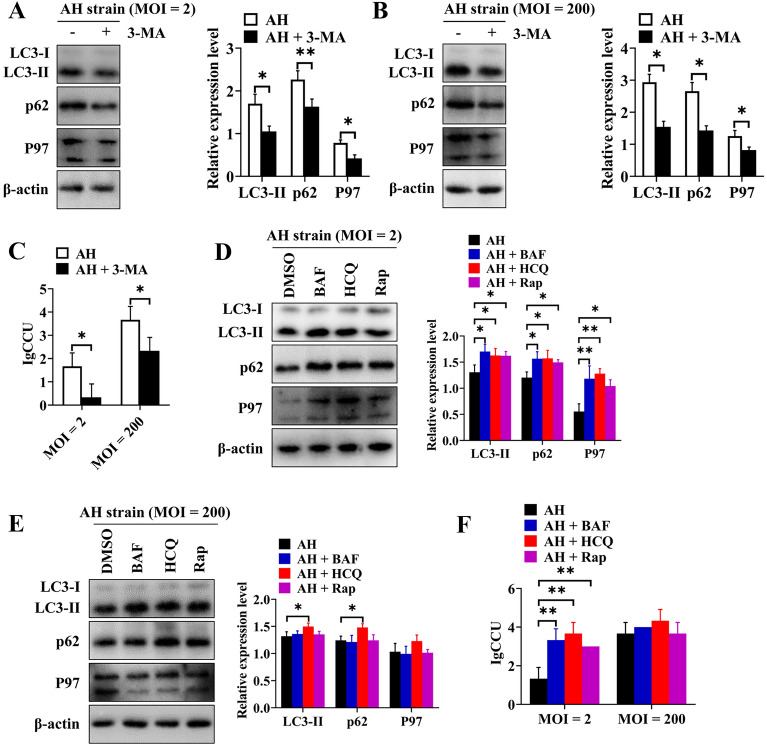
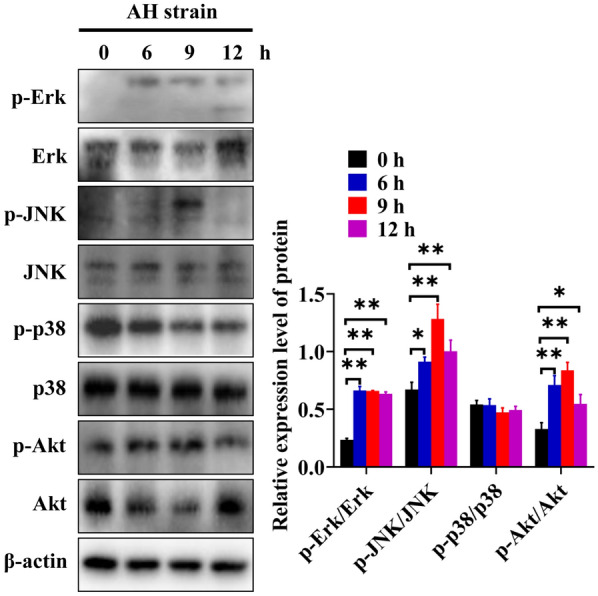
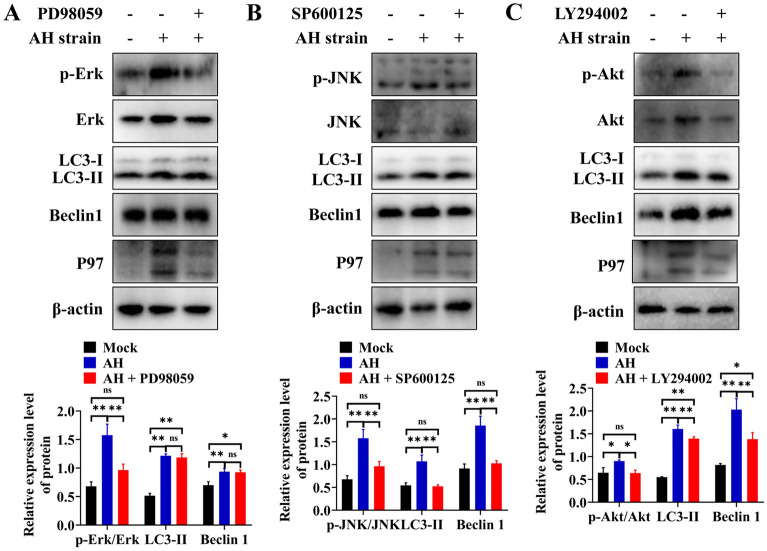
Autophagy is an important conserved homeostatic process related to nutrient and energy deficiency and organelle damage in diverse eukaryotic cells and has been reported to play an important role in cellular responses to pathogens and bacterial replication. The respiratory bacterium Mycoplasma hyopneumoniae has been identified to enter porcine alveolar macrophages, which are considered important immune cells. However, little is known about the role of autophagy in the pathogenesis of M. hyopneumoniae infection of porcine alveolar macrophages. Our experiments demonstrated that M. hyopneumoniae infection enhanced the formation of autophagosomes in porcine alveolar macrophages but prevented the fusion of autophagosomes with lysosomes, thereby blocking autophagic flux and preventing the acidification and destruction of M. hyopneumoniae in low-pH surroundings. In addition, using different autophagy regulators to intervene in the autophagy process, we found that incomplete autophagy promoted the intracellular proliferation of M. hyopneumoniae. We also found that blocking the phosphorylation of JNK and Akt downregulated the autophagy induced by M. hyopneumoniae, but pathways related to two mitogen-activated protein kinases (Erk1/2 and p38) did not affect the process. Collectively, M. hyopneumoniae induced incomplete autophagy in porcine alveolar macrophages through the JNK and Akt signalling pathways; conversely, incomplete autophagy prevented M. hyopneumoniae from entering and degrading lysosomes to realize the proliferation of M. hyopneumoniae in porcine alveolar macrophages. These findings raise the possibility that targeting the autophagic pathway may be effective for the prevention or treatment of M. hyopneumoniae infection.
自噬是一种重要的保守的内稳态过程,与营养和能量缺乏以及各种真核细胞的细胞器损伤有关,并被报道在细胞对病原体和细菌复制的反应中发挥重要作用。呼吸细菌支原体肺炎已被确定进入猪肺泡巨噬细胞,猪肺泡巨噬细胞被认为是重要的免疫细胞。然而,关于自噬在猪肺泡巨噬细胞感染支原体肺炎中的作用知之甚少。我们的实验表明,支原体肺炎感染增强了猪肺泡巨噬细胞中自噬体的形成,但阻止了自噬体与溶酶体的融合,从而阻断了自噬流,并防止了低 pH 环境中支原体肺炎的酸化和破坏。此外,使用不同的自噬调节剂干预自噬过程,我们发现不完全自噬促进了支原体肺炎的细胞内增殖。我们还发现,阻断 JNK 和 Akt 的磷酸化下调了支原体肺炎诱导的自噬,但与两种丝裂原活化蛋白激酶(Erk1/2 和 p38)相关的途径并不影响该过程。总之,支原体肺炎通过 JNK 和 Akt 信号通路诱导猪肺泡巨噬细胞中的不完全自噬;相反,不完全自噬阻止了支原体肺炎进入并降解溶酶体,从而实现了支原体肺炎在猪肺泡巨噬细胞中的增殖。这些发现提出了一种可能性,即靶向自噬途径可能是预防或治疗支原体肺炎感染的有效方法。