Yoo Jungmin, Jung Chi Young, Na Ju Ock, Kim Tae-Hyung, Oh Yeon-Mok, Ra Seung Won
Department of Internal Medicine, Ulsan University Hospital, Ulsan, Republic of Korea.
Division of Pulmonology, Department of Internal Medicine, Daegu Catholic University Medical Center, Daegu, Republic of Korea.
J Thorac Dis. 2022 Jul;14(7):2532-2543. doi: 10.21037/jtd-22-133.
This study aimed to establish nationwide data for the distributions of typical and atypical bacterial pathogens in Korean patients with moderate acute exacerbations of chronic obstructive pulmonary disease (AECOPD) and evaluate the clinical usefulness of a urinary antigen test (UAT) to detect .
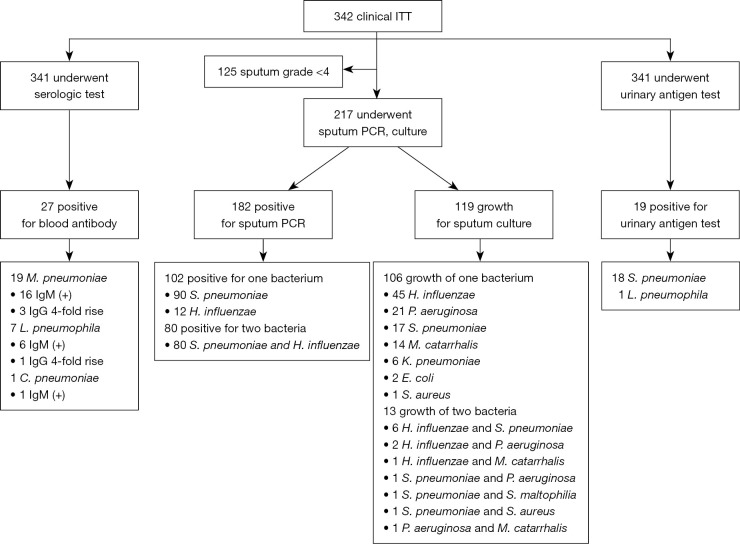
This study was a post hoc analysis of a randomized controlled trial designed to compare oral zabofloxacin with moxifloxacin for treating outpatients with moderate AECOPD. From clinics across South Korea, 342 subjects with AECOPD were enrolled, and their blood, sputum, and urine samples were collected at baseline. A serologic test, sputum culture and polymerase chain reaction (PCR), and UAT were performed to identify bacterial pathogens. Bacterial prevalence and regional distributions were analyzed. The patients' characteristics and clinical response between UAT-positive and UAT-negative groups were compared, as were the detection rates using conventional sputum culture and PCR versus UAT.
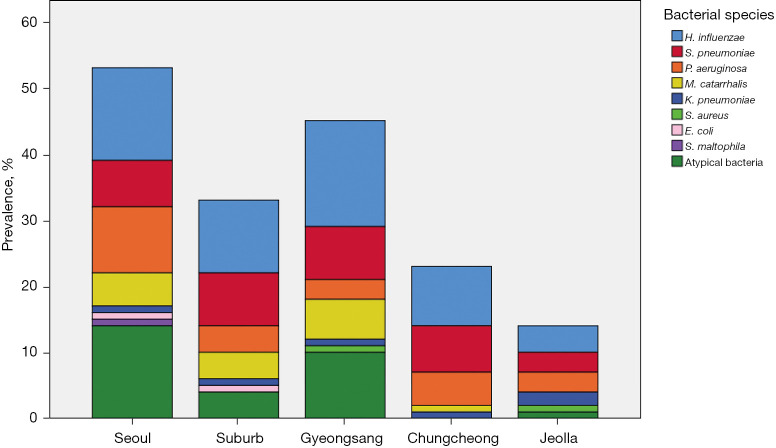
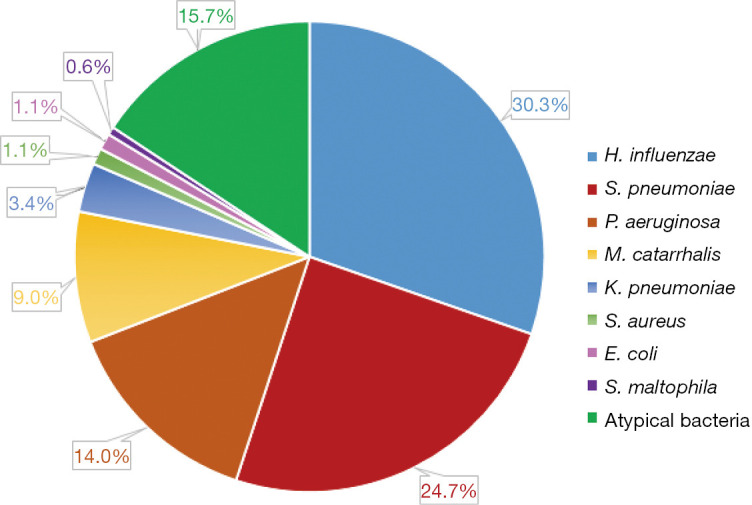
The most commonly isolated pathogen was (30.3%), followed by (24.7%) and (14.0%), with no significant regional differences in bacterial distribution. Patients with positive UAT for showed no clinical failure when treated with respiratory quinolone (0.0%), whereas 11.8% of patients with negative UAT showed clinical failure (P=0.037). UAT showed moderate agreement with sputum culture by kappa coefficient (κ=0.476).
The bacterial prevalence in patients with moderate AECOPD in South Korea showed correlations with the global prevalence, without significant regional differences. In outpatient settings, UAT has the potential to be used as a supplemental tool with sputum culture as a guide for determining the suspicion of bacterial exacerbation.
本研究旨在建立韩国慢性阻塞性肺疾病中度急性加重(AECOPD)患者中典型和非典型细菌病原体分布的全国性数据,并评估尿抗原检测(UAT)在检测方面的临床实用性。
本研究是一项随机对照试验的事后分析,该试验旨在比较口服扎氟沙星与莫西沙星治疗中度AECOPD门诊患者的疗效。从韩国各地的诊所招募了342名AECOPD患者,并在基线时采集了他们的血液、痰液和尿液样本。进行了血清学检测、痰培养和聚合酶链反应(PCR)以及UAT以鉴定细菌病原体。分析了细菌的流行率和区域分布。比较了UAT阳性和UAT阴性组患者的特征和临床反应,以及传统痰培养和PCR与UAT的检测率。
最常分离出的病原体是[具体病原体1](30.3%),其次是[具体病原体2](24.7%)和[具体病原体3](14.0%),细菌分布无显著区域差异。UAT检测[具体病原体]呈阳性的患者接受呼吸喹诺酮治疗时无临床失败情况(0.0%),而UAT检测呈阴性的患者中有11.8%出现临床失败(P=0.037)。UAT与痰培养的kappa系数显示出中度一致性(κ=0.476)。
韩国中度AECOPD患者的细菌流行率与全球流行率相关,无显著区域差异。在门诊环境中,UAT有可能作为一种补充工具,以痰培养为指导来确定对细菌加重的怀疑。