Institute for Experimental and Clinical Pharmacology and Toxicology, Center of Brain, Behavior and Metabolism, University of Lübeck, 23562 Lübeck, Germany.
Institute for Diabetes and Obesity, Helmholtz Zentrum Munich, Munich, and German Center for Diabetes Research (DZD), 85764 Neuherberg, Germany.
Brain. 2022 Dec 19;145(12):4264-4274. doi: 10.1093/brain/awac243.
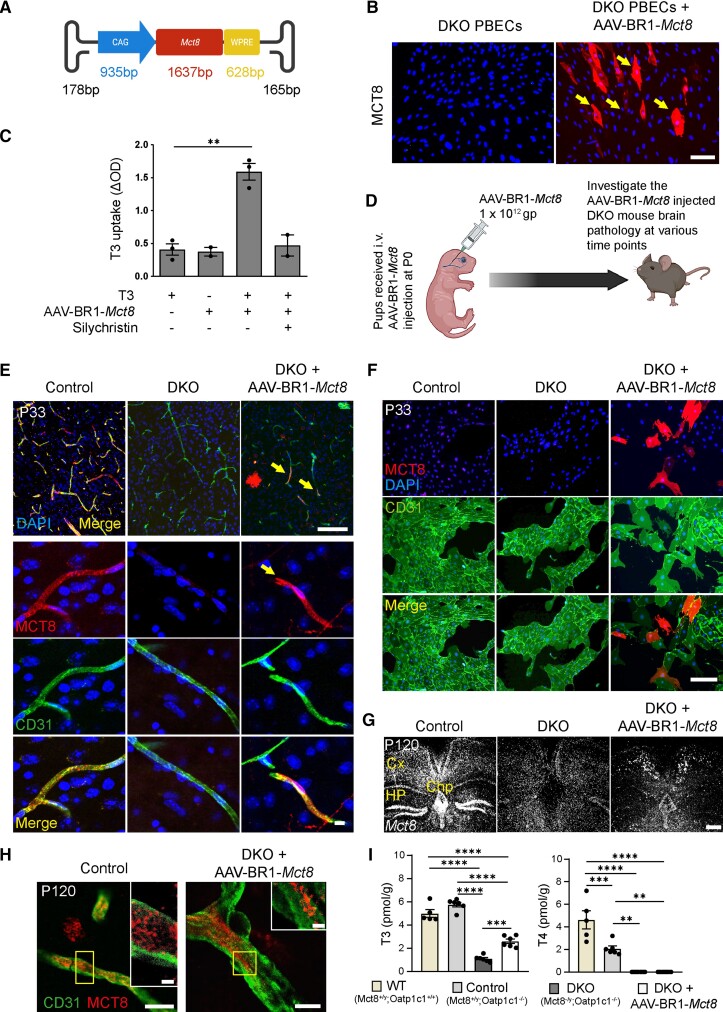
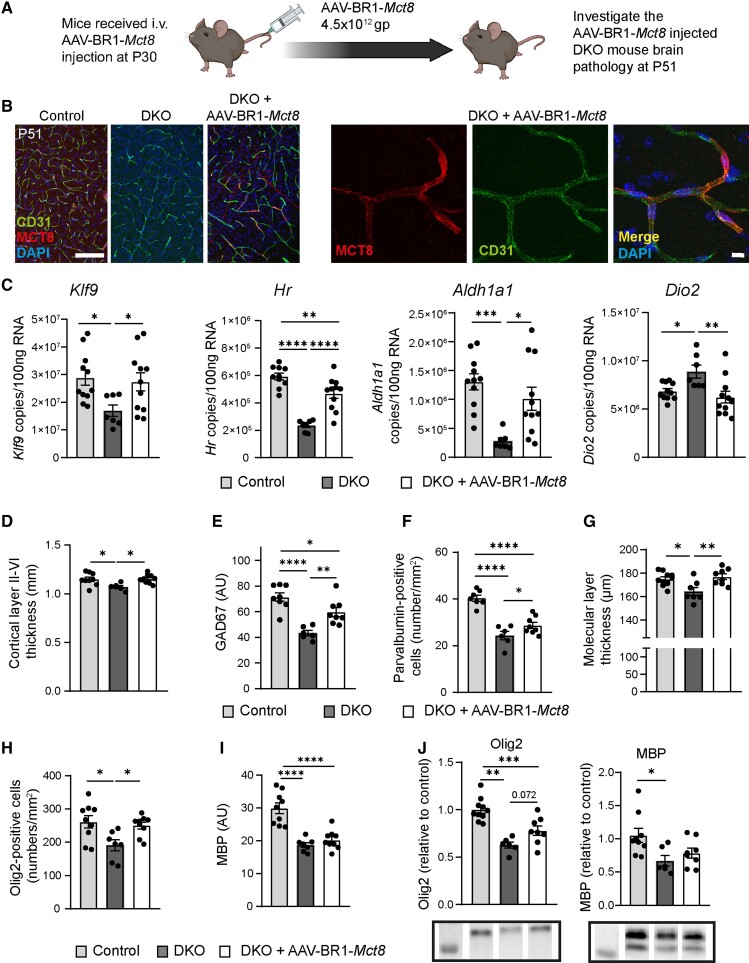
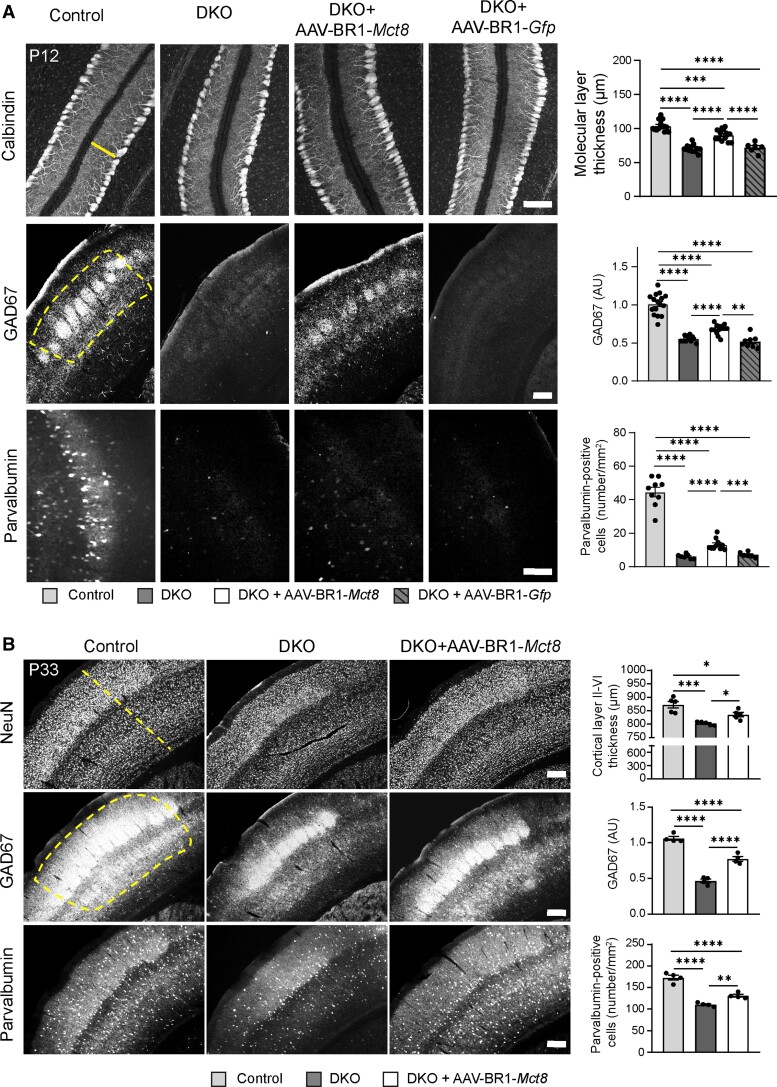
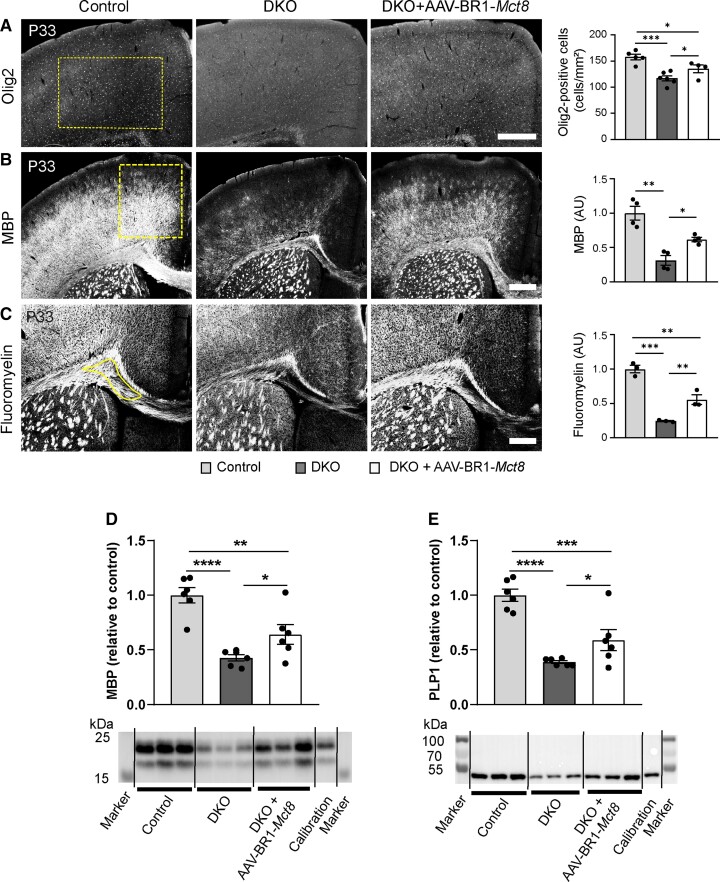
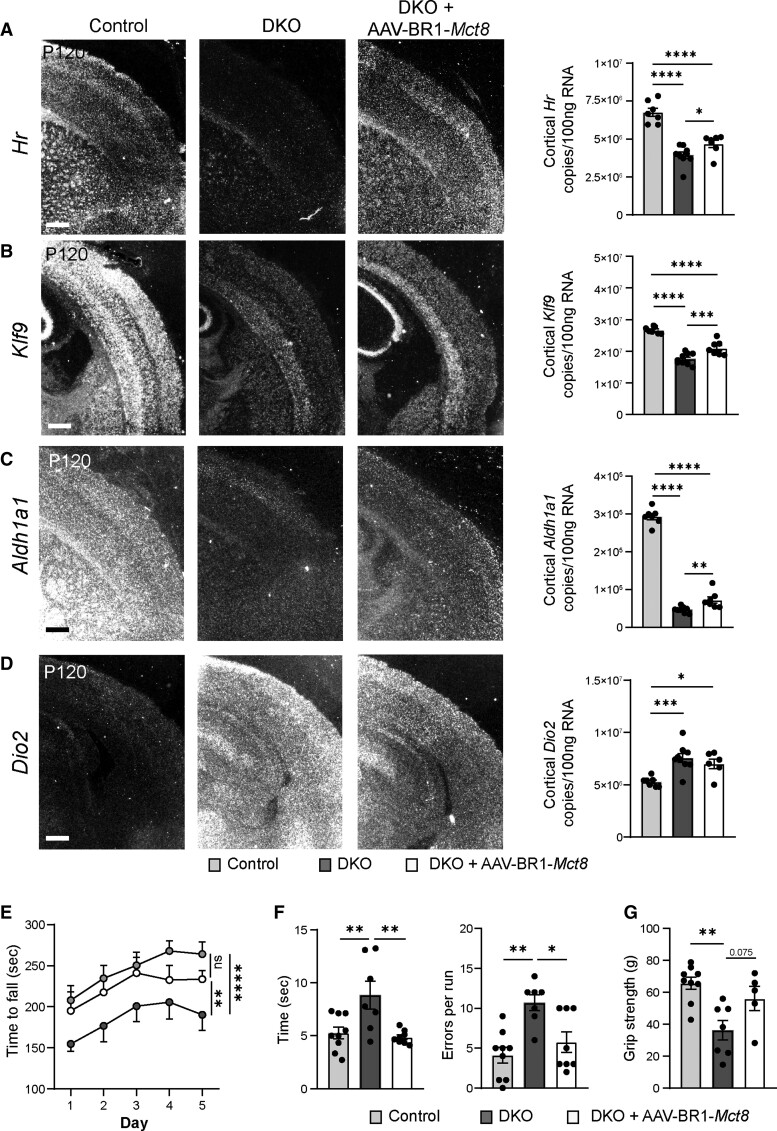
A genetic deficiency of the solute carrier monocarboxylate transporter 8 (MCT8), termed Allan-Herndon-Dudley syndrome, is an important cause of X-linked intellectual and motor disability. MCT8 transports thyroid hormones across cell membranes. While thyroid hormone analogues improve peripheral changes of MCT8 deficiency, no treatment of the neurological symptoms is available so far. Therefore, we tested a gene replacement therapy in Mct8- and Oatp1c1-deficient mice as a well-established model of the disease. Here, we report that targeting brain endothelial cells for Mct8 expression by intravenously injecting the vector AAV-BR1-Mct8 increased tri-iodothyronine (T3) levels in the brain and ameliorated morphological and functional parameters associated with the disease. Importantly, the therapy resulted in a long-lasting improvement in motor coordination. Thus, the data support the concept that MCT8 mediates the transport of thyroid hormones into the brain and indicate that a readily accessible vascular target can help overcome the consequences of the severe disability associated with MCT8 deficiency.
溶质载体单羧酸转运蛋白 8(MCT8)的遗传缺陷,称为 Allan-Herndon-Dudley 综合征,是导致 X 连锁智力和运动障碍的重要原因。MCT8 将甲状腺激素转运穿过细胞膜。虽然甲状腺激素类似物改善了 MCT8 缺乏症的外周变化,但迄今为止尚无针对神经系统症状的治疗方法。因此,我们在 Mct8 和 Oatp1c1 缺陷小鼠中测试了基因替代疗法,作为该疾病的成熟模型。在这里,我们报告说,通过静脉注射载体 AAV-BR1-Mct8 靶向脑内皮细胞表达 Mct8,可增加脑中三碘甲状腺原氨酸(T3)水平,并改善与疾病相关的形态和功能参数。重要的是,该治疗可持久改善运动协调能力。因此,这些数据支持 MCT8 介导甲状腺激素进入大脑的运输的概念,并表明易于接近的血管靶标有助于克服与 MCT8 缺乏相关的严重残疾的后果。