Jiangsu Province Key Laboratory of Anesthesiology, Xuzhou Medical University, Xuzhou, Jiangsu Province, China.
Jiangsu Province Key Laboratory of Anesthesiology, Xuzhou Medical University, Xuzhou, Jiangsu Province, China; Department of Anesthesiology, Ninth People's Hospital of Suzhou, Suzhou, Jiangsu 215200, China.
J Biol Chem. 2022 Sep;298(9):102326. doi: 10.1016/j.jbc.2022.102326. Epub 2022 Aug 4.
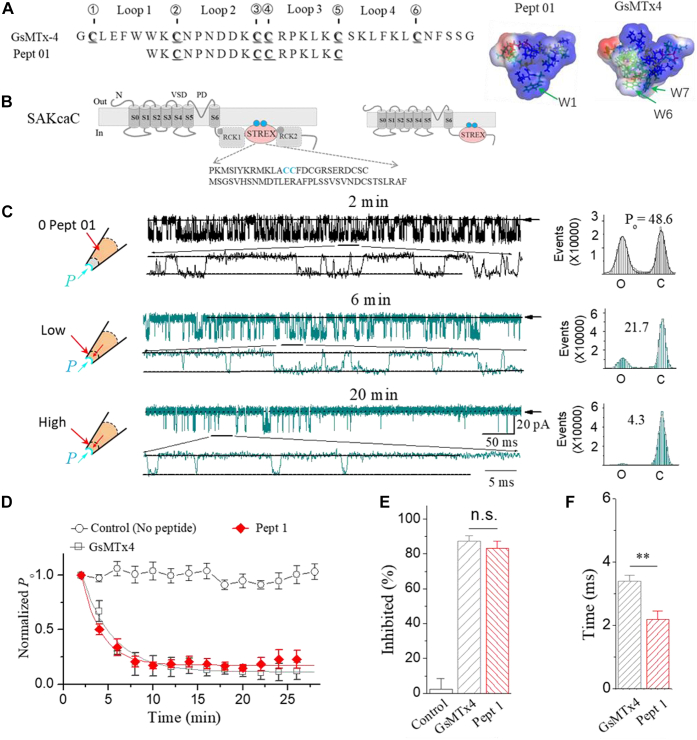
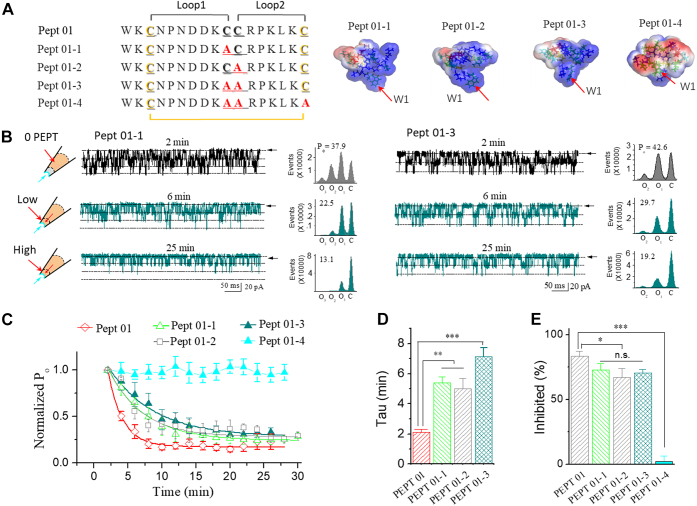
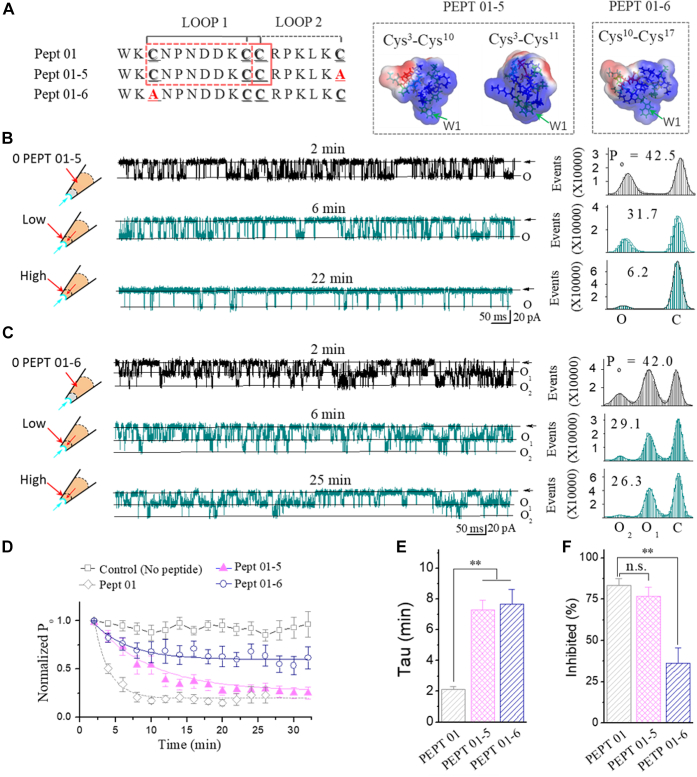
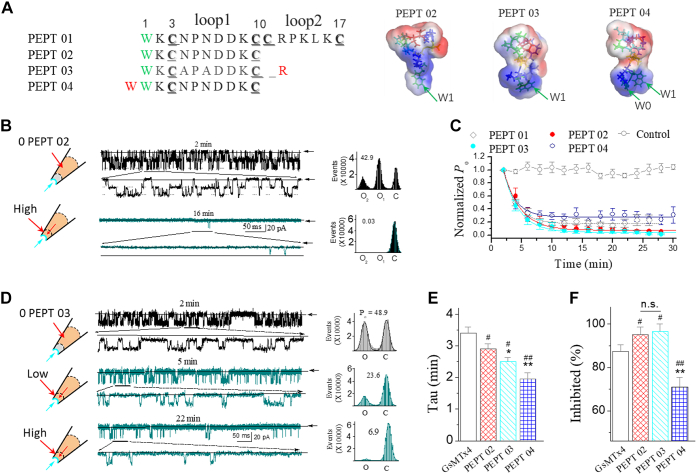
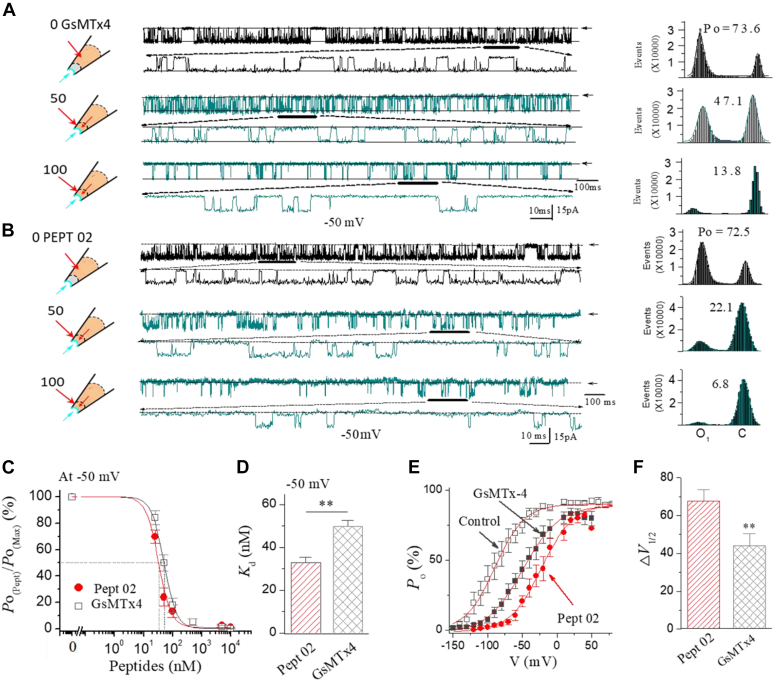
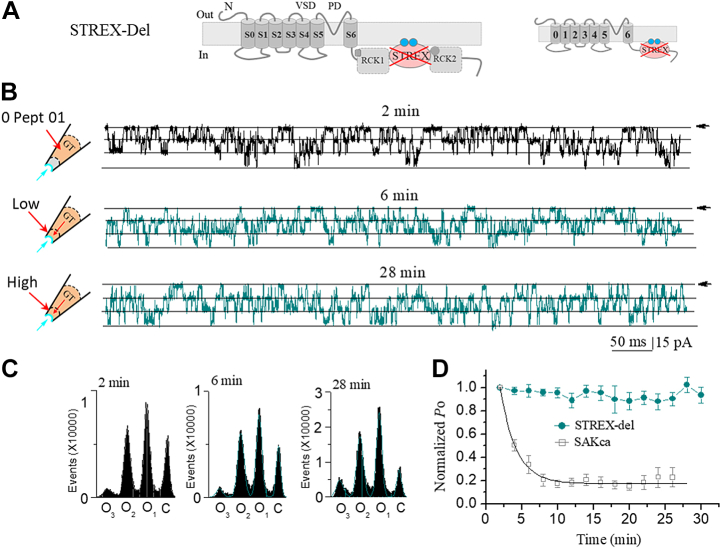
Atrial fibrillation is the most common sustained cardiac arrhythmia in humans. Current atrial fibrillation antiarrhythmic drugs have limited efficacy and carry the risk of ventricular proarrhythmia. GsMTx4, a mechanosensitive channel-selective inhibitor, has been shown to suppress arrhythmias through the inhibition of stretch-activated channels (SACs) in the heart. The cost of synthesizing this peptide is a major obstacle to clinical use. Here, we studied two types of short peptides derived from GsMTx4 for their effects on a stretch-activated big potassium channel (SAKcaC) from the heart. Type I, a 17-residue peptide (referred to as Pept 01), showed comparable efficacy, whereas type II (i.e., Pept 02), a 10-residue peptide, exerted even more potent inhibitory efficacy on SAKcaC compared with GsMTx4. We identified through mutagenesis important sequences required for peptide functions. In addition, molecular dynamics simulations revealed common structural features with a hydrophobic head followed by a positively charged protrusion that may be involved in peptide channel-lipid interactions. Furthermore, we suggest that these short peptides may inhibit SAKcaC through a specific modification to the mechanogate, as the inhibitory effects for both types of peptides were mostly abolished when tested with a mechano-insensitive channel variant (STREX-del) and a nonmechanosensitive big potassium (mouse Slo1) channel. These findings may offer an opportunity for the development of a new class of drugs in the treatment of cardiac arrhythmia generated by excitatory SACs in the heart.
心房颤动是人类最常见的持续性心律失常。目前的抗心律失常药物对心房颤动的疗效有限,而且存在诱发室性心律失常的风险。GsMTx4 是一种机械敏感通道选择性抑制剂,已被证明通过抑制心脏中的伸展激活通道(SAC)来抑制心律失常。这种肽的合成成本是其临床应用的主要障碍。在这里,我们研究了两种源自 GsMTx4 的短肽对心脏中的伸展激活大钾通道(SAKcaC)的作用。I 型,一种 17 个残基的肽(称为 Pept 01),显示出相当的功效,而 II 型(即 Pept 02),一种 10 个残基的肽,与 GsMTx4 相比,对 SAKcaC 表现出更强的抑制作用。我们通过突变鉴定了肽功能所需的重要序列。此外,分子动力学模拟揭示了与疏水头后紧接着正电荷突出物相关的共同结构特征,这可能涉及肽通道-脂质相互作用。此外,我们认为这些短肽可能通过对机械门的特定修饰来抑制 SAKcaC,因为当用机械不敏感通道变体(STREX-del)和非机械敏感大钾(小鼠 Slo1)通道进行测试时,两种类型的肽的抑制作用都被大部分消除。这些发现为开发治疗心脏兴奋 SAC 引起的心律失常的新药提供了机会。