
辩论:经[具体物质]生物转化的荔枝果皮原花青素低聚物能否增强对晚期糖基化终产物的抑制能力?
Debate: Could the litchi pericarp oligomeric procyanidins bioconverted by increase the inhibitory capacity on advanced glycation end products?
作者信息
Feng Nianjie, Tang Fei, Hu Chuanqin, Cheng Lei, Lv Zhejuan, Shen Yang, Li Wei, Xiao Gengsheng, Dong Hao, Wu Qian
机构信息
Key Laboratory of Fermentation Engineering (Ministry of Education), National "111" Center for Cellular Regulation and Molecular Pharmaceutics, Cooperative Innovation Center of Industrial Fermentation (Ministry of Education & Hubei Province), Hubei Key Laboratoy of Industrial Microbiology, Hubei University of Technology, Wuhan, China.
Key Laboratory of Cleaner Production and Integrated Resource Utilization of China National Light Industry, Beijing Technology and Business University, Beijing, China.
出版信息
Front Nutr. 2022 Jul 22;9:961078. doi: 10.3389/fnut.2022.961078. eCollection 2022.
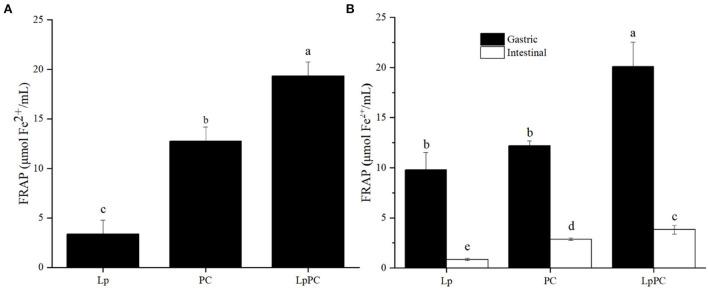
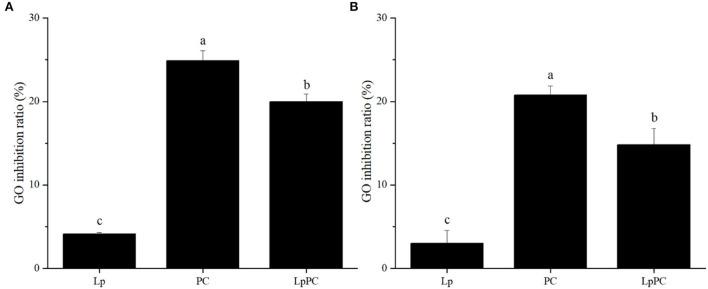
Lactic acid bacteria (LAB) have already been used as fermentation strains to enhance the antioxidant capacity of polyphenols. Antioxidant capacity is one of the most important factors to inhibit advanced glycation end product (AGE) formation and could LAB increase the inhibitory capacity of procyanidins on AGEs formation? It was surprising that opposite results were obtained both in simulated food processing and gastrointestinal digestion systems. After incubation with , litchi pericarp oligomeric procyanidins (LPOPCs) were bioconverted to several phenolic acids, which increased the antioxidant activity as expected. However, antiglycation ability and trapping carbonyl compounds capacity both weakened and it might be the primary reason for decreasing the inhibitory effect on AGE formation. Furthermore, it was found that LPOPCs incubated with inhibited the activity of digestive enzymes and thus decreased the digestibility of glycated protein. Our study systematically proposed for the first time that procyanidins bioconversion is an effective means to improve the antioxidant activity but has no remarkable promoting effect on AGEs inhibition.
乳酸菌(LAB)已被用作发酵菌株以增强多酚的抗氧化能力。抗氧化能力是抑制晚期糖基化终产物(AGE)形成的最重要因素之一,乳酸菌能否提高原花青素对AGEs形成的抑制能力?令人惊讶的是,在模拟食品加工和胃肠消化系统中均得到了相反的结果。与荔枝果皮低聚原花青素(LPOPCs)孵育后,其被生物转化为几种酚酸,如预期那样提高了抗氧化活性。然而,抗糖化能力和捕获羰基化合物的能力均减弱,这可能是降低对AGE形成抑制作用的主要原因。此外,发现与LPOPCs孵育会抑制消化酶的活性,从而降低糖化蛋白的消化率。我们的研究首次系统地提出,原花青素生物转化是提高抗氧化活性的有效手段,但对AGEs抑制没有显著的促进作用。



 Zotero 插件