Department of International Health, Johns Hopkins University Bloomberg School of Public Health, Baltimore, Maryland, USA
Medical Research Council/ Wits Rural Public Health and Health Transitions Research Unit (Agincourt), School of Public Health, Faculty of Health Sciences, University of the Witwatersrand, 27 St Andrews Road, Parktown, Johannesburg, 2193, South Africa, Johannesburg, South Africa.
BMJ Glob Health. 2022 Aug;6(Suppl 5). doi: 10.1136/bmjgh-2022-009395.
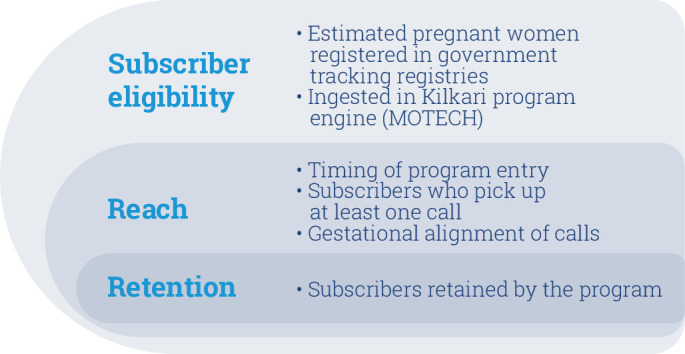
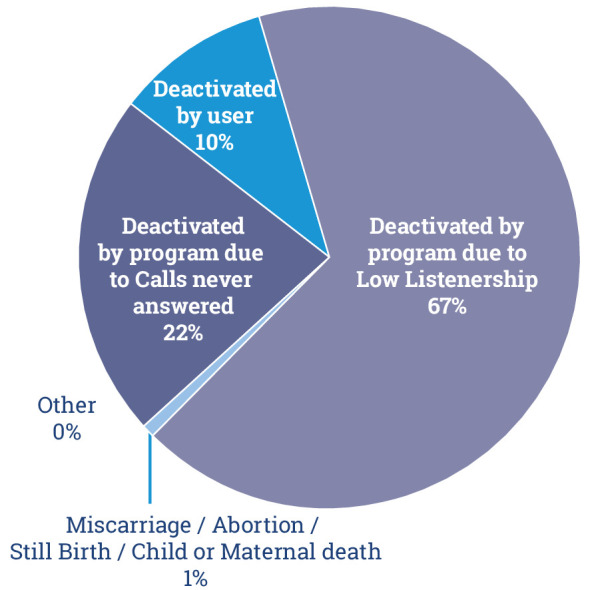
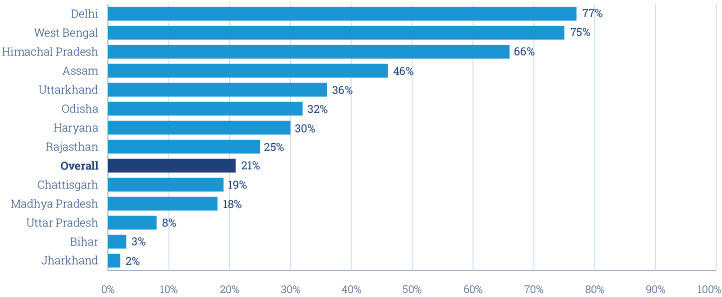
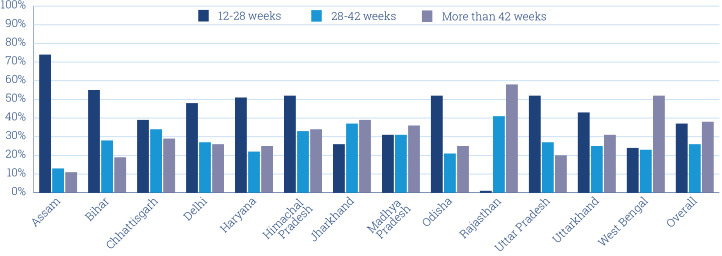
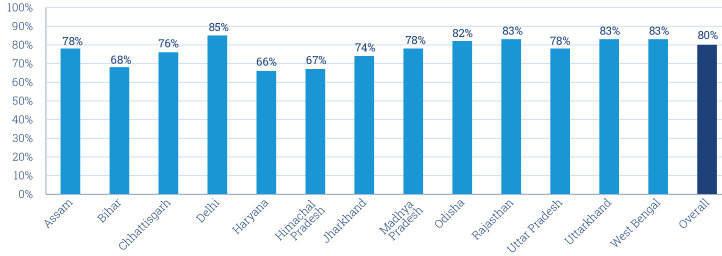
Kilkari is an outbound service that makes weekly, stage-based, prerecorded calls about reproductive, maternal, neonatal and child health directly to families' mobile phones, starting from the second trimester of pregnancy and until the child is 1 year old. Since its initiation in 2012-2013, Kilkari has scaled to 13 states across India. In this analysis article, we explored the subscriber's journey from entry to programme to engagement with calls. Data sources included call data records and household survey data from the 2015 National Family Health Survey. In 2018, of the 13.6 million records received by MOTECH, the technology platform that powers Kilkari, 9.5 million (~70%) were rejected and 4.1 million new subscribers were created. Overall, 21% of pregnant women across 13 states were covered by the programme in 2018, with West Bengal and Himachal Pradesh reaching a coverage of over 50%. Among new subscriptions in 2018, 63% were subscribed during pregnancy and 37% after childbirth. Of these, over 80% were ever reached by Kilkari calls and 39% retained in the programme. The main causes for deactivation of subscribers from the system were low listenership and calls going unanswered for six continuous weeks. Globally, Kilkari is the largest maternal mobile messaging programme of its kind in terms of number of subscribers but the coverage among pregnant women remains low. While call reach appears to be on the higher side, subscriber retention is low; this highlights broader challenges with providing mobile health services at scale across India.
基尔卡里(Kilkari)是一项外呼服务,每周向孕妇及其家庭的手机拨打基于阶段的预先录制的生殖、孕产妇、新生儿和儿童健康电话,从怀孕第二个月开始,直到孩子满 1 岁。自 2012-2013 年启动以来,基尔卡里已在印度 13 个邦推广。在本文分析中,我们探讨了订户从注册到参与电话服务的历程。数据来源包括电话数据记录和 2015 年国家家庭健康调查的家庭调查数据。2018 年,MOTECH(为基尔卡里提供技术平台的公司)收到的 1360 万条记录中,有 950 万条(约 70%)被拒绝,新订户有 410 万。总体而言,2018 年,13 个邦中有 21%的孕妇被该项目覆盖,西孟加拉邦和喜马偕尔邦的覆盖率超过 50%。在 2018 年的新订户中,63%是在怀孕期间注册的,37%是在分娩后注册的。其中,超过 80%的人曾接到过基尔卡里的电话,39%的人仍在该项目中。导致订户从系统中注销的主要原因是收听率低和连续六周无人接听电话。在全球范围内,就订户数量而言,基尔卡里是同类中最大的产妇手机短信项目,但孕妇的覆盖率仍然较低。虽然电话接通率似乎较高,但订户保留率较低;这凸显了在印度大规模提供移动医疗服务所面临的更广泛挑战。