Department of Cardiology, Angiology and Pneumology, Heidelberg University, Heidelberg, Germany
MVZ-DRZ Sinsheim Eberbach Erbach Walldorf Heidelberg, Heidelberg, Germany.
BMJ Open. 2022 Aug 8;12(8):e058304. doi: 10.1136/bmjopen-2021-058304.
Since the safety of coronary CT angiography (CTA) is of great importance, especially with regard to widening indications and increasing morbidity, the aim of this study was to assess influencing factors.
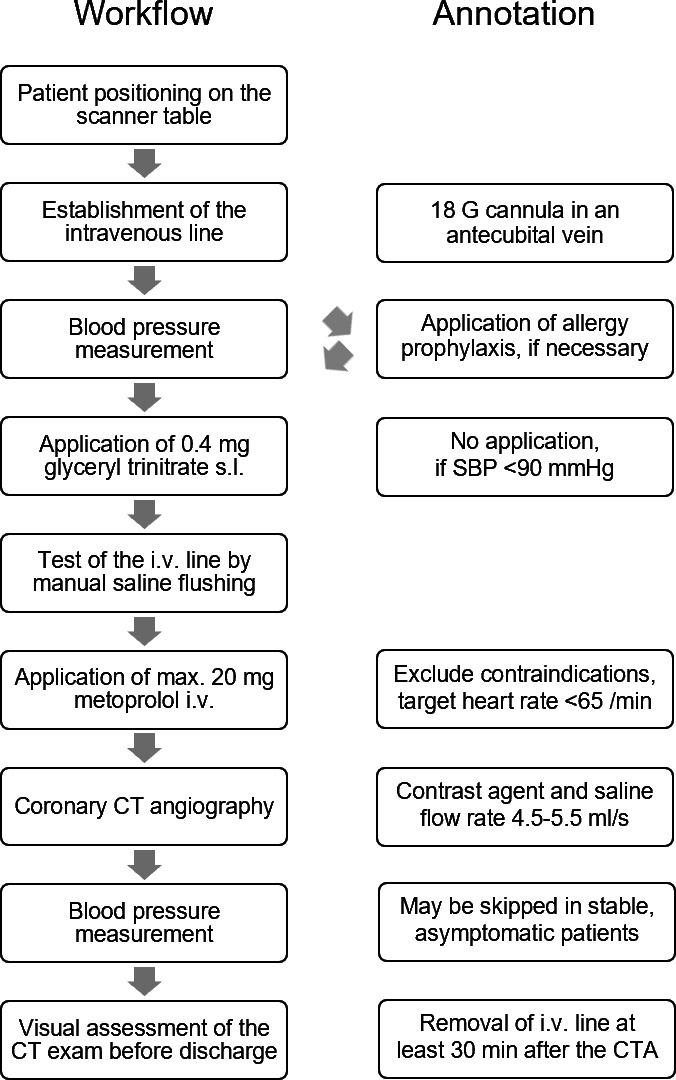
Patients undergoing coronary CTA in a third-generation dual-source CT in a radiological centre were included in a clinical registry. Up to 20 mg metoprolol was administered intravenously to attain a heart rate ≤65/min. Glyceryl trinitrate (GTN) was administered in doses of 0.8 mg and 0.4 mg. Blood pressure was measured before the administration and after the CTA.
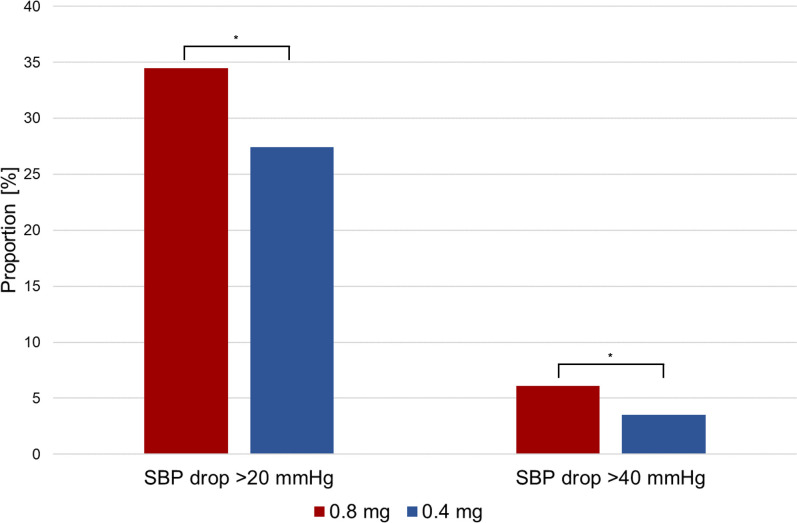
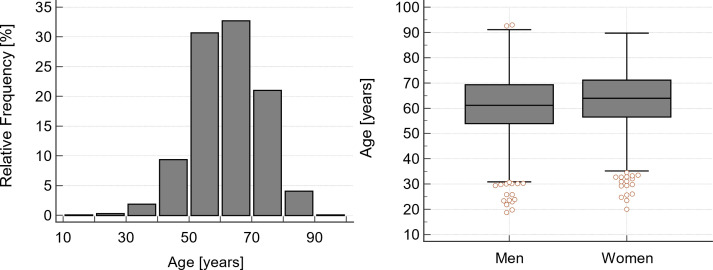
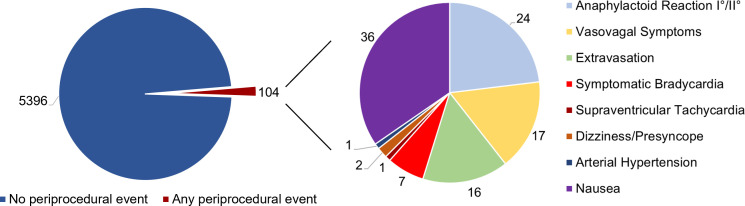
Out of 5500 consecutive patients (3194 men, 62.3 (54.9-70.0) years), adverse events occurred in 68 patients (1.2%) with mild anaphylactoid reactions (0.4%), vasovagal symptoms (0.3%) and extravasation (0.3%) being most frequent. Anti-allergic drugs were given in 17 patients, atropine in 3 patients and volume in 1 patient. Drug administration resulted in a significant mean arterial pressure decline (96.0 (88.3-106.0) vs 108.7 (99.7-117.3) mmHg; p<0.001). Patients who suffered systolic blood pressure drops >20 mmHg or >40 mmHg were older (66.5 (58.6-73.3) vs 60.5 (53.6-68.3) years; 70.2 (63.3-76.5) vs 62.1 (54.7-69.6) years), more often male (65.1% vs 54.4%; 68.9% vs 57.3%) and had higher Agatston score equivalents (83.0 (2.0-432.0) vs 15.0 (0.0-172.0); 163.0 (16.3-830.8) vs 25.0 (0.0-220.0); all p<0.001). GTN dose reduction lowered the fraction of patients suffering from blood pressure drops >20 mmHg or >40 mmHg from 34.5% to 27.4% and from 6.1% to 3.5% (both p<0.001), respectively. The proportion of coronary segments with impaired image quality did not differ significantly.
Coronary CTA with intravenous beta-blocker administration is a safe procedure in an outpatient setting as adverse events are rare and mostly mild. Reduced GTN doses can further improve safety by lowering the rate of significant blood pressure drops, which occurred especially in elderly men with increased plaque burden.
NCT03815123.
由于冠状动脉 CT 血管造影(CTA)的安全性非常重要,特别是在扩大适应证和增加发病率的情况下,本研究旨在评估影响因素。
在放射科中心的第三代双源 CT 中进行冠状动脉 CTA 的患者被纳入临床登记处。静脉给予高达 20mg 的美托洛尔,以使心率≤65/min。给予硝酸甘油(GTN),剂量为 0.8mg 和 0.4mg。在给药前和 CTA 后测量血压。
在 5500 例连续患者(3194 例男性,62.3(54.9-70.0)岁)中,68 例(1.2%)发生不良事件,其中轻度过敏反应(0.4%)、血管迷走神经症状(0.3%)和外渗(0.3%)最常见。17 例患者给予抗过敏药物,3 例患者给予阿托品,1 例患者给予容量。药物给药导致平均动脉压显著下降(96.0(88.3-106.0)与 108.7(99.7-117.3)mmHg;p<0.001)。收缩压下降>20mmHg 或>40mmHg 的患者年龄更大(66.5(58.6-73.3)与 60.5(53.6-68.3)岁;70.2(63.3-76.5)与 62.1(54.7-69.6)岁),更常见于男性(65.1%与 54.4%;68.9%与 57.3%),Agatston 评分等效值更高(83.0(2.0-432.0)与 15.0(0.0-172.0);163.0(16.3-830.8)与 25.0(0.0-220.0);均 p<0.001)。GTN 剂量减少将收缩压下降>20mmHg 或>40mmHg 的患者比例从 34.5%降至 27.4%和从 6.1%降至 3.5%(均 p<0.001)。受影响的冠状动脉节段的图像质量比例没有显著差异。
在门诊环境中,冠状动脉 CTA 联合静脉内使用β受体阻滞剂是一种安全的程序,因为不良事件罕见且大多为轻度。降低 GTN 剂量可通过降低显著血压下降的发生率进一步提高安全性,这种下降尤其发生在斑块负担增加的老年男性中。
NCT03815123。