Kruyer Anna, Angelis Ariana, Garcia-Keller Constanza, Li Hong, Kalivas Peter W
Department of Neuroscience, Medical University of South Carolina, Charleston, SC, USA.
Department of Biostatistics & Bioinformatics, Medical University of South Carolina, Charleston, SC, USA.
Sci Adv. 2022 Aug 12;8(32):eabo7044. doi: 10.1126/sciadv.abo7044. Epub 2022 Aug 10.
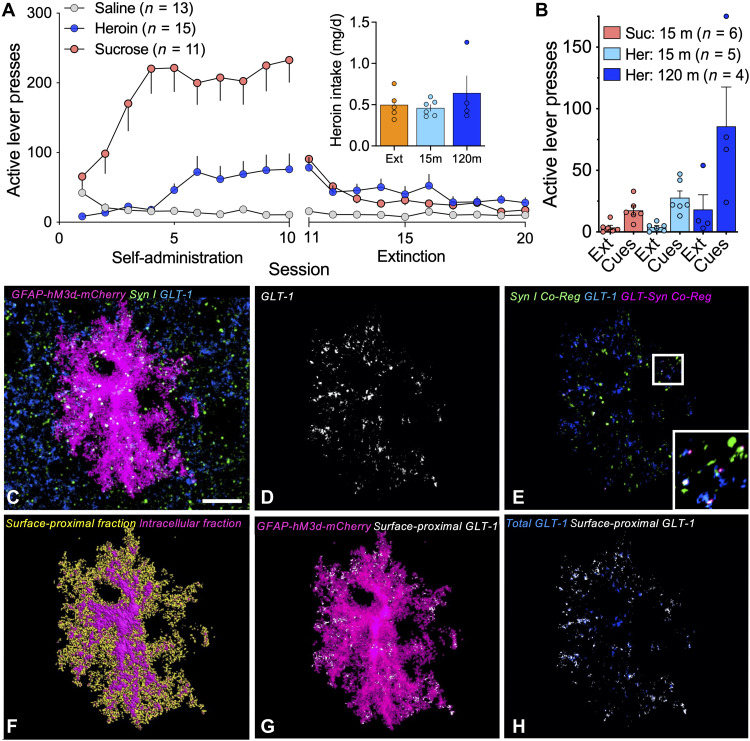
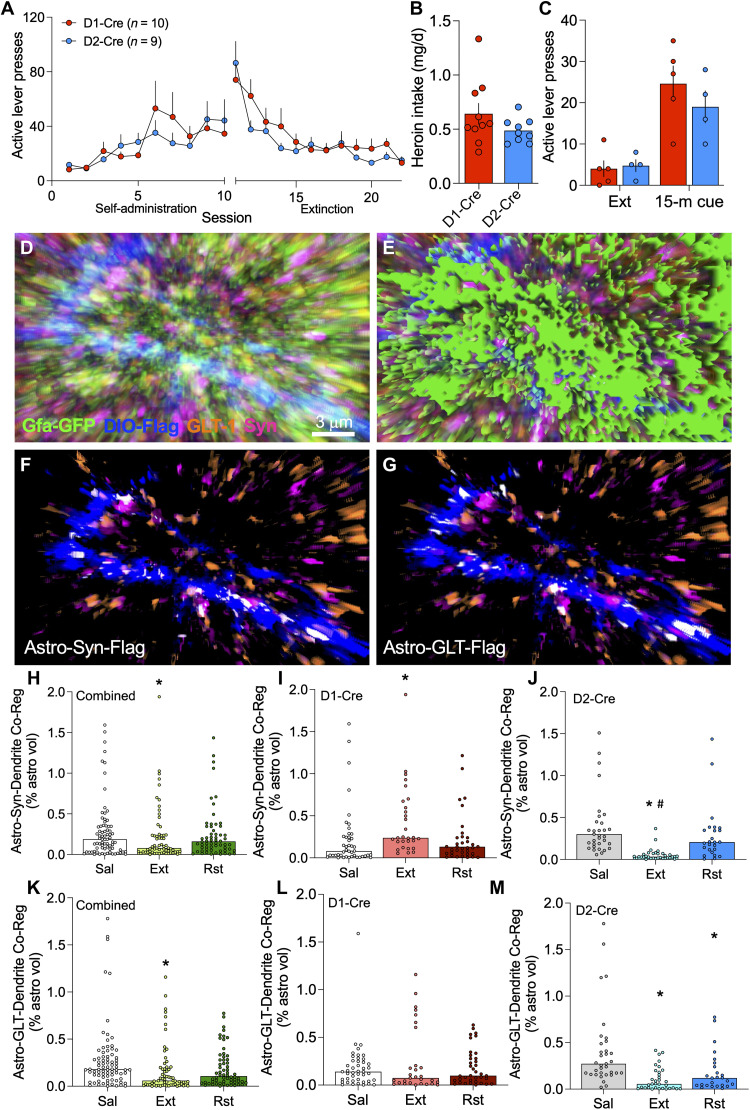
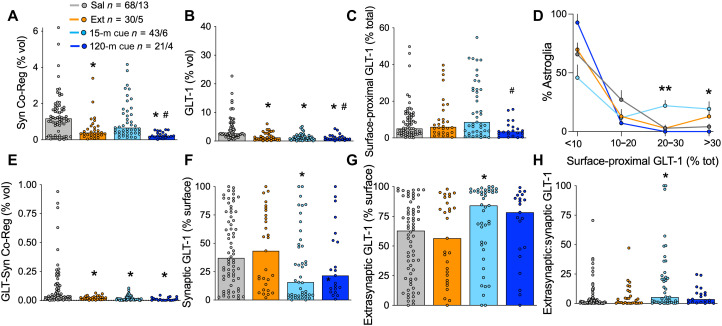
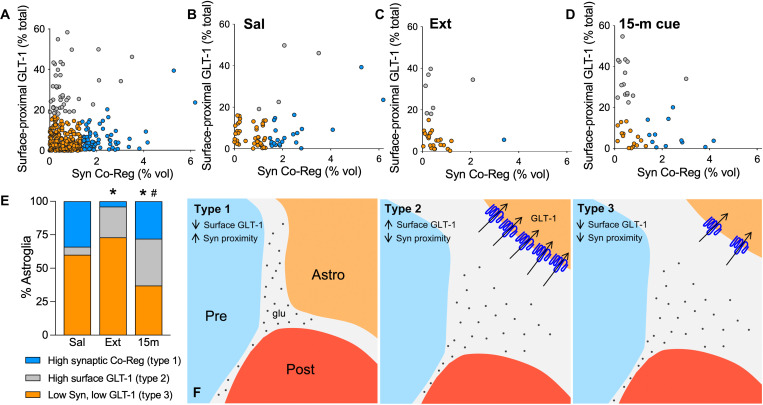
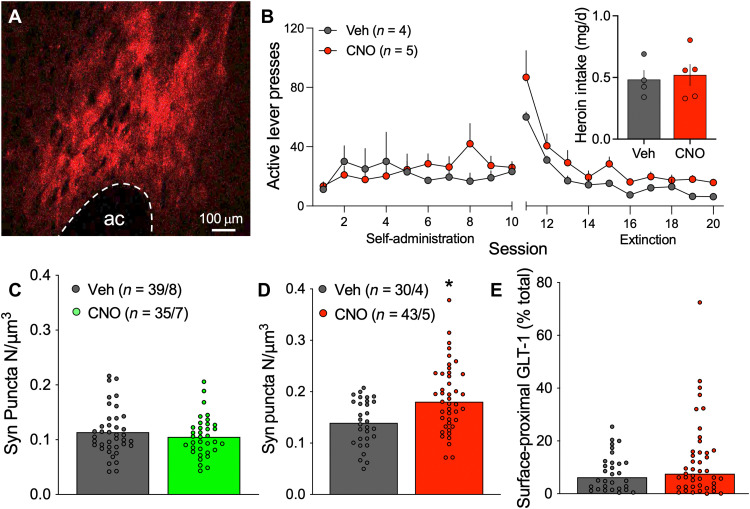
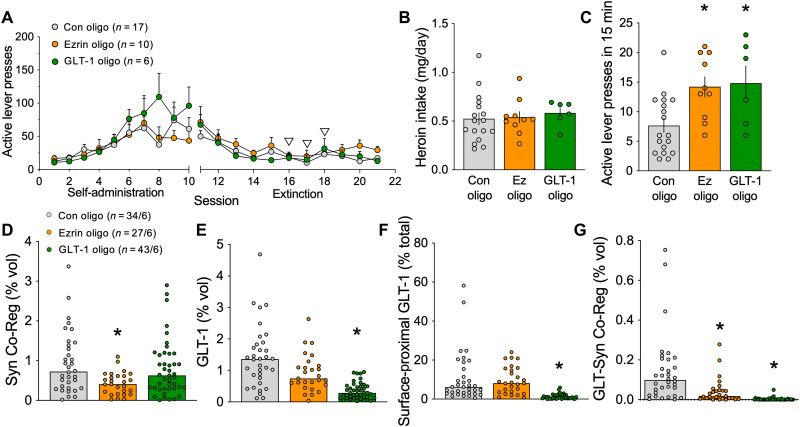
Opioid use disorder (OUD) produces detrimental personal and societal consequences. Astrocytes are a major cell group in the brain that receives little attention in mediating OUD. We determined how astrocytes and the astroglial glutamate transporter, GLT-1, in the nucleus accumbens core adapt and contribute to heroin seeking in rats. Seeking heroin, but not sucrose, produced two transient forms of plasticity in different astroglial subpopulations. Increased morphological proximity to synapses occurred in one subpopulation and increased extrasynaptic GLT-1 expression in another. Augmented synapse proximity by astroglia occurred selectively at D2-dopamine receptor-expressing dendrites, while changes in GLT-1 were not neuron subtype specific. mRNA-targeted antisense inhibition of either morphological or GLT-1 plasticity promoted cue-induced heroin seeking. Thus, we show that heroin cues induce two distinct forms of transient plasticity in separate astroglial subpopulations that dampen heroin relapse.
阿片类物质使用障碍(OUD)会产生有害的个人和社会后果。星形胶质细胞是大脑中的主要细胞群,在介导OUD方面很少受到关注。我们确定了伏隔核核心中的星形胶质细胞和星形胶质谷氨酸转运体GLT-1如何适应并促进大鼠对海洛因的寻觅行为。寻觅海洛因而非蔗糖,会在不同的星形胶质细胞亚群中产生两种短暂的可塑性形式。在一个亚群中,与突触的形态学距离增加,而在另一个亚群中,突触外GLT-1表达增加。星形胶质细胞增强的突触接近性选择性地发生在表达D2-多巴胺受体的树突上,而GLT-1的变化不是神经元亚型特异性的。对形态学或GLT-1可塑性进行mRNA靶向反义抑制会促进线索诱导的海洛因寻觅行为。因此,我们表明海洛因线索在不同的星形胶质细胞亚群中诱导出两种不同形式的短暂可塑性,从而抑制海洛因复发。