Musculoskeletal and Immune Disease Research Institute, School of Medicine, Wonkwang University, 460 Iksandae-ro, Iksan, Jeonbuk, 54538, Republic of Korea.
Division of Rheumatology, Department of Internal Medicine, Wonkwang University Hospital, 460 Iksandae-ro, Iksan, Jeonbuk, 54538, Republic of Korea.
BMC Complement Med Ther. 2022 Aug 10;22(1):214. doi: 10.1186/s12906-022-03694-y.
Rheumatoid arthritis (RA) is a chronic inflammatory autoimmune disease that causes local bone erosion and systemic osteoporosis. Harpagoside (HAR), an iridoid glycoside, has various pharmacological effects on pain, arthritis, and inflammation. Our previous study suggests that HAR is more deeply involved in the mechanism of bone loss caused by inflammatory stimuli than hormonal changes. Here, we identified the local and systemic bone loss inhibitory effects of HAR on RA and its intracellular mechanisms using a type 2 collagen-induced arthritis (CIA) mouse model.
The anti-osteoporosis and anti-arthritic effects of HAR were evaluated on bone marrow macrophage in vitro and CIA in mice in vivo by obtaining clinical scores, measuring hind paw thickness and inflammatory cytokine levels, micro-CT and histopathological assessments, and cell-based assay.
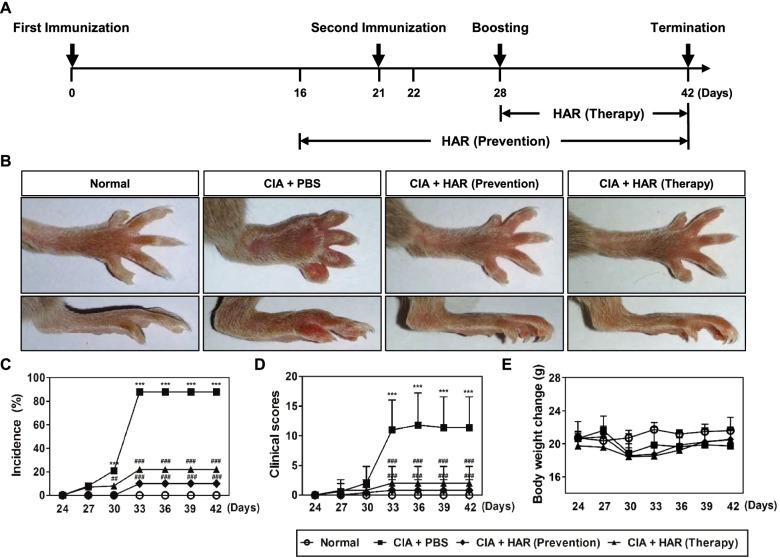
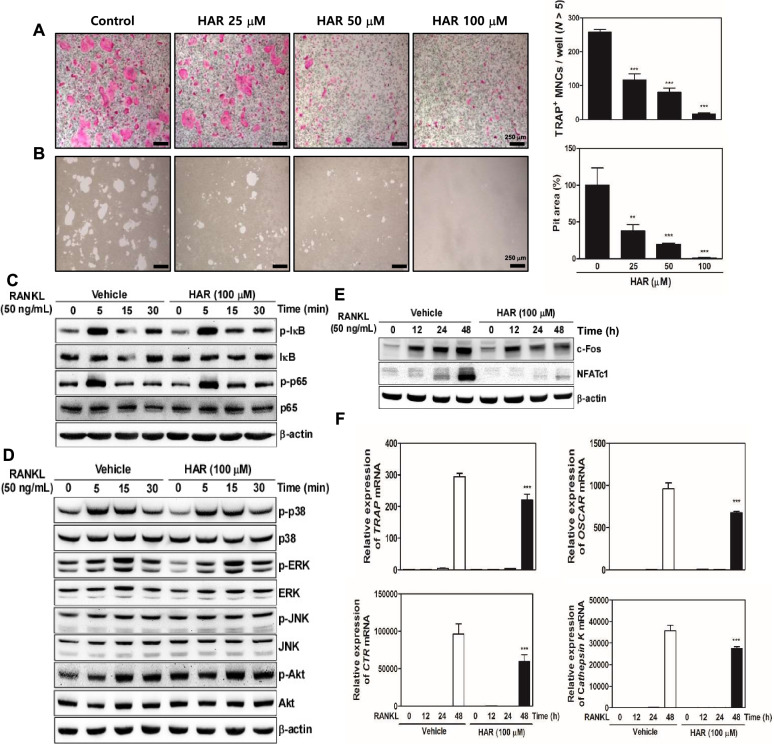
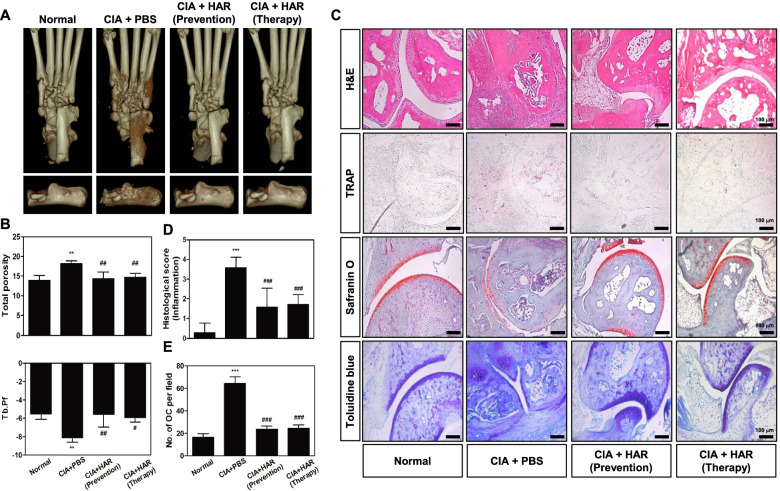
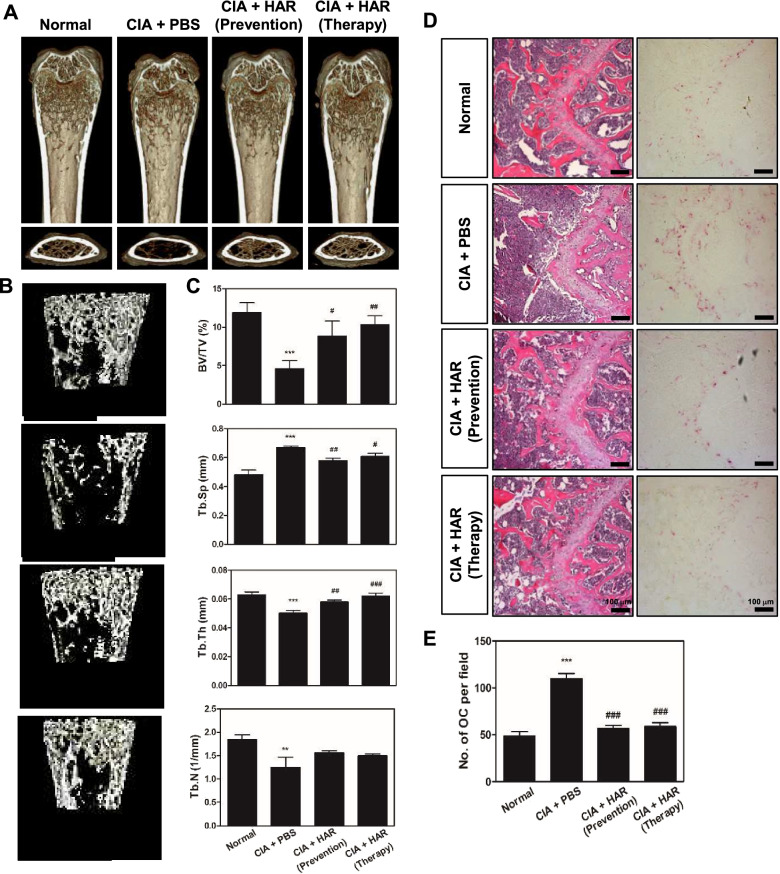
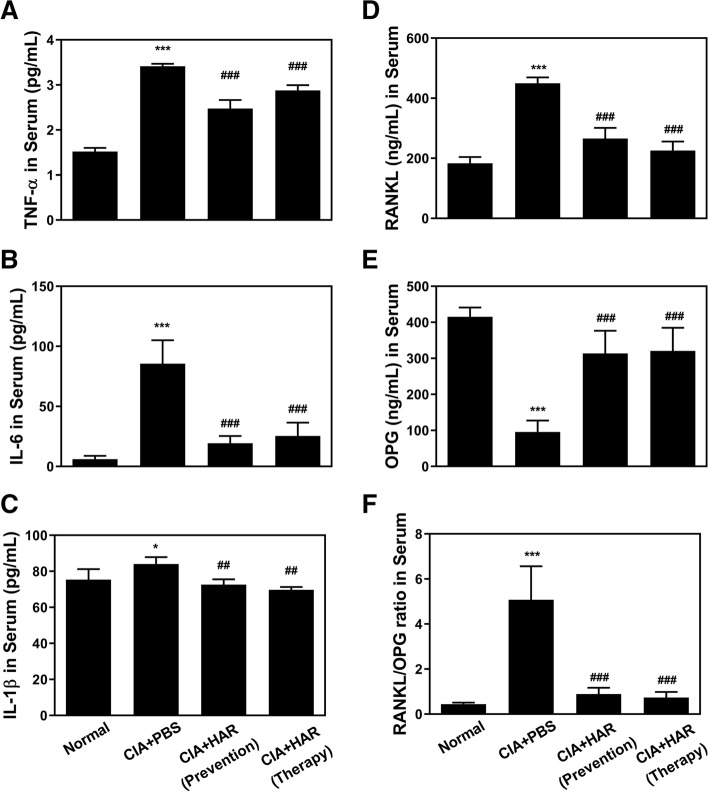
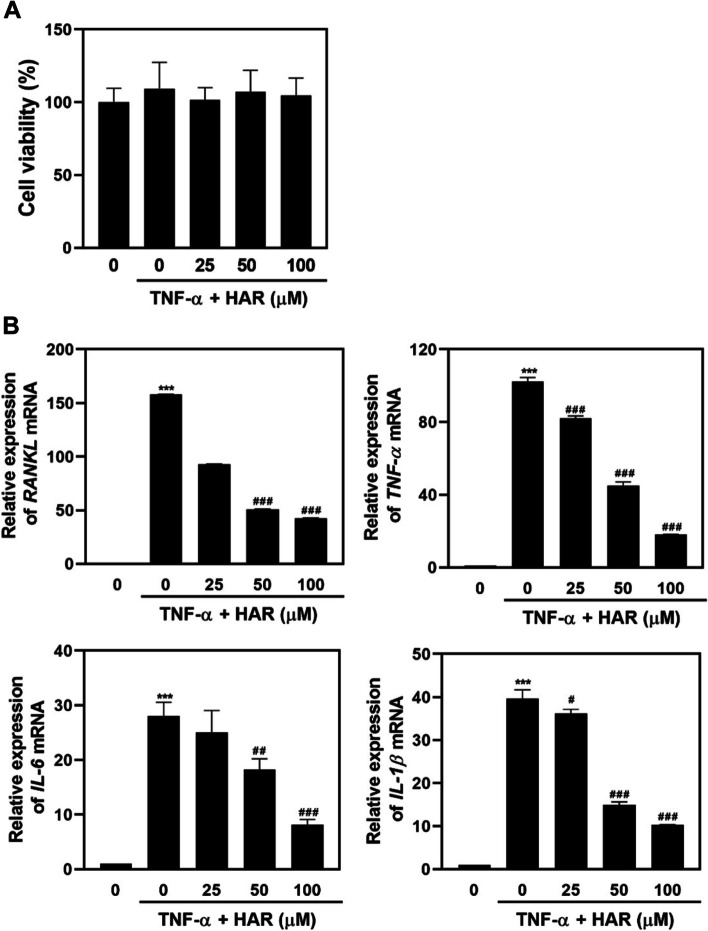
HAR markedly reduced the clinical score and incidence rate of CIA in both the prevention and therapy groups. Histological analysis demonstrated that HAR locally ameliorated the destruction of bone and cartilage and the formation of pannus. In this process, HAR decreased the expression of inflammatory cytokines, such as tumor necrosis factor-α, interleukin (IL)-6, and IL-1β in the serum of CIA mice. Additionally, HAR downregulated the expression of receptor activator of nuclear factor-κB ligand and upregulated that of osteoprotegerin. HAR suppressed systemic bone loss by inhibiting osteoclast differentiation and osteoclast marker gene expression in a CIA mouse model.
Taken together, these findings show the beneficial effect of HAR on local symptoms and systemic bone erosion triggered by inflammatory arthritis.
类风湿性关节炎(RA)是一种慢性炎症性自身免疫性疾病,会导致局部骨质侵蚀和全身性骨质疏松。哈巴俄苷(HAR)是一种环烯醚萜苷,对疼痛、关节炎和炎症具有多种药理作用。我们之前的研究表明,HAR 比激素变化更深入地参与了炎症刺激引起的骨质流失机制。在这里,我们使用 2 型胶原诱导性关节炎(CIA)小鼠模型,确定了 HAR 对 RA 的局部和全身性骨质流失抑制作用及其细胞内机制。
通过获得临床评分、测量后爪厚度和炎症细胞因子水平、micro-CT 和组织病理学评估以及基于细胞的测定,在体外骨髓巨噬细胞和体内 CIA 小鼠中评估 HAR 的抗骨质疏松和抗关节炎作用。
HAR 显著降低了预防和治疗组 CIA 的临床评分和发生率。组织学分析表明,HAR 局部改善了骨和软骨的破坏以及血管翳的形成。在此过程中,HAR 降低了 CIA 小鼠血清中肿瘤坏死因子-α、白细胞介素(IL)-6 和 IL-1β 等炎症细胞因子的表达。此外,HAR 通过抑制核因子-κB 配体受体激活因子和上调护骨素的表达来下调破骨细胞分化和破骨细胞标记基因的表达。HAR 通过抑制 CIA 小鼠模型中的破骨细胞分化和破骨细胞标记基因的表达来抑制全身性骨质流失。
综上所述,这些发现表明 HAR 对炎症性关节炎引起的局部症状和全身性骨质侵蚀具有有益作用。