Dorris Emma R, Grealis Stacey, Kegl Karmen, Kennedy Norelee, Larkin Louise, Lynch Brian, Moran Ailis, O'Brien Justine, Skeffington Stephanie, Slater Kayleigh, Ward Rebecca, Willett Allison
University College Dublin, Belfield, Dublin 04, D04V1W8, Ireland.
, Mayo, Ireland.
BMC Rheumatol. 2022 Aug 11;6(1):55. doi: 10.1186/s41927-022-00285-9.
Research priority setting is a useful approach to decide which unanswered questions are most worth trying to solve through research. The aim is to reduce bias in the research agenda. Traditionally, research was decided by funders, policymakers, and academics with limited influence from other stakeholders like people living with health conditions, caregivers, or the community. This can lead to research gaps that fail to address these important stakeholder needs. The objective of this study is to identify the top research priorities for Rheumatic and Musculoskeletal Disease (RMD) research in Ireland.
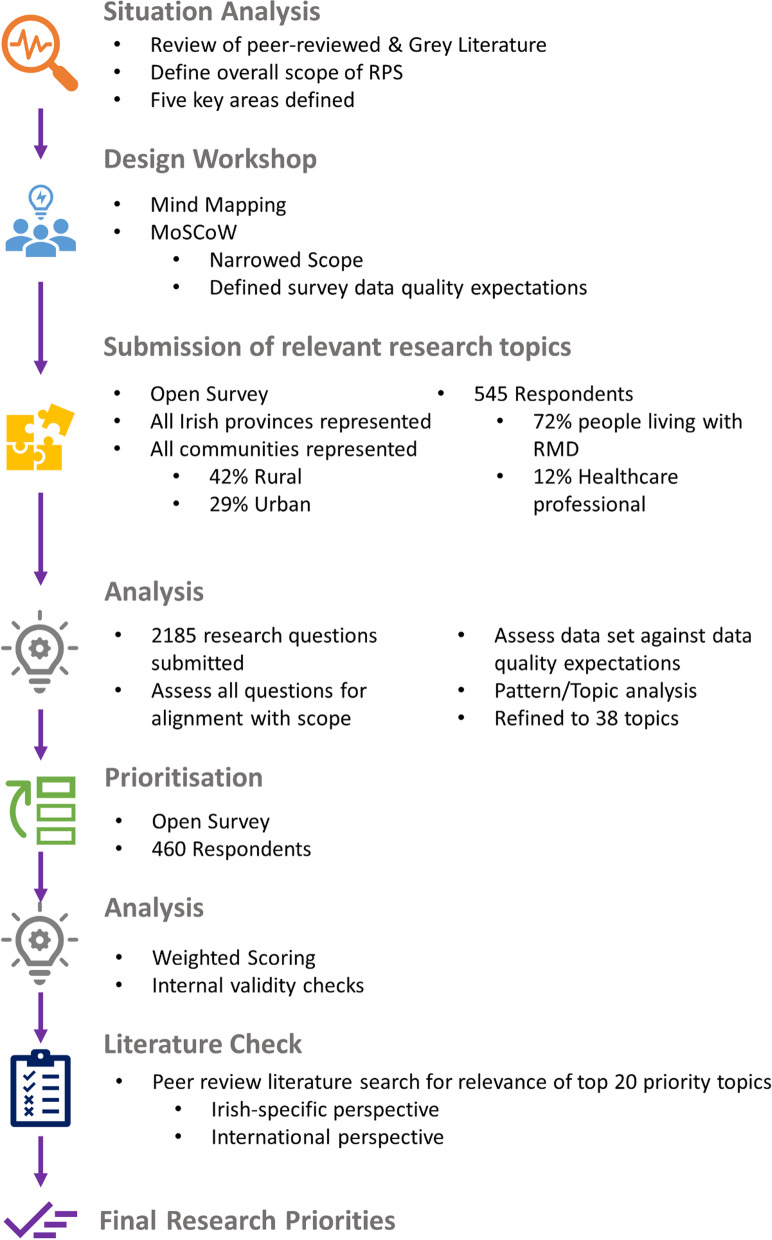
The process framework included a design workshop, two online surveys and a review of the literature.
545 people completed the first survey to identify RMD research topics relevant to Ireland, of which 72% identified as a person living with RMD. 460 people completed the second survey to prioritise these research topics.
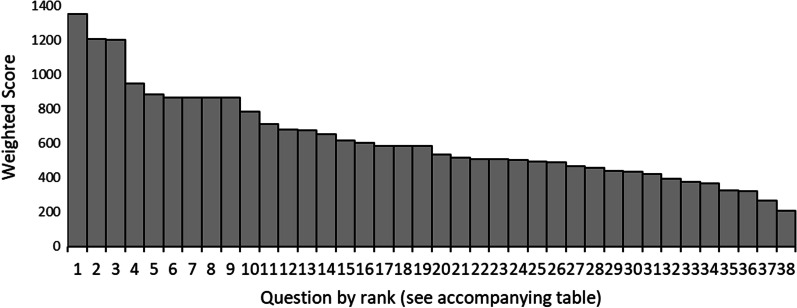
The first survey had 2185 research topics submitted. These were analysed and grouped into 38 topic areas which were ranked in the second survey. The top three research priorities for RMD research in Ireland focused on preventing RMD progression, RMD diagnosis and its impact, and pain management.
The prioritised research topics indicate important areas of RMD research for Ireland. Research funded in response to these co-created research priorities will have increased relevance and impact.
研究重点设定是一种有用的方法,用于确定哪些未解决的问题最值得通过研究来解决。其目的是减少研究议程中的偏差。传统上,研究由资助者、政策制定者和学者决定,其他利益相关者(如健康状况患者、护理人员或社区)的影响有限。这可能导致研究差距,无法满足这些重要利益相关者的需求。本研究的目的是确定爱尔兰风湿性和肌肉骨骼疾病(RMD)研究的首要研究重点。
该过程框架包括一次设计研讨会、两次在线调查和一次文献综述。
545人完成了第一次调查,以确定与爱尔兰相关的RMD研究主题,其中72%的人确定为RMD患者。460人完成了第二次调查,以对这些研究主题进行优先排序。
第一次调查共提交了2185个研究主题。这些主题经过分析后被归为38个主题领域,并在第二次调查中进行了排名。爱尔兰RMD研究的前三大研究重点集中在预防RMD进展、RMD诊断及其影响以及疼痛管理。
确定优先顺序的研究主题指出了爱尔兰RMD研究的重要领域。针对这些共同确定的研究重点提供资金的研究将具有更高的相关性和影响力。