Sigurðsson Haraldur B, Briem Kristín, Grävare Silbernagel Karin, Snyder-Mackler Lynn
Physical Therapy, University of Iceland.
Physical Therapy, University of Delaware.
Int J Sports Phys Ther. 2022 Aug 1;17(5):823-831. doi: 10.26603/001c.36524. eCollection 2022.
The 11+ program prevents anterior cruciate ligament (ACL) injuries in athletes through unknown mechanisms.
The aim of the current study was to evaluate the effects of The 11+ intervention program, performed by female soccer players during a single season, on the frequency of Early Peaks during athletic tasks.
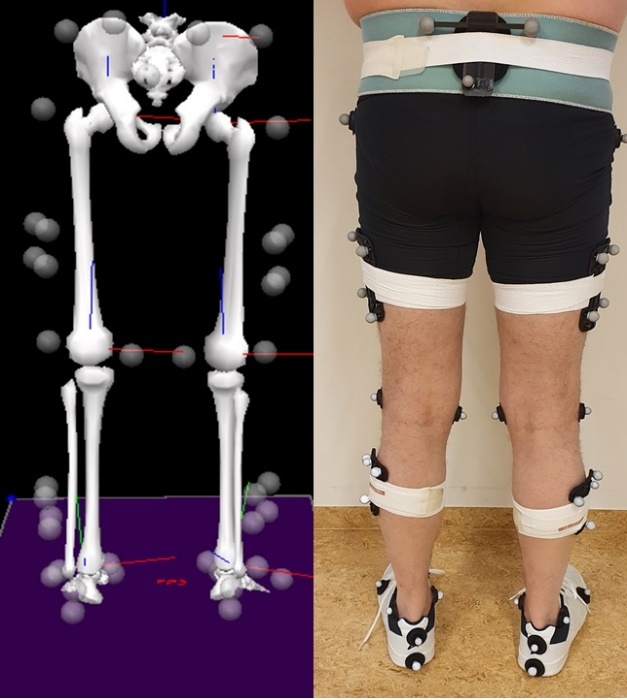
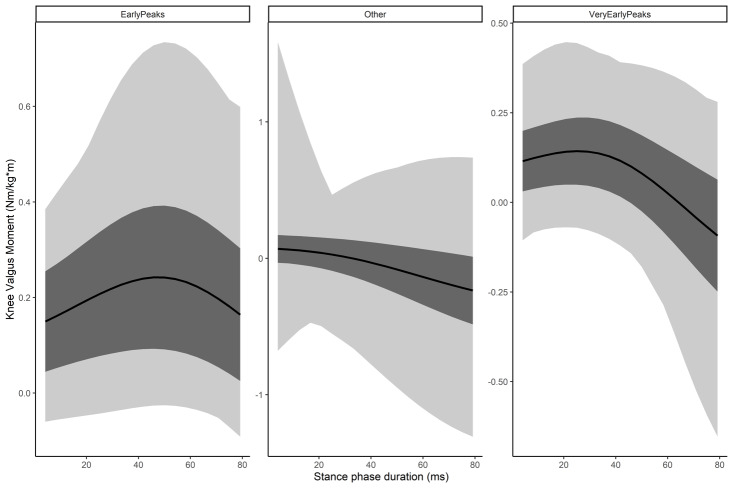
Three teams (69 players) of collegiate female soccer athletes (Divisions I and II) were recruited. Two teams (49 players) volunteered to perform The 11+ three times per week for one season (~22 weeks plus three weeks pre-season), and one team (20 players) served as controls. The athletes performed three repetitions of a cutting maneuver, side shuffle direction change, and forwards to backwards running direction change before and after the competitive season and were recorded using marker-based 3D motion capture. Knee valgus moment time series were calculated for each repetition with inverse kinematics and classified as either "Very Early Peak", "Early Peak" or "other" using cluster analysis. The classification was based timing of the peak relative to the timing of ACL injuries. The effect of the intervention on the frequency of Very Early Peaks and Early Peaks was evaluated with a mixed Poisson regression controlling for the movement task and pre-season frequency.
The 11+ intervention reduced the frequency of Early Peak knee valgus moment in one intervention team (coefficient = -1.16, p = 0.004), but not the other (coefficient = -0.01, p = 0.977). No effect was observed on the frequency of Very Early Peak knee valgus moment.
Reduced frequency of knee valgus moment Early Peak during athletic tasks may explain the mechanism by which The 11+ program decreases risk of ACL injury. Prospective studies with a much larger sample size are required to establish a link between Early Peak knee valgus moments and risk of ACL injury.
2b.
11+ 计划通过未知机制预防运动员的前交叉韧带(ACL)损伤。
本研究的目的是评估女子足球运动员在单个赛季中进行的 11+ 干预计划对运动任务中早期峰值频率的影响。
招募了三支大学女子足球运动员队伍(69 名球员)(第一和第二分区)。两支队伍(49 名球员)自愿每周进行三次 11+ 训练,为期一个赛季(约 22 周加三周季前赛),一支队伍(20 名球员)作为对照组。运动员在赛季前后进行三次重复的切入动作、侧向变向和前后跑向变向,并使用基于标记的 3D 运动捕捉技术进行记录。使用逆运动学计算每次重复的膝内翻力矩时间序列,并通过聚类分析将其分类为“非常早期峰值”、“早期峰值”或“其他”。分类基于峰值相对于 ACL 损伤时间的时间。使用控制运动任务和季前赛频率的混合泊松回归评估干预对非常早期峰值和早期峰值频率的影响。
11+ 干预降低了一个干预组中早期峰值膝内翻力矩的频率(系数 = -1.16,p = 0.004),但在另一组中未降低(系数 = -0.01,p = 0.977)。未观察到对非常早期峰值膝内翻力矩频率的影响。
运动任务中膝内翻力矩早期峰值频率的降低可能解释了 11+ 计划降低 ACL 损伤风险的机制。需要进行样本量更大的前瞻性研究来建立早期峰值膝内翻力矩与 ACL 损伤风险之间的联系。
2b。