Division of Experimental Chemotherapy, Cancer Chemotherapy Center, Japanese Foundation for Cancer Research, Tokyo, Japan.
Department of Computational Biology and Medical Science, Graduate School of Frontier Sciences, The University of Tokyo, Tokyo, Japan.
Cancer Sci. 2022 Nov;113(11):3888-3900. doi: 10.1111/cas.15529. Epub 2022 Sep 11.
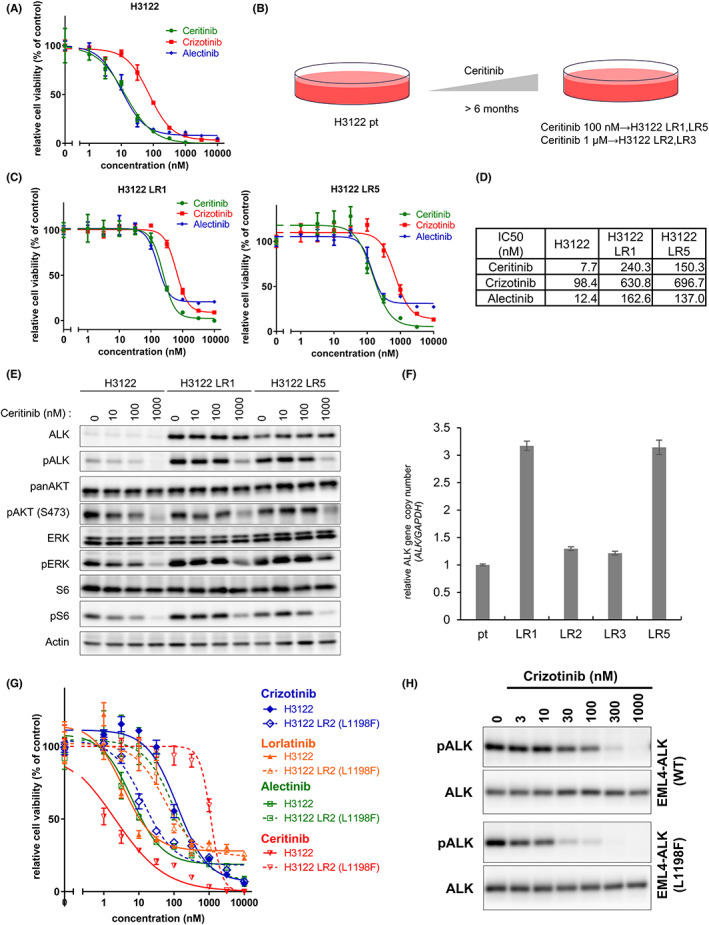
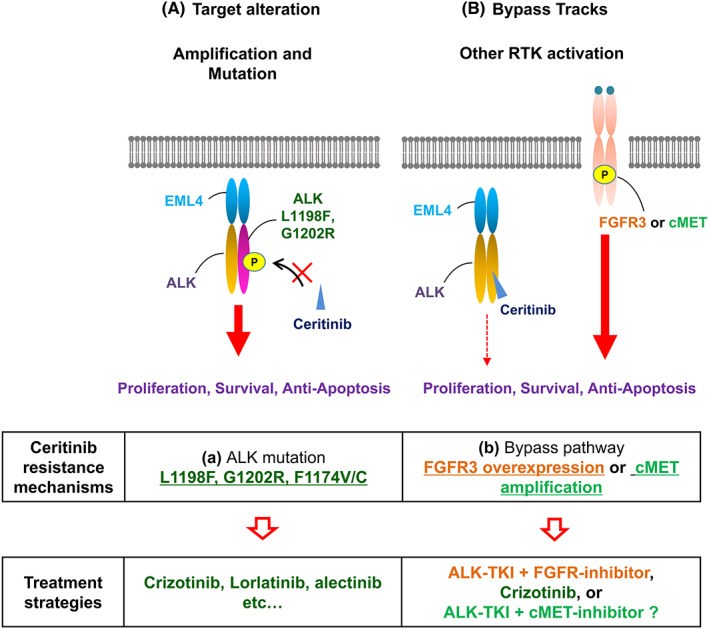
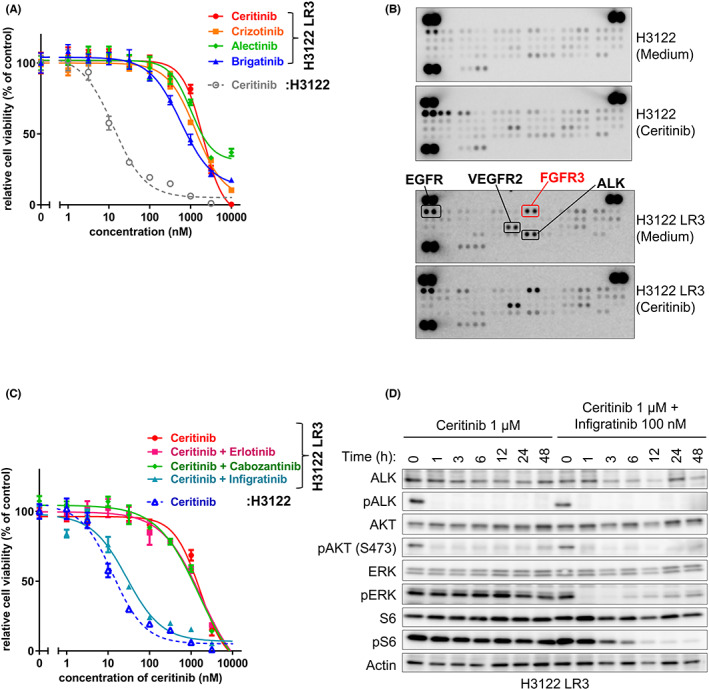
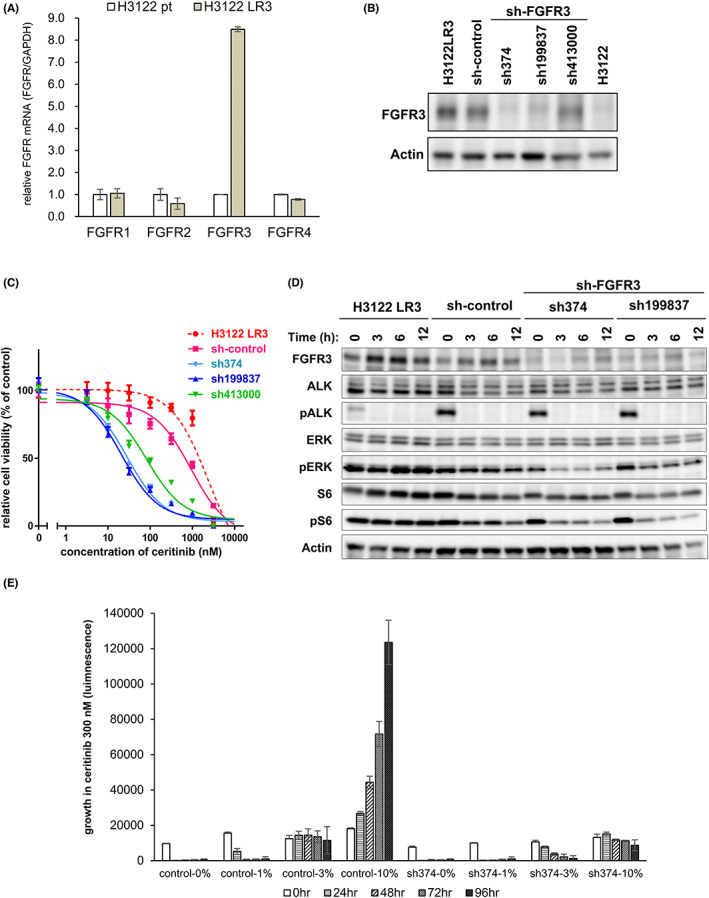
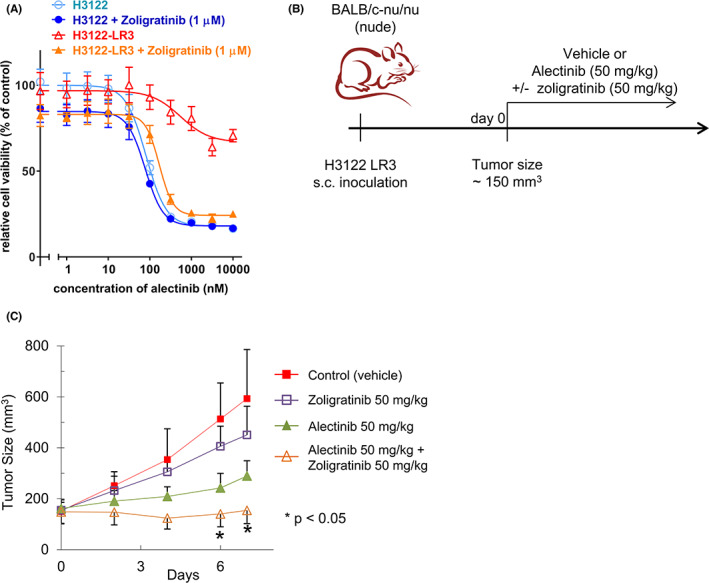
The rearrangement of anaplastic lymphoma kinase (ALK) occurs in 3%-5% of patients with non-small cell lung cancer (NSCLC) and confers sensitivity to ALK-tyrosine kinase inhibitors (TKIs). For the treatment of patients with ALK-rearranged NSCLC, various additional ALK-TKIs have been developed. Ceritinib is a second-generation ALK-TKI and has shown great efficacy in the treatment of patients with both newly diagnosed and crizotinib (a first-generation ALK-TKI)-refractory ALK-rearranged NSCLC. However, tumors can also develop ceritinib resistance. This may result from secondary ALK mutations, but other mechanisms responsible for this have not been fully elucidated. In this study, we explored the mechanisms of ceritinib resistance by establishing ceritinib-resistant, echinoderm microtubule-associated protein-like 4 (EML4)-ALK-positive H3122 cells and ceritinib-resistant patient-derived cells. We identified a mechanism of ceritinib resistance induced by bypass signals that is mediated by the overexpression and activation of fibroblast growth factor receptor 3 (FGFR3). FGFR3 knockdown by small hairpin RNA or treatment with FGFR inhibitors was found to resensitize the resistant cells to ceritinib in vitro and in vivo. FGFR ligands from either human serum or fetal bovine serum were able to activate FGFR3 and induce ceritinib resistance. A detailed analysis of ceritinib-resistant patient-derived specimens confirmed that tyrosine-protein kinase Met (cMET) amplification induces ceritinib resistance. Amplified cMET counteractivated EGFR and/or Her3 and induced ceritinib resistance. These results reveal multiple ceritinib resistance mechanisms and suggest that ceritinib resistance might be overcome by identifying precise resistance mechanisms.
间变性淋巴瘤激酶 (ALK) 的重排发生在 3%-5%的非小细胞肺癌 (NSCLC) 患者中,并对 ALK-酪氨酸激酶抑制剂 (TKI) 敏感。为了治疗 ALK 重排的 NSCLC 患者,已经开发了各种其他的 ALK-TKI。色瑞替尼是一种第二代 ALK-TKI,在治疗新诊断和克唑替尼(第一代 ALK-TKI)耐药的 ALK 重排 NSCLC 患者方面显示出了巨大的疗效。然而,肿瘤也可能对色瑞替尼产生耐药性。这可能是由于继发的 ALK 突变,但导致这种情况的其他机制尚未完全阐明。在这项研究中,我们通过建立色瑞替尼耐药、棘皮动物微管相关蛋白样 4 (EML4)-ALK 阳性 H3122 细胞和色瑞替尼耐药的患者来源细胞,探讨了色瑞替尼耐药的机制。我们发现了一种由旁路信号诱导的色瑞替尼耐药机制,该机制是由成纤维细胞生长因子受体 3 (FGFR3) 的过度表达和激活介导的。通过小发夹 RNA 或 FGFR 抑制剂处理,FGFR3 的敲低被发现可使耐药细胞在体外和体内重新对色瑞替尼敏感。来自人血清或胎牛血清的 FGFR 配体能够激活 FGFR3,并诱导色瑞替尼耐药。对色瑞替尼耐药的患者来源标本的详细分析证实,酪氨酸蛋白激酶 Met (cMET) 扩增诱导色瑞替尼耐药。扩增的 cMET 抵消了 EGFR 和/或 Her3,并诱导了色瑞替尼耐药。这些结果揭示了多种色瑞替尼耐药机制,并表明通过确定精确的耐药机制,可能克服色瑞替尼耐药。