Demsash Addisalem Workie, Chereka Alex Ayenew, Kassie Sisay Yitayih, Donacho Dereje Oljira, Ngusie Habtamu Setegn, Tegegne Masresha Derese, Melaku Mequannent Sharew, Wubante Sisay Maru, Hunde Mekonnen Kenate
Health Informatics Department, College of Health Science, Mattu University, Mettu, Ethiopia.
Health Informatics Department, Institute of Public Health, University of Gondar, Gondar, Ethiopia.
BMC Nutr. 2022 Aug 11;8(1):77. doi: 10.1186/s40795-022-00573-0.
Inadequate micronutrients in the diet and vitamin A deficiency are worldwide public health problems. In developing regions, many preschool children are undernourished, become blind every year and died before the age of 23 months. This study was aimed to explore the spatial distribution of vitamin A rich foods intake among children aged 6-23 months and identify associated factors in Ethiopia.
Ethiopian Mini Demographic and Health Survey 2019 dataset with a total 1407 children aged 6-23 months was used. Data management and processing were done using STATA version 15 software and Microsoft Office Excel. ArcMap version 10.7 software was used for mapping and spatial visualization of the distribution. Spatial scan statistics was performed using SaTScan version 9.5 software for Bernoulli-based model. Multilevel mixed effect logistic regression model was employed to identify associated factors.
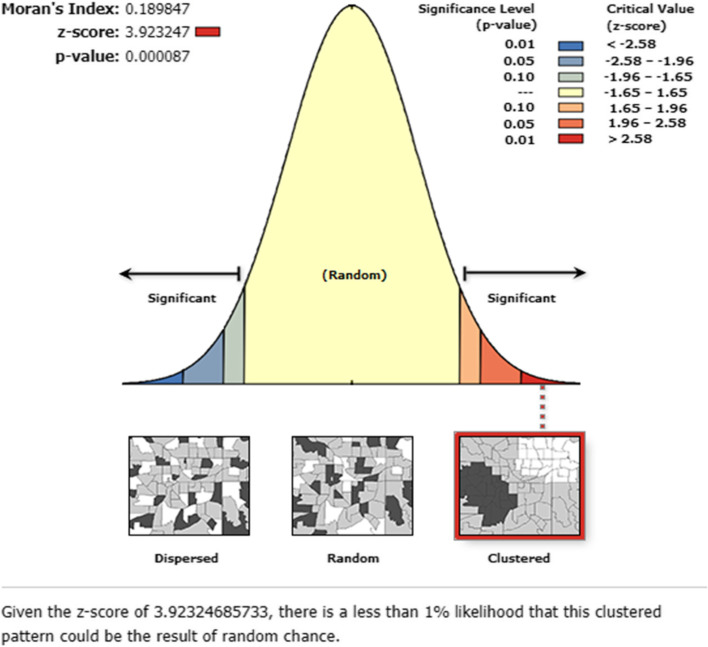
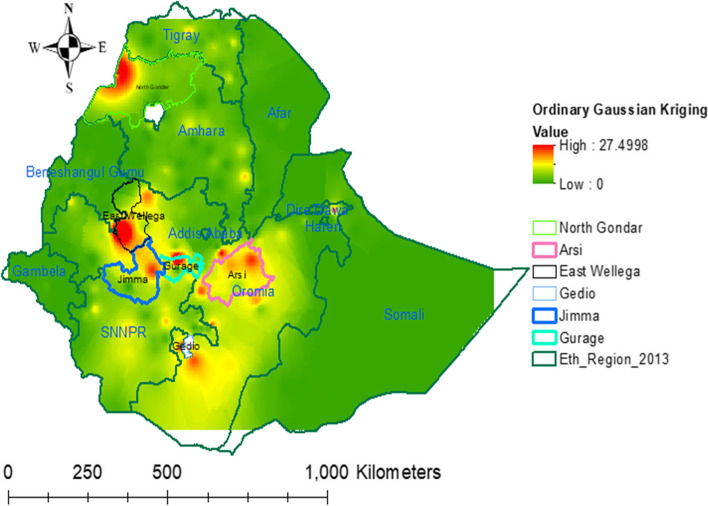
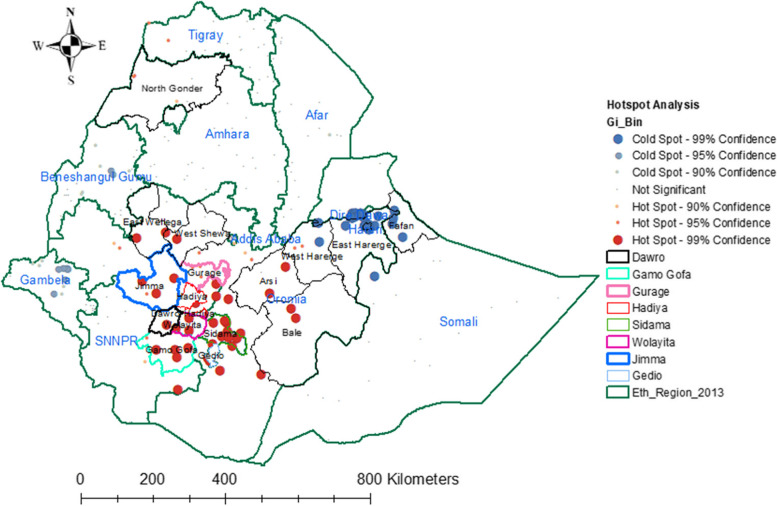
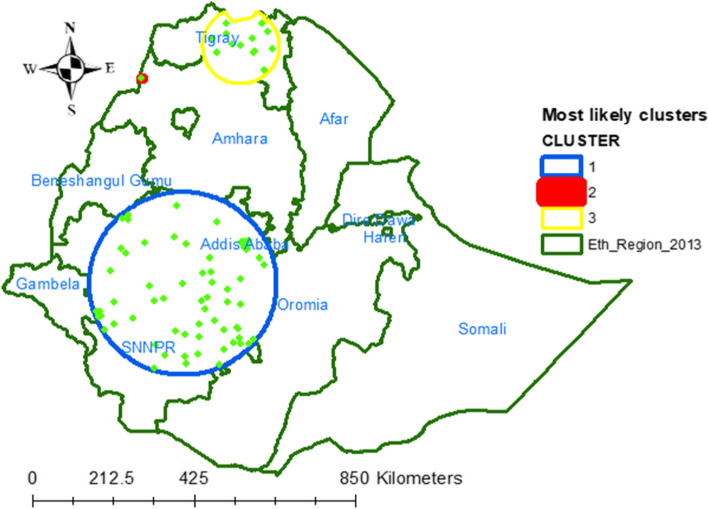
Overall, 38.99% (95% CI: 36.46-41.62) of children aged 6- 23 months took vitamin A rich foods. Poor intake of vitamin A rich foods was significantly clustered Dire Dawa city, Somali and Harari regions of Ethiopia. Children aged 6-23 months lived in the primary cluster were 70% (RR = 1.70, P-value < 0.001) more likely to intake vitamin A rich foods than children lived outside the window. In the multilevel mixed effect logistic regression analysis, Primary educational status (AOR:1.42, 95% CI: 1.05, 1.93) and higher educational status (AOR:3.0, 95% CI: 1.59, 5.65) of mother, Dire Dawa (AOR:0.49, 95% CI: 0.22, 1.12) city, Afar (AOR: 0.16, 95% CI: 0.07, 0.36), Amhara (AOR: 0.37, 95% CI: 0.19, 0.71) and Somali (AOR: 0.02, 95% CI: 0.003, 0.08) regions of Ethiopia, children aged 13-23 months (AOR: 1.80, 95% CI: 1.28, 2.36), Mothers' exposure to media (AOR: 1.41, 95% CI: 1.04, 1.92) were statistically significant factors for vitamin A rich foods intake among children aged 6-23 months.
Only 4 out of ten children took vitamin A rich foods which is too low compared to the national target and significantly clustered in Ethiopia. Mother's educational status, Region, Child age and Mother's media exposure are significant factors vitamin A rich foods intake. Stakeholders should strengthen mothers' education status, creating awareness for mothers on child feeding and using locally available natural resource to produce vitamin A rich foods.
饮食中微量营养素不足和维生素A缺乏是全球性的公共卫生问题。在发展中地区,许多学龄前儿童营养不良,每年都有儿童失明并在23个月前死亡。本研究旨在探讨埃塞俄比亚6至23个月儿童中富含维生素A食物摄入量的空间分布,并确定相关因素。
使用了2019年埃塞俄比亚微型人口与健康调查数据集,其中共有1407名6至23个月的儿童。数据管理和处理使用STATA 15软件和Microsoft Office Excel完成。ArcMap 10.7软件用于绘制分布图和进行空间可视化。使用SaTScan 9.5软件对基于伯努利模型进行空间扫描统计。采用多水平混合效应逻辑回归模型来确定相关因素。
总体而言,6至23个月的儿童中,38.99%(95%置信区间:36.46 - 41.62)摄入了富含维生素A的食物。埃塞俄比亚的德雷达瓦市、索马里和哈拉里地区富含维生素A食物的摄入量低的情况显著聚集。生活在主要聚集区的6至23个月儿童摄入富含维生素A食物的可能性比生活在聚集区外的儿童高70%(相对风险 = 1.70,P值 < 0.001)。在多水平混合效应逻辑回归分析中,母亲的小学教育程度(调整后比值比:1.42,95%置信区间:1.05,1.93)和高等教育程度(调整后比值比:3.0,95%置信区间:1.59,5.65)、德雷达瓦市(调整后比值比:0.49,95%置信区间:0.22,1.12)、阿法尔(调整后比值比:0.16,95%置信区间:0.07,0.36)、阿姆哈拉(调整后比值比:0.37,95%置信区间:0.19,0.71)和索马里(调整后比值比:0.02,95%置信区间:0.003,0.08)地区、13至23个月的儿童(调整后比值比:1.80,95%置信区间:1.28,2.36)、母亲接触媒体(调整后比值比:1.41,95%置信区间:].04,1.92)是6至23个月儿童摄入富含维生素A食物的统计学显著因素。
每十名儿童中只有四名摄入了富含维生素A的食物,与国家目标相比过低,且在埃塞俄比亚显著聚集。母亲的教育程度、地区、儿童年龄和母亲接触媒体是摄入富含维生素A食物的重要因素。利益相关者应加强母亲的教育程度,提高母亲对儿童喂养的认识,并利用当地可用的自然资源生产富含维生素A的食物。