Center for Environmental Research and Community Health (CERCH), School of Public Health, University of California at Berkeley, 1995 University Avenue, Suite 265, Berkeley, CA 94704, USA.
Department of Public Health, School of Social Sciences, Humanities, and Art, University of California at Merced, 5200 N. Lake Road, Merced, CA 95343, USA.
Int J Environ Res Public Health. 2022 Aug 5;19(15):9661. doi: 10.3390/ijerph19159661.
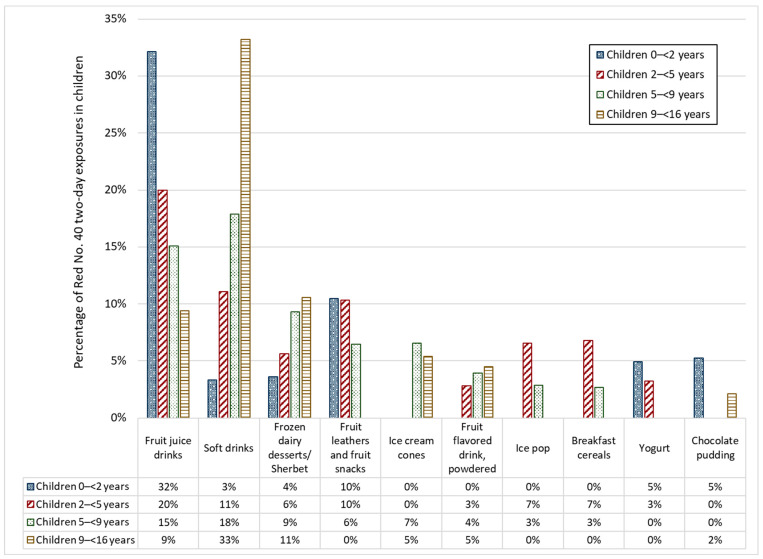
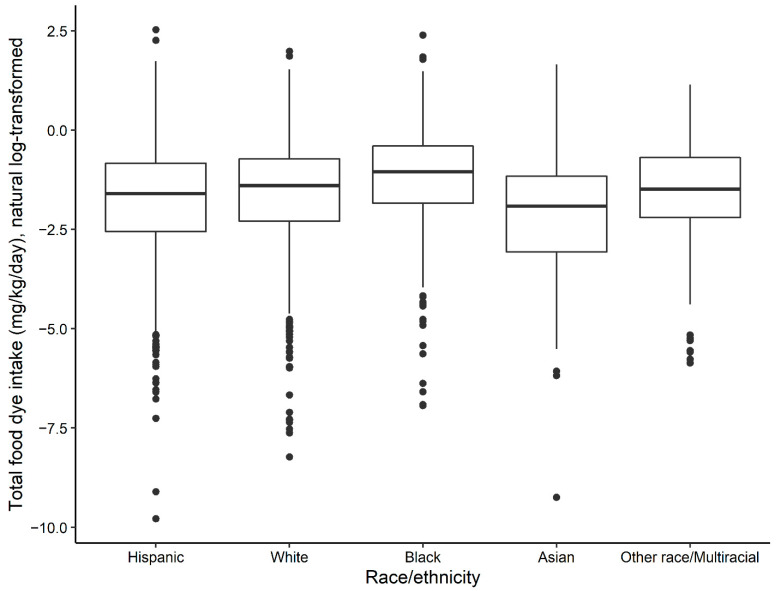
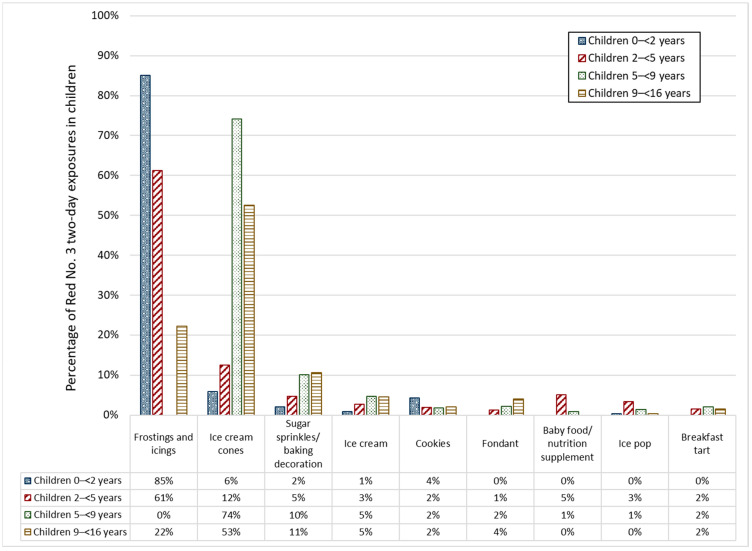
The Food and Drug Administration (FDA) regulates artificial food colors (AFCs) in the United States. Exposure to AFCs has raised concerns about adverse behavioral effects in children. We quantified AFC exposure in women of childbearing age, pregnant women, and children and compared them to FDA and World Health Organization acceptable daily intakes (ADIs). We estimated the “typical” and “high” single-day and two-day average dietary exposure to each AFC (mg/kg/day) based on laboratory measurements and food consumption data from the 2015−2016 National Health and Nutrition Examination Survey (NHANES). We also examined whether AFC intake differed by income, education, and ethnicity. Exposure tended to be higher in children and the highest AFC exposure was found for Red No. 40. Children’s mean and 95th percentile FD&C Red No. 3 estimated intakes exceeded the ADIs in some instances. Juice drinks, soft drinks, icings, and ice cream cones were major foods contributing to children’s (<16 years old) AFC exposure. AFC intake was higher in participants with lower incomes and education and of African American ethnicity. The findings indicate widespread AFC exposure including in very young children. Research is needed on the sociodemographic determinants of exposure and AFC toxicokinetics to better describe the absorption and organ-specific exposure.
美国食品和药物管理局(FDA)监管人工食品色素(AFC)。接触 AFC 引起了人们对儿童不良行为影响的担忧。我们量化了育龄妇女、孕妇和儿童的 AFC 暴露量,并将其与 FDA 和世界卫生组织可接受的日摄入量(ADI)进行了比较。我们根据实验室测量和 2015-2016 年全国健康和营养检查调查(NHANES)的食物消耗数据,估计了每种 AFC(mg/kg/天)的“典型”和“高”单日和两天平均饮食暴露量。我们还研究了 AFC 摄入量是否因收入、教育和种族而异。儿童的暴露量往往较高,而 Red No. 40 的 AFC 暴露量最高。儿童的平均和第 95 百分位数 FD&C 红色 3 号的估计摄入量在某些情况下超过了 ADI。果汁饮料、软饮料、糖霜和冰淇淋蛋筒是导致儿童(<16 岁)AFC 暴露的主要食物。收入较低、受教育程度较低和非裔美国人的参与者摄入的 AFC 较多。研究结果表明,AFC 暴露非常普遍,包括非常年幼的儿童。需要研究暴露的社会人口决定因素和 AFC 毒代动力学,以更好地描述吸收和器官特异性暴露。