Department of Neuroscience, Psychology, Drug Research and Child Health-Neurofarba-Pharmacology and Toxicology Section, University of Florence, Viale G. Pieraccini 6, 50139 Florence, Italy.
Department of Biotechnology, Chemistry and Pharmacy, University of Siena, Via Aldo Moro 2, 53100 Siena, Italy.
Int J Mol Sci. 2022 Jul 29;23(15):8428. doi: 10.3390/ijms23158428.
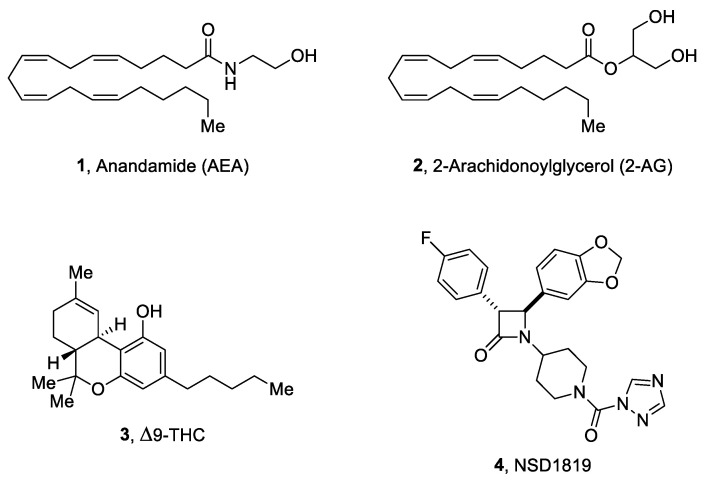
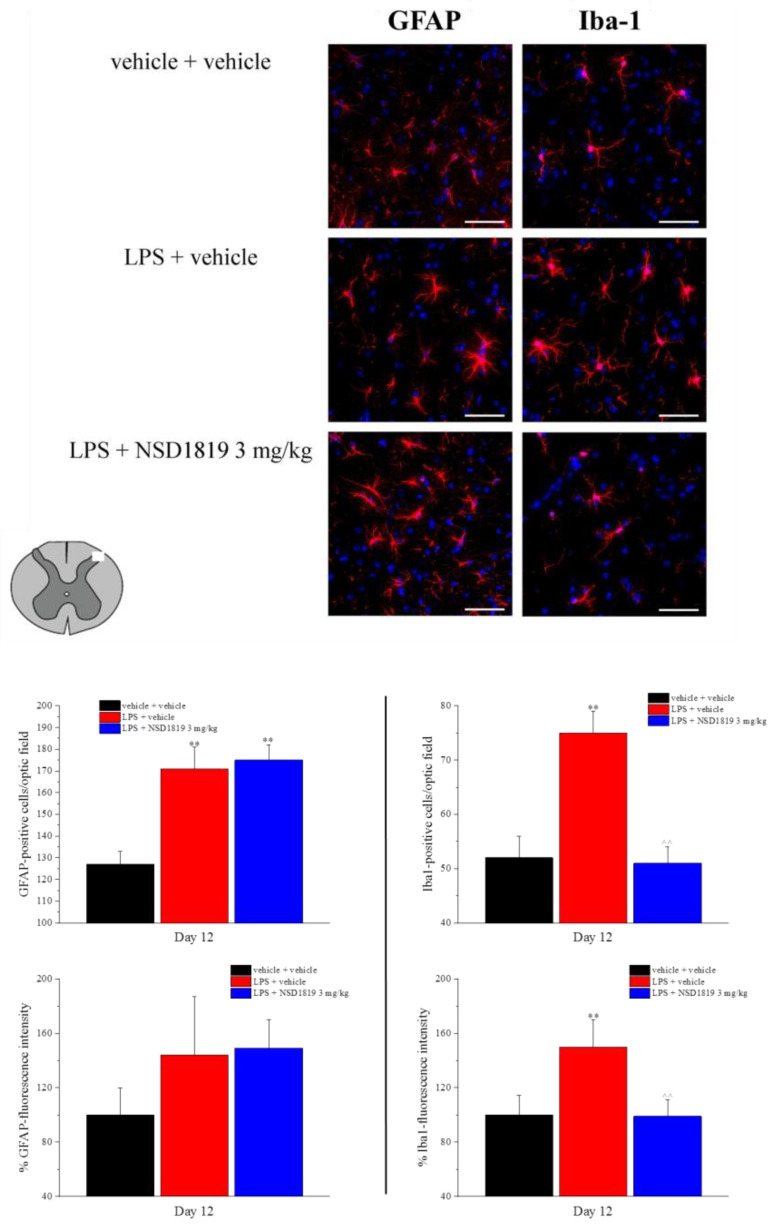
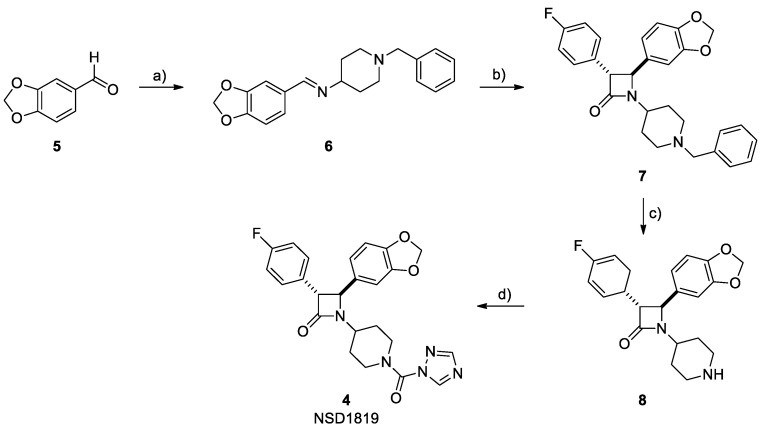
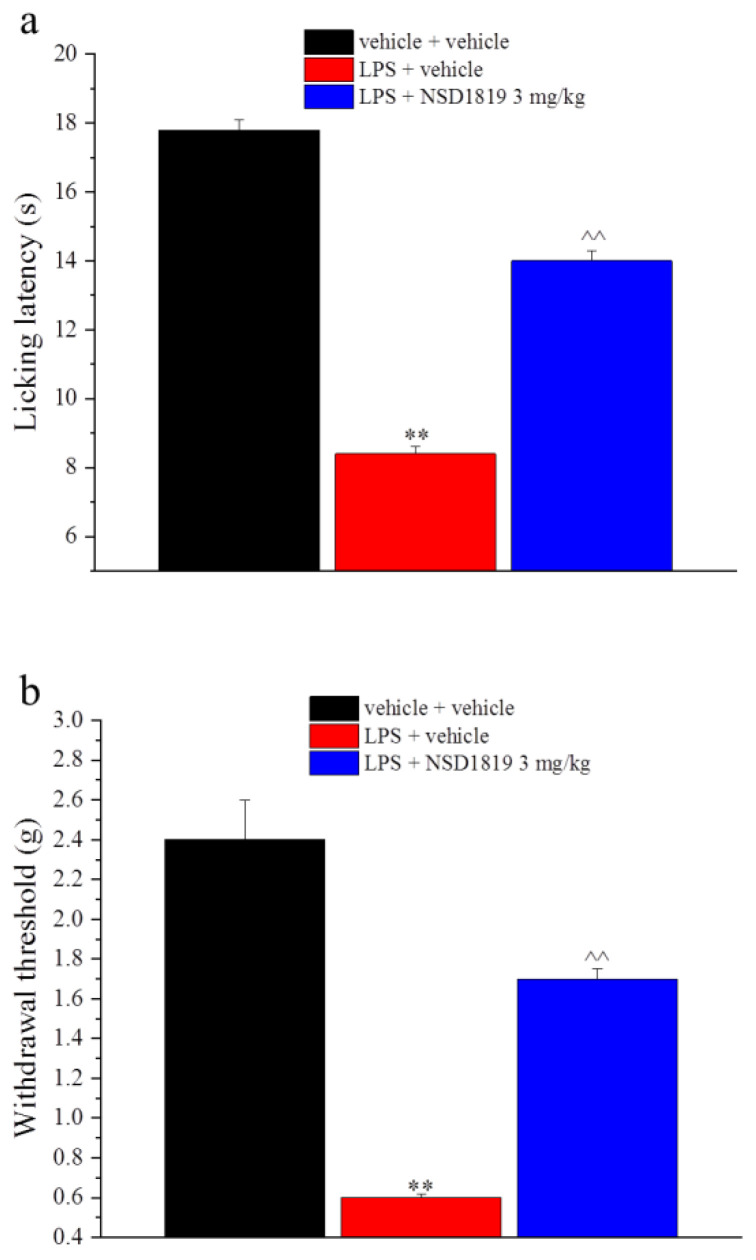
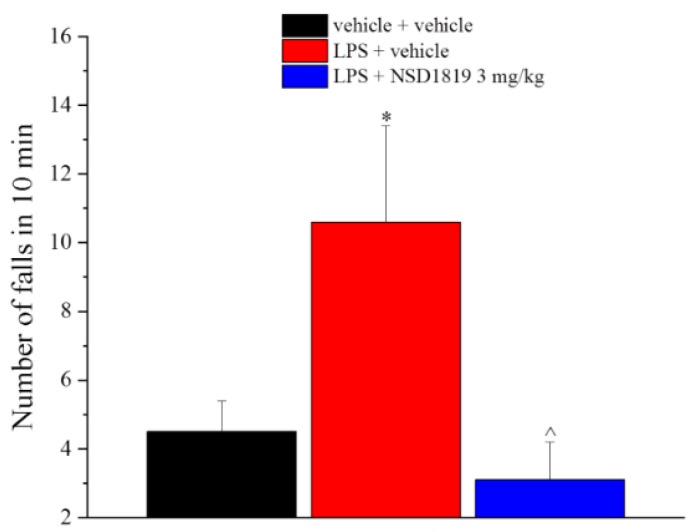
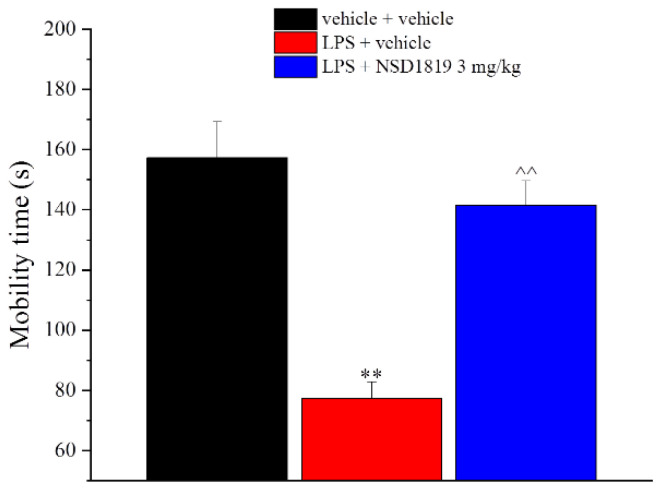
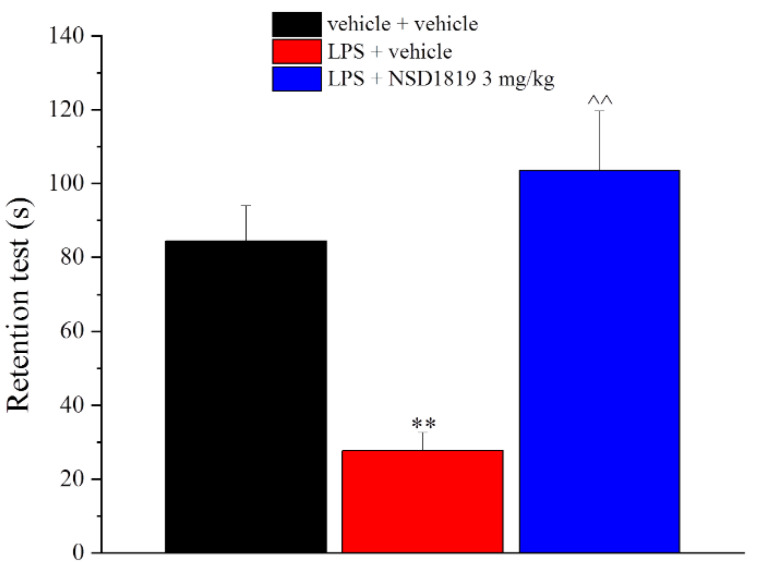
Neuroinflammation is a key pathological event shared by different diseases affecting the nervous system. Since the underlying mechanism of neuroinflammation is a complex and multifaceted process, current pharmacological treatments are unsatisfactory-a reason why new therapeutic approaches are mandatory. In this context, the endocannabinoid system has proven to possess neuroprotective and immunomodulatory actions under neuroinflammatory status, and its modulation could represent a valuable approach to address different inflammatory processes. To this aim, we evaluated the efficacy of a repeated treatment with NSD1819, a potent β-lactam-based monoacylglycerol lipase inhibitor in a mouse model of neuroinflammation induced by lipopolysaccharide (LPS) injection. Mice were intraperitoneally injected with LPS 1 mg/kg for five consecutive days to induce systemic inflammation. Concurrently, NSD1819 (3 mg/kg) was daily per os administered from day 1 until the end of the experiment (day 11). Starting from day 8, behavioral measurements were performed to evaluate the effect of the treatment on cognitive impairments, allodynia, motor alterations, anhedonia, and depressive-like behaviors evoked by LPS. Histologically, glial analysis of the spinal cord was also performed. The administration of NSD1819 was able to completely counteract thermal and mechanical allodynia as highlighted by the Cold plate and von Frey tests, respectively, and to reduce motor impairments as demonstrated by the Rota rod test. Moreover, the compound was capable of neutralizing the memory loss in the Passive avoidance test, and reducing depressive-like behavior in the Porsolt test. Finally, LPS stimulation caused a significant glial cells activation in the dorsal horn of the lumbar spinal cord that was significantly recovered by NSD1819 repeated treatment. In conclusion, NSD1819 was able to thwart the plethora of symptoms evoked by LPS, thus representing a promising candidate for future applications in the context of neuroinflammation and related diseases.
神经炎症是影响神经系统的不同疾病共有的关键病理事件。由于神经炎症的潜在机制是一个复杂和多方面的过程,目前的药物治疗并不令人满意,这也是为什么需要新的治疗方法的原因。在这种情况下,内源性大麻素系统已被证明在神经炎症状态下具有神经保护和免疫调节作用,其调节可能是解决不同炎症过程的一种有价值的方法。为此,我们评估了在脂多糖(LPS)注射诱导的神经炎症小鼠模型中,重复使用 NSD1819(一种有效的基于β-内酰胺的单酰基甘油脂肪酶抑制剂)的疗效。小鼠连续 5 天腹腔注射 LPS 1mg/kg 诱导全身炎症。同时,从第 1 天开始,每天口服给予 NSD1819(3mg/kg),直至实验结束(第 11 天)。从第 8 天开始,进行行为测量,以评估治疗对 LPS 引起的认知障碍、痛觉过敏、运动改变、快感缺失和抑郁样行为的影响。还对脊髓的神经胶质进行了组织学分析。NSD1819 的给药能够完全对抗冷板和von Frey 测试分别显示的热和机械性痛觉过敏,并减少旋转棒测试显示的运动障碍。此外,该化合物能够中和被动回避测试中的记忆丧失,并减少在 Porsolt 测试中的抑郁样行为。最后,LPS 刺激导致腰椎脊髓背角的神经胶质细胞明显激活,NSD1819 的重复治疗显著恢复了这种激活。总之,NSD1819 能够阻止 LPS 引起的多种症状,因此是神经炎症和相关疾病未来应用的有希望的候选药物。