
在切变条件下,黏着斑激酶 PTK2 和整合素 αIIbβ3 信号在胶原和 GPIbVI 依赖性血栓形成中的作用。
Roles of Focal Adhesion Kinase PTK2 and Integrin αIIbβ3 Signaling in Collagen- and GPVI-Dependent Thrombus Formation under Shear.
机构信息
Department of Biochemistry, CARIM, Maastricht University, 6229 ER Maastricht, The Netherlands.
Leibniz Institut für Analytische Wissenschaften-ISAS-e.V., 44139 Dortmund, Germany.
出版信息
Int J Mol Sci. 2022 Aug 4;23(15):8688. doi: 10.3390/ijms23158688.
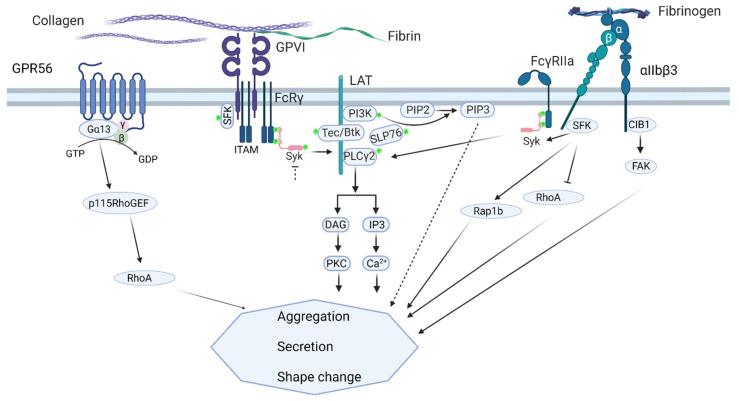
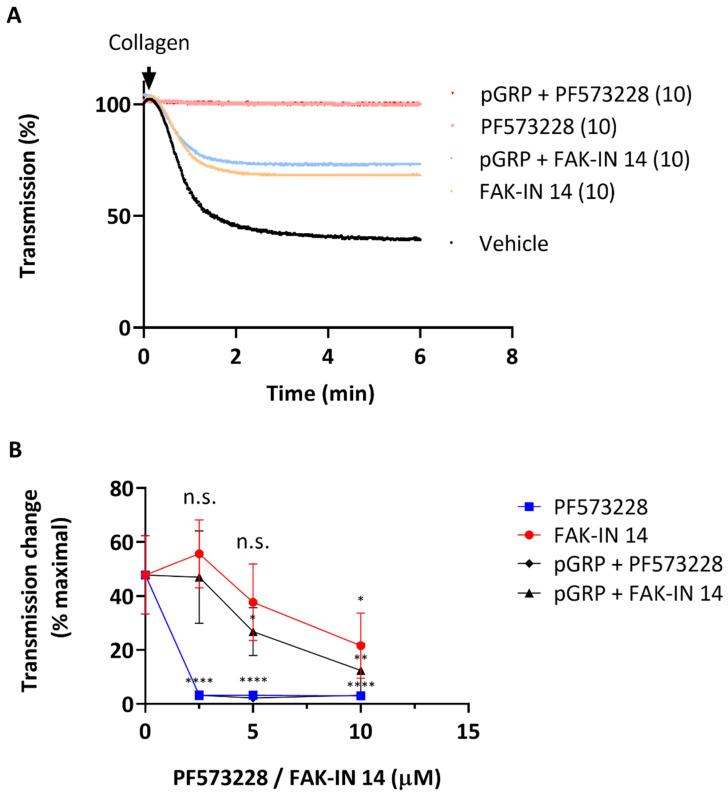
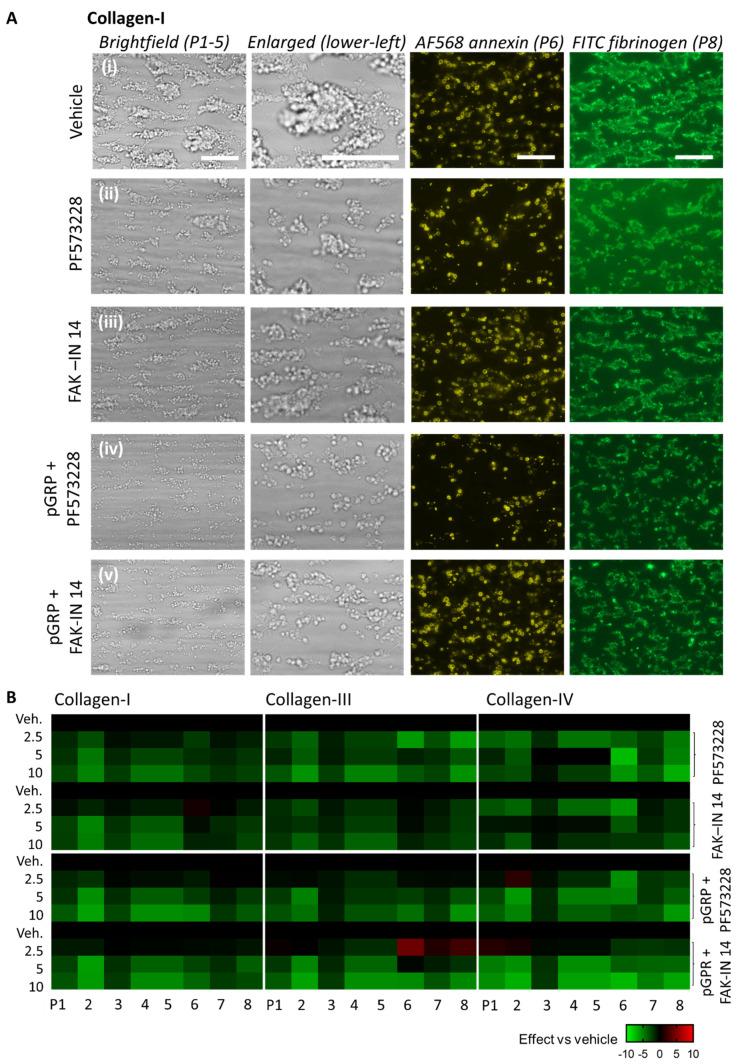
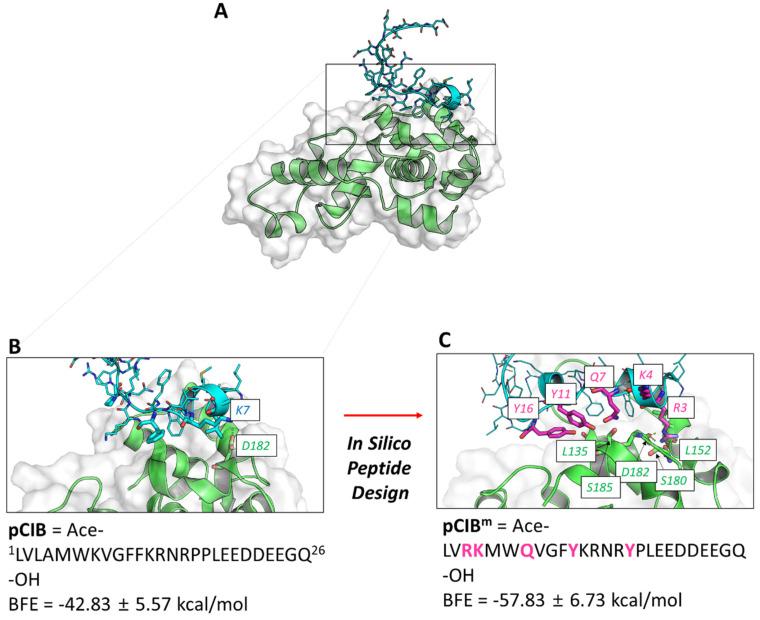
Glycoprotein (GP)VI and integrin αIIbβ3 are key signaling receptors in collagen-dependent platelet aggregation and in arterial thrombus formation under shear. The multiple downstream signaling pathways are still poorly understood. Here, we focused on disclosing the integrin-dependent roles of focal adhesion kinase (protein tyrosine kinase 2, PTK2), the shear-dependent collagen receptor GPR56 (ADGRG1 gene), and calcium and integrin-binding protein 1 (CIB1). We designed and synthetized peptides that interfered with integrin αIIb binding (pCIB and pCIBm) or mimicked the activation of GPR56 (pGRP). The results show that the combination of pGRP with PTK2 inhibition or of pGRP with pCIB > pCIBm in additive ways suppressed collagen- and GPVI-dependent platelet activation, thrombus buildup, and contraction. Microscopic thrombus formation was assessed by eight parameters (with script descriptions enclosed). The suppressive rather than activating effects of pGRP were confined to blood flow at a high shear rate. Blockage of PTK2 or interference of CIB1 no more than slightly affected thrombus formation at a low shear rate. Peptides did not influence GPVI-induced aggregation and Ca2+ signaling in the absence of shear. Together, these data reveal a shear-dependent signaling axis of PTK2, integrin αIIbβ3, and CIB1 in collagen- and GPVI-dependent thrombus formation, which is modulated by GPR56 and exclusively at high shear. This work thereby supports the role of PTK2 in integrin αIIbβ3 activation and signaling.
糖蛋白 (GP)VI 和整合素 αIIbβ3 是胶原依赖性血小板聚集和剪切下动脉血栓形成的关键信号受体。其多个下游信号通路仍知之甚少。在这里,我们专注于揭示整合素依赖性粘着斑激酶(蛋白酪氨酸激酶 2,PTK2)、剪切依赖性胶原受体 GPR56(ADGRG1 基因)和钙和整合素结合蛋白 1(CIB1)的作用。我们设计并合成了干扰整合素 αIIb 结合的肽(pCIB 和 pCIBm)或模拟 GPR56 激活的肽(pGRP)。结果表明,pGRP 与 PTK2 抑制的联合或 pGRP 与 pCIB > pCIBm 的联合以累加方式抑制了胶原和 GPVI 依赖性血小板激活、血栓形成和收缩。通过八个参数(包含脚本描述)评估微观血栓形成。pGRP 的抑制作用而非激活作用仅限于高剪切率下的血流。低剪切率下,阻断 PTK2 或干扰 CIB1 对血栓形成的影响不大。在没有剪切的情况下,肽不会影响 GPVI 诱导的聚集和 Ca2+信号转导。总之,这些数据揭示了剪切依赖性的 PTK2、整合素 αIIbβ3 和 CIB1 在胶原和 GPVI 依赖性血栓形成中的信号轴,该信号轴受 GPR56 调节,仅在高剪切下发生。这项工作支持了 PTK2 在整合素 αIIbβ3 激活和信号转导中的作用。




 Zotero 插件